Container ship, port and Asian retail shelf — the stages of a first food shipment Asia timeline.

First Food Shipment Asia Timeline: Contract to Retail Shelf

The question every new exporter asks is: “We signed the importer — how long until we are on shelf?” The answer is not six weeks. It is not six months either. For most processed food and beverage products, the realistic first food shipment Asia timeline is four to nine months from signed contract to retail shelf. For…

Premium chocolate bars with Asian-market label drafts — chocolate import Asia labeling for Japan, Korea and China.

Chocolate Import Asia Labeling: Japan, Korea and China Guide

Chocolate is both an opportunity and a trap in North Asia. Japan’s gift culture, Korea’s premium growth, and Greater China’s specialty retail expansion create real demand. But chocolate is temperature-sensitive, additive-heavy, and subject to some of the strictest labeling rules in the region. A product that sells well in one market will not automatically clear…

Contract and warning marks on a desk — the red flags to check before signing with an Asian food importer.

How to Vet an Asian Food Importer: 10 Red Flags Before You Sign

Most first-time Asia launches fail not because the product is wrong, but because producers skip the work needed to properly vet an Asian food importer before signing. Finding a distributor is the easy part — the contact list from FHC Shanghai, ProWine or Foodex Japan is full of them. Proper vetting is where the real work begins.…

European food exhibitor entering FHC Shanghai 2026 with a pre-show checklist, SNIEC exhibition hall isometricEuropean food exhibitor entering FHC Shanghai 2026 with a pre-show checklist, SNIEC exhibition hall isometric

FHC Shanghai 2026: Pre-Show Checklist for European Exporters

An Italian olive oil client spent €12,000 on a booth at FHC Shanghai 2026 — or rather, at the previous November edition. They came home with two qualified buyer leads. The booth fee was not the problem. The problem was everything that did not happen before the show opened: samples stuck in customs, English-only business cards with…

Five common outreach mistakes European food exporters make when emailing Asian food importers — generic blasts, catalogue attachments, GACC claims, poor research and missing contact channels

Email Asian Food Importers: 5 Mistakes to Avoid

Email Asian food importers the wrong way, and you get deleted in eight seconds. I am starting outreach to Asian importers for European food brands this week. Before I send the first email, I want to share something from the other side of the table. I have watched European exporters pitch Asian importers for years…

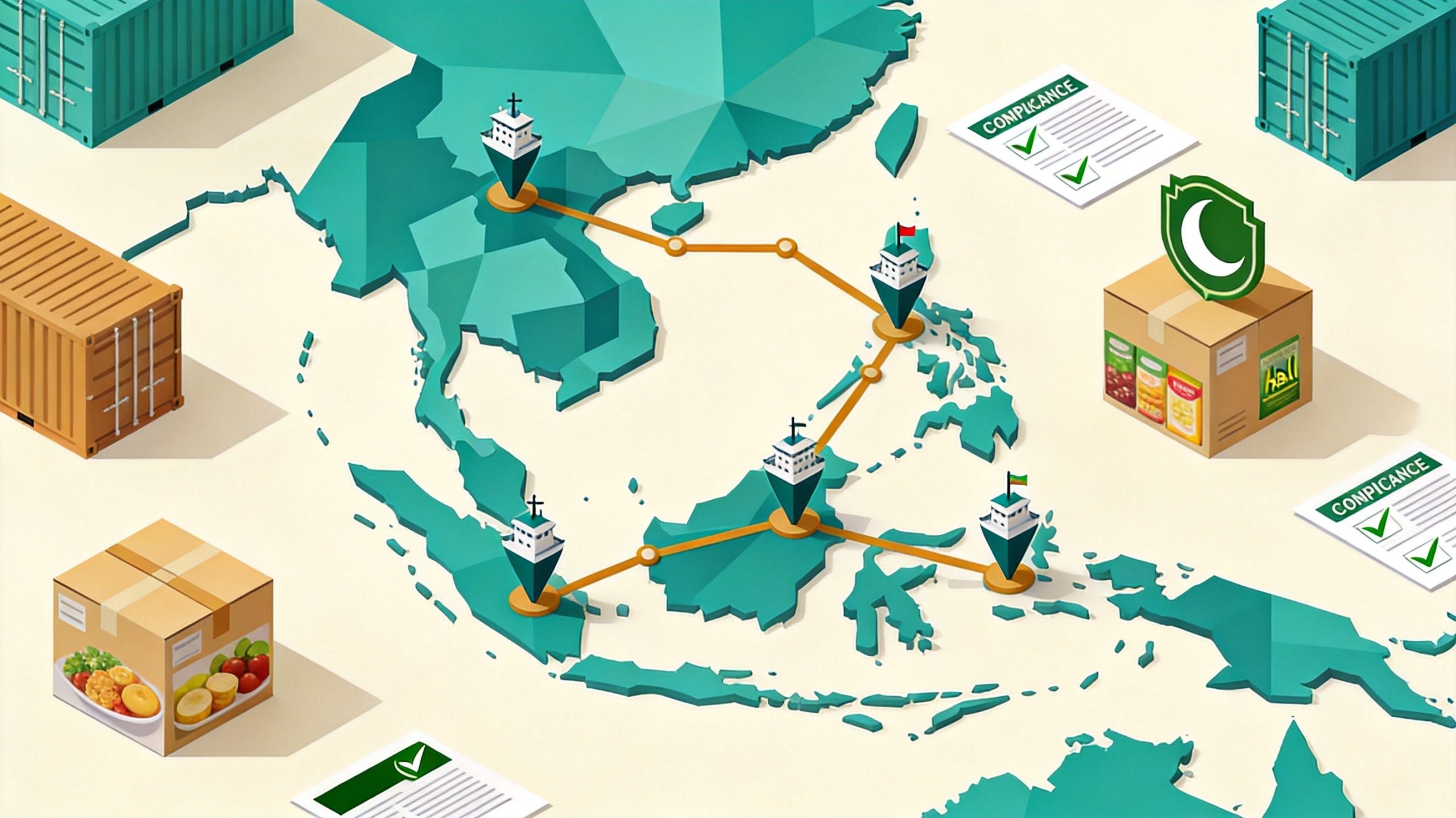
Isometric illustration of Southeast Asian trade routes with food shipping containers and compliance documents, representing the six-country food export compliance roadmap

Exporting Food to Southeast Asia: A 6-Country Compliance Roadmap

Export food to Southeast Asia, and you quickly discover it is not one market — it is six major ones. Singapore, Thailand, Vietnam, Malaysia, Indonesia and the Philippines each run their own regulator, registration system, labelling rules and language requirements. What is legal in one can get your shipment destroyed in the next. But under…

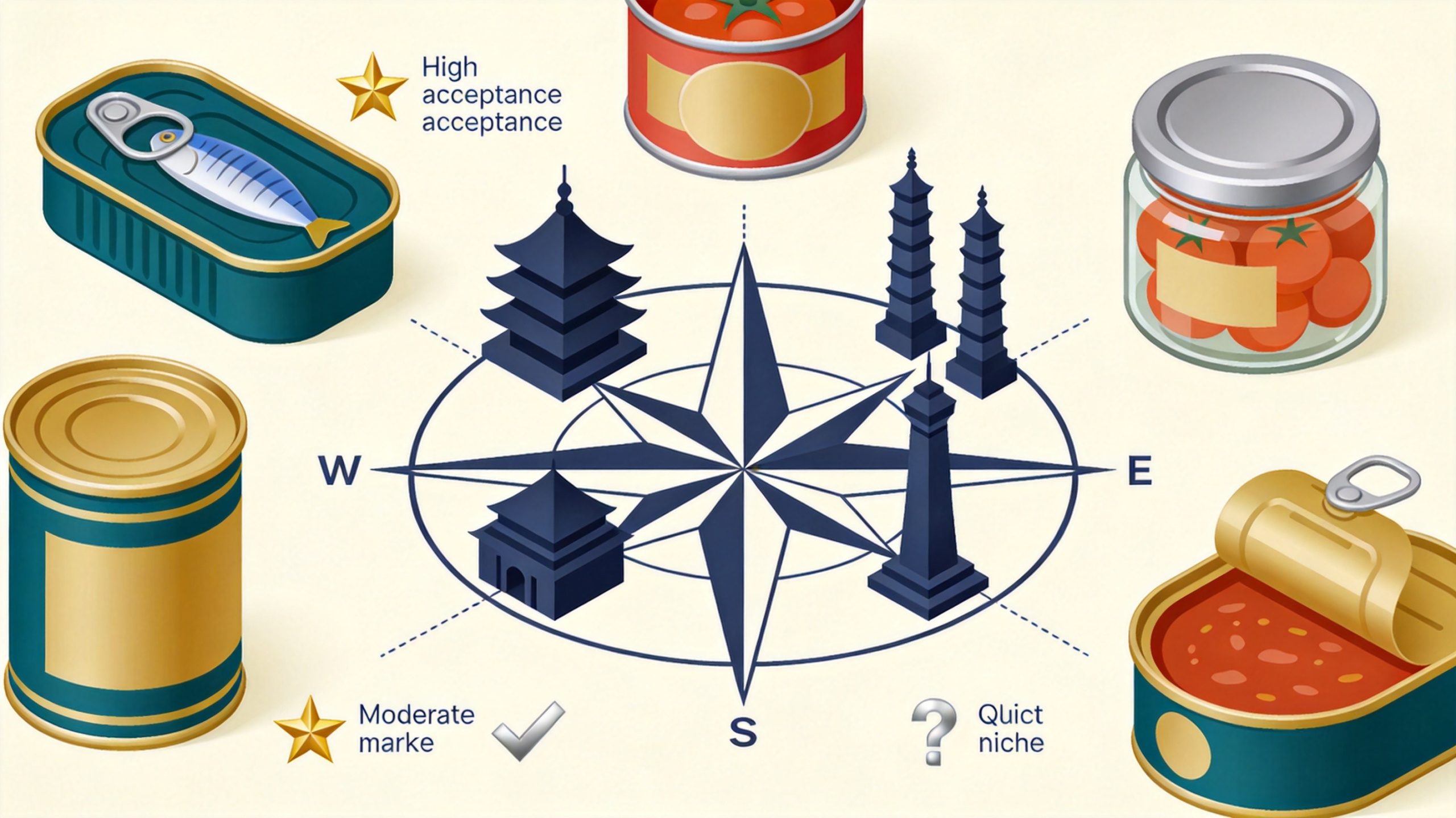
Isometric illustration of European canned food tins and jars arranged around a compass pointing to Asian markets, showing different acceptance levels across Japan, Hong Kong, Korea and China.

Canned Food in Asia: Where European Conservas, Confit and Tinned Seafood Actually Sell

Canned food in Asia is not one market. It is several — and the reception differs sharply by country. A Portuguese sardine in olive oil, a French duck confit, a Spanish tuna belly, an Italian tomato passata — each carries a different meaning depending on where it lands. European canned and preserved food sells unevenly…

Olive oil bottle between Chinese, Japanese and Korean cultural landmark icons, illustrating Asian market compliance requirements for Mediterranean olive oil exporters

Exporting Olive Oil to Asia in 2026: A Compliance Comparison for China, Japan and Korea

6 October 2026 | Shanghai, China The three most common wrong assumptions we hear from Mediterranean olive oil producers are: “English labels are fine,” “Japan just needs JAS,” and “tariffs are all about the HS code.” Each can stop a shipment at the port. Between grade classification standards that diverge from EU terminology, China GB…

Food samples at an Asian trade show booth with ATA Carnet document, shipping routes connecting to Tokyo Shanghai Seoul and Bangkok

Shipping Food Samples to Asia: Compliance, Temporary Import & ATA Carnet Guide (2026)

5 October 2026 | Shanghai, China A real scenario: you’ve prepared twenty kilograms of handmade cookies as samples for next month’s trade show in Japan. You plan to carry them in your luggage. At Narita Airport, a customs officer looks at your suitcase and asks: “Are these commercial samples or personal items?” You say samples.…

Isometric bonded-warehouse scene with parcels shipping to consumers, representing the 1210 CBEC model and preferential tax.

Selling Imported Food via China Cross-Border E-Commerce in 2026: A No-Entity Pathway for Craft Brands

2 October, 2026 | Shanghai, China For craft food brands looking at China, cross-border e-commerce (CBEC) remains the fastest route to market 鈥?no Chinese entity required, no general-trade import licence, and a tax structure that cuts the effective VAT bill by almost a third. But “no entity” does not mean “no rules.” The 2026 regulatory…

© 2026 Specit Consulting. All rights reserved. Unauthorized reproduction is prohibited.
Specit Consulting
On-Ground Intelligence for
Asia Market Entry
© 2026 All rights reserved.

Contact

info@specitconsulting.com

+86 150 2128 9465 (WhatsApp)

1F, B3, No.2850 Lian Xi Road
Jin Ze Town, Qing Pu District
Shanghai, China 201722

© 2026 Specit Consulting. All rights reserved.
Chat on WhatsApp
WhatsApp