

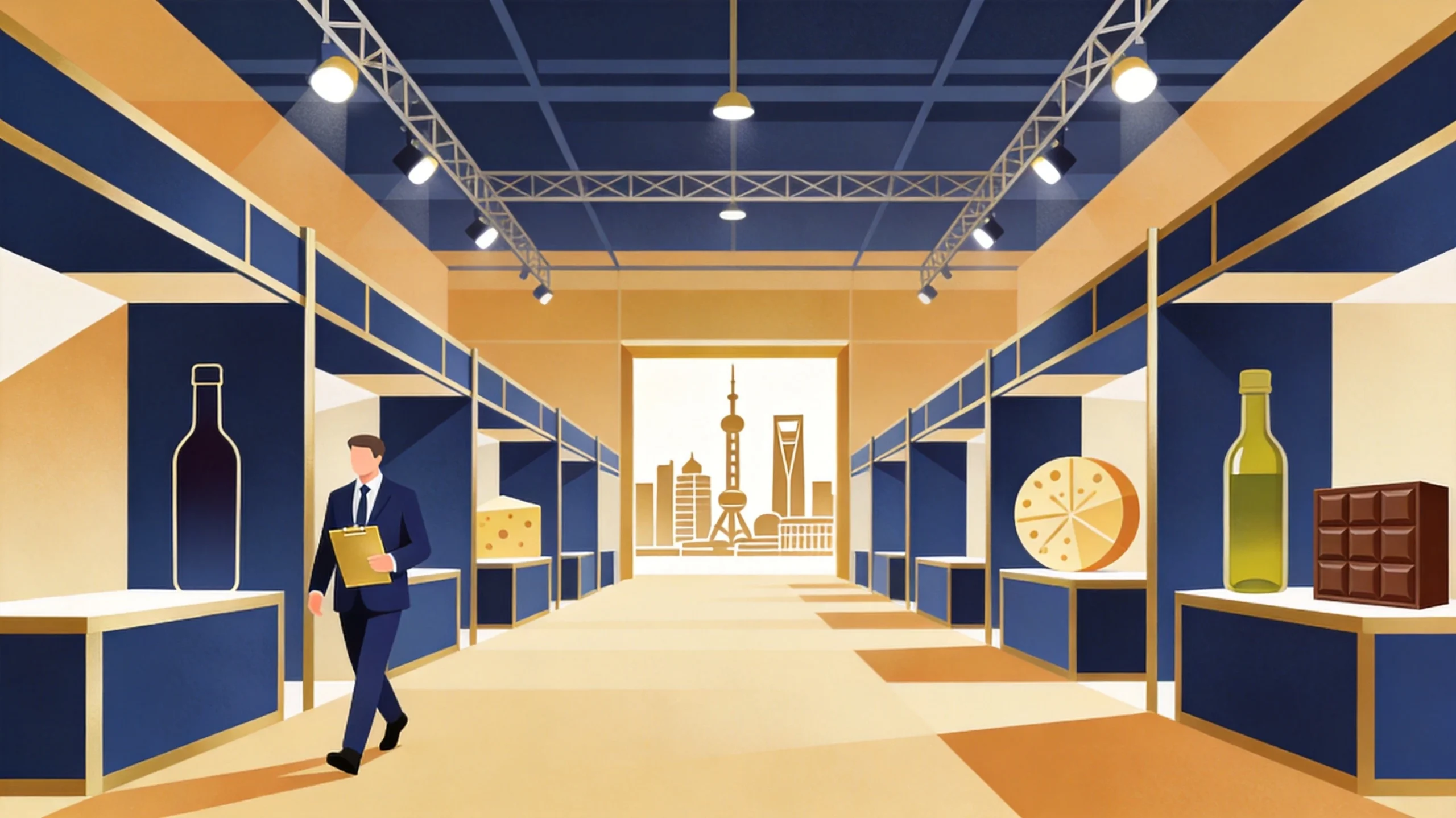
An Italian olive oil client spent €12,000 on a booth at FHC Shanghai 2026 — or rather, at the previous November edition. They came home with two qualified buyer leads.
The booth fee was not the problem. The problem was everything that did not happen before the show opened: samples stuck in customs, English-only business cards with no WeChat, zero pre-booked meetings, and a pitch that assumed every visitor was a distributor.
FHC Shanghai runs 10–12 November 2026 at the Shanghai New International Expo Centre (SNIEC, Pudong). Over 3,000 exhibitors, 180,000+ professional buyers, and 50+ country pavilions. The scale is real. But scale does not convert itself. Preparation does.
Here is the checklist we use with clients before FHC Shanghai 2026, based on what the exhibitors who leave with meetings actually do.
Four Weeks Before: The Hard Preparation
This is where most exhibitors under-prepare. Everything below takes longer than you think.
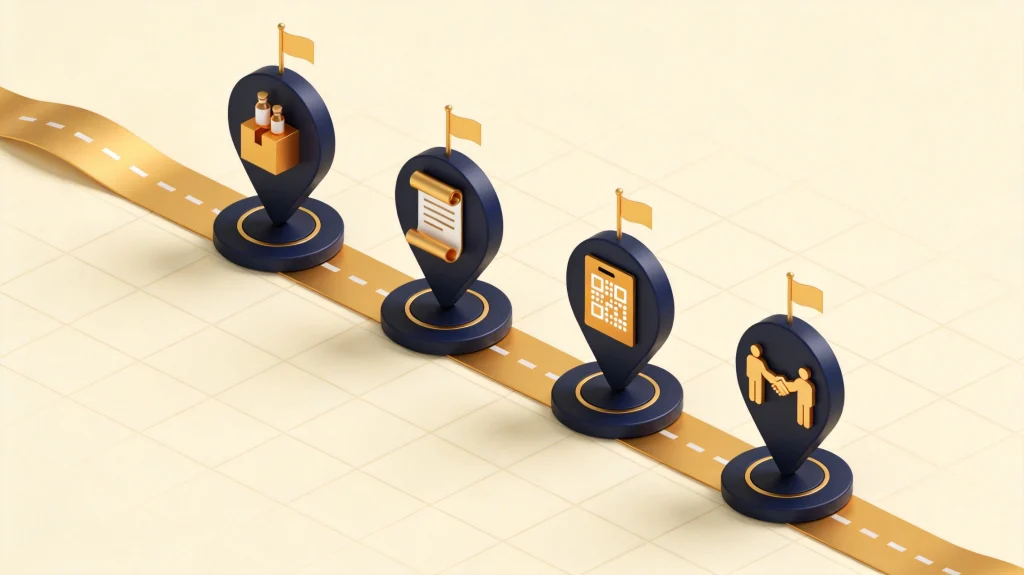
Samples: decide the route now
You have two options for getting samples into the show:
Option A: Ship through the official exhibition logistics channel. FHC designates a forwarder each year for exhibition goods. This is the standard route and works for most non-perishable products. You ship to a bonded warehouse in Shanghai, the forwarder handles temporary import filing under exhibition procedures, and samples are delivered to your stand. Perishable and chilled products need a refrigerated plan — confirm cold chain capability with the designated forwarder now, not three weeks from now.
Option B: Hand-carry. This looks simple but is not. Mainland China does not accept ATA Carnets for consumable food samples. Meat, dairy, aquatic products, and certain fruit and vegetables are subject to strict quarantine and import licensing requirements regardless of quantity or "sample" status. If you hand-carry, you are technically importing, and you may be stopped at customs. For shelf-stable, processed food in small quantities, this is usually low risk, but know the rules for your specific category before you pack.
Check the show manual (available from the FHC organisers' portal) for sample filing deadlines. Missing the filing window is the number one reason samples do not arrive on stands.
Chinese business cards — not English-only

Print bilingual cards before you leave. On the Chinese side:
- A Chinese name (get a native speaker to choose one that sounds reasonable — do not trust Google Translate)
- A Chinese title (e.g., 出口经理 for Export Manager)
- Your company name in Chinese (get this from your distributor or a translator, not a machine)
- A WeChat QR code printed on the card
Without WeChat, you are asking the buyer to work on your terms. That does not work in China. Every serious Chinese buyer uses WeChat as their primary business communication tool. If you leave the show without adding a contact on WeChat, you have almost certainly lost them.
Chinese label review — do it now, not at the show.
FHC rules require imported food on display to have compliant Chinese labelling if it is intended for tasting or commercial demonstration. Even samples that are not for sale can trigger label compliance questions from visiting regulators, and more importantly, a sloppy or non-existent Chinese label signals to buyers that you are not serious about the market.
Have your Chinese label draft reviewed against GB 7718-2025 before the show. The new standard takes effect in March 2027 but is already the reference point buyers and distributors expect. Two things to check specifically:
- Remove any "zero additives" (零添加) or "preservative-free" (无防腐剂) claims. These are banned under GB 7718-2025, and a label carrying such claims will be flagged immediately by any knowledgeable distributor as non-compliant.
- Ensure allergens, net content, country of origin, and Chinese importer information are formatted correctly.
If you do not yet have an appointed Chinese importer, you can use your own company's China contact or leave the importer field blank with a note — but the rest of the label needs to be compliant. For additive specifics, see our GB 2760 additive check guide.
Pre-book meetings before you arrive
The organisers run structured matchmaking sessions with buyers from major retail and foodservice chains — Sam's Club, Yonghui, Aldi China, Metro China, Lawson, Hema, and others. Register for these sessions the moment they open; slots fill fast.
Separately, reach out directly to:
- Your existing contacts in China. Ask, "Will you be at FHC? Can we book 15 minutes at our booth or yours?"
- Distributors you have been in conversation with. FHC week is the single best excuse to get a face-to-face meeting.
- Import agents you have been introduced to. A meeting at the show is worth ten emails.
Do not rely on walk-up traffic. The exhibitors who book 20+ qualified meetings during FHC start scheduling them in September.
Two Weeks Before: Buyer Intelligence
Write down who you are actually meeting.g
If two weeks before the show your meeting list is empty, you are not ready. Build it now.
FHC's buyer base spans multiple channels, and different buyers need different conversations:
- Importers and distributors: Want exclusive terms, margin structure, marketing support, shelf-life data, and compliance documentation.
- Supermarket and hypermarket chains (Sam's, Yonghui, Hema, Ole', City'super): Want SKU-level pricing, minimum order volumes, supply capacity, and proven sales data in other markets.
- E-commerce platforms (Tmall Global, JD Worldwide, Douyin): Cross-border e-commerce has different registration requirements than general trade; know which model you are prepared for.
- Foodservice and HORECA buyers (hotels, restaurant groups, bakery chains): Want bulk pack formats, consistent supply, and often customisation.
- Regional dealers (smaller distributors covering specific provinces): May be more interested in mixed containers and lower MOQs.
A specialty olive oil and a frozen dim sum brand do not need the same meetings. Decide which two channels are your priority, and tailor your conversations accordingly.
Competitor reconnaissance — one hour well spent
Pull up the FHC floor plan. Identify:
- Which direct competitors are exhibiting, and in which halls
- Which country pavilions carry competing products from other origins
- What positioning they are using on their stand (premium? organic? price-driven? origin-story?)
- Whether they are launching new products or packaging formats at the show
Walk the relevant competitor stands in the first two hours of day one — before you get pulled into meetings. You will learn more in that hour than from three months of websites.
One Week Before: Logistics Confirmation
- Confirm booth setup time and entrance pass collection. Know which hall, which stand number, and what time you can access the stand for build-up.
- Confirm sample delivery address and on-site contact. Make sure your samples have arrived and are being held for you.
- Confirm hotel and transport. SNIEC in Pudong is not within walking distance of most popular hotels; book a hotel near the venue or on Line 7/Line 2 metro. Pudong traffic during FHC is severe — allow 45 minutes minimum from Puxi.
- Confirm booth staffing at all times. An unmanned stand is wasted money. Have a rota that covers opening to closing, with breaks scheduled.
- Download WeChat and set up your profile if you have not already. Print cards with your QR code. Have a QR code for your company WeChat Official Account or your LinkedIn on the stand as well.
- Prepare your digital assets in both English and Chinese — company profile, product sheets, certificates. Have them ready to send via WeChat during or immediately after each conversation.
What Not to Say on the Stand
A few things that lose buyers within the first minute: These are just the first-impression killers; the full list of on-booth errors that cost exhibitors real pipeline goes well beyond the first minute, and we unpack them in our guide to the mistakes European brands make at Asian food shows.
Don't lead with MOQ. The first question a buyer asks is not "what is your minimum?" It is "what makes this different, and who is already buying it?" If you open with MOQ, you have answered a question they have not asked yet. Lead with your product story, your differentiation, your price segment, and your existing market presence. MOQ comes up when the buyer is interested.
Don't give everyone the same pitch. The importer looking for exclusive national distribution needs a different conversation than the retail buyer scouting a promotional SKU for their imported food section. Ask which channel they are in before you launch into your pitch. "Are you looking at distribution, retail, or foodservice?" is a better opener than "let me tell you about our company."
Don't hand catalogues to everyone. A 24-page full-colour catalogue that gets thrown away at the next stand is a waste of printing and a missed opportunity. Ask first: "Would it be useful if I sent you a one-page product sheet on this specific item after the show?" This does two things: it qualifies their interest, and it gives you a reason to follow up with a specific piece of content rather than a generic "nice to meet you."
Don't badmouth competitors. Buyers know who the other players are. If you are asked about a competitor, acknowledge them neutrally and move to your own differentiation. Trash-talking signals insecurity.
Every Evening During the Show: The Highest-ROI Activity
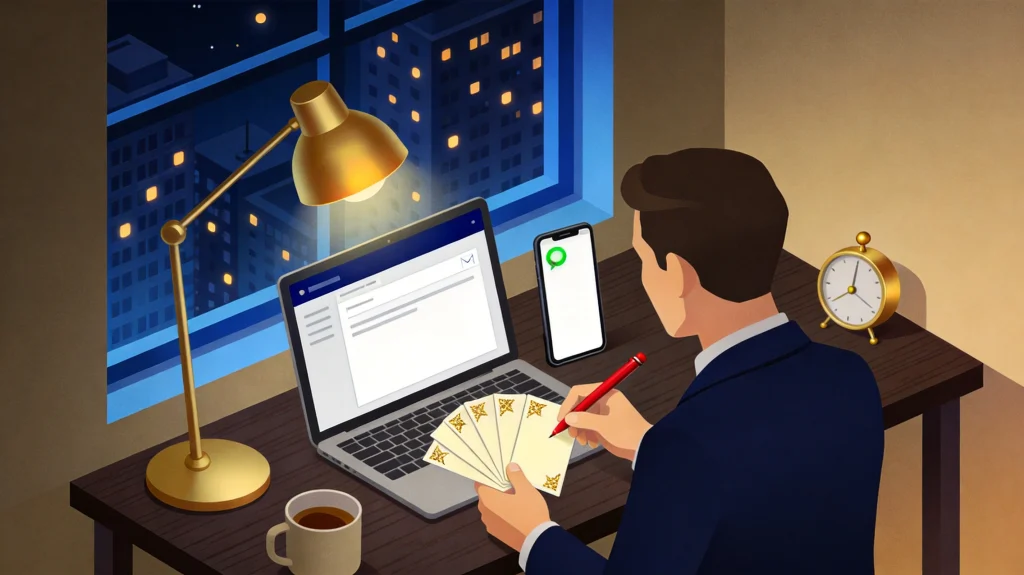
This is the single most important thing you do during FHC week. Most exhibitors do not do it. That is why they go home with two leads.
Annotate every business card within an hour of the meeting
Do not wait until the end of the show, and do not trust your memory. After each conversation, write on the back of the card (or in a phone note):
- Which channel they are in (import/distribution/retail/e-commerce/HORECA)
- What current brands they carry (especially competitors)
- What their specific pain point or interest was ("looking for organic EVOO below €8/bottle" / "needs GACC-registered supplier for frozen berries")
- What you promised to send them
- The next step (e.g., "send spec sheet by Friday," "arrange WeChat intro with our existing Shanghai buyer")
By day three of the show, you will not remember which card belonged to which conversation. Annotating immediately takes ten seconds per card.
Follow up within 24 hours — not after you get home
Send a short WeChat message or email the same evening:
Hi [Name], good meeting you today at FHC. You mentioned [specific thing — the Sam's Club listing, the GACC question, the organic SKU they were interested in]. I'll send you [the specific thing — spec sheet, certificate, intro to our existing distributor] by [specific day]. Let's stay in touch.
Not a catalogue. Not a company introduction. A specific reference to a specific thing they said, and a specific commitment. This one message — sent within 24 hours — gets replied to at a dramatically higher rate than the generic follow-up email sent a week after the show ends.
That first evening message is Touch 1 of what we call the 48-hour golden window and the full three-touch cadence — Touch 2 at seven days with a value-add piece of content, Touch 3 at 21 days with a direct meeting ask, before moving quiet contacts to a quarterly list.
Log it in a simple tracker.
A spreadsheet is fine: name, company, channel, product interest, pain point, next step, follow-up date. Share it with anyone else on your team who is at the show. Without a log, the show ends, the cards pile up, and the leads dissolve. For a deeper look at follow-up cadence, see our trade show follow-up guide.
FHC vs ProWine vs SIAL Shanghai: Which Show Matters?
Not every China food show is the same. Here is how they differ, and which one is worth your time depending on what you sell:
FHC Shanghai — November (10–12 Nov 2026). Covers all food and beverage categories: imported, domestic, retail, HORECA. Best for importers, distributors, supermarket/hypermarket chains, foodservice buyers. This is the broadest buyer audience of the four.
ProWine Shanghai — runs concurrently with FHC at SNIEC, same week. Wine and spirits only. Best for wine and spirit importers, sommeliers, and HORECA beverage programs. If you are a wine-only producer, this is your show.
SIAL Shanghai (SIAL Meets China) — May annually. Focused on food innovation and new product launches. Best for trend-focused buyers, newer categories, and SME exhibitors launching something new. May timing means it does not overlap with the FHC/ProWine week.
ProWine Shenzhen / HOFEX Hong Kong — various dates. Regional shows focused on South China and the Greater Bay Area. Worth considering if South China is a priority market and you already have a national distributor.
FHC and ProWine Shanghai run at the same venue, same week in November. If your product spans both food and wine (e.g., a wine vinegar producer, a fortified wine, a gourmet food product that crosses categories), FHC/ProWine week is the densest concentration of buyers in the Asian calendar. You can walk between the two halls without leaving the venue.
If you are purely wine and spirits, ProWine Shanghai is the better stand; if you carry food as well, FHC gives you access to the full buyer universe.
If You Are Not Exhibiting
You do not need a booth to make FHC week productive. Three things you can do as a visitor that often generate more qualified conversations than a stand:
Walk the floor with a plan. Identify the 20 booths you want to visit — distributors, potential partners, competing brands, and category buyers. Have a 30-second introduction ready. Do not collect brochures; collect business cards and WeChat contacts from people you have actual conversations with.
Book dinners with existing contacts. The entire Asian food trade is in Shanghai during FHC week. A dinner with a current importer, a casual coffee with a distributor you have been emailing, or a group dinner with multiple contacts is often more productive than three days of booth duty.
Walk the retail market. Visit Ole', City'super, Hema, Sam's Club, and a few specialty import retailers in Shanghai. See which products sit on which shelves, at what price points, with what positioning. Take photos. This gives you a concrete answer when a buyer asks, " What do you know about the China market?" — you can describe what you saw on the shelf. That is more credible than any secondhand report.
The One Thing That Matters
FHC is not the event. The preparation is the event.
The exhibitors who book meetings before they arrive, who review their labels before they print them, who annotate cards during the show, and who follow up within 24 hours are the ones who go home with a pipeline. The ones who show up with a booth and a catalogue and hope for the best go home with a stack of unread business cards and a follow-up list that never gets sent.
The booth fee is the entry ticket. The checklist is what makes it worth paying.
If you are preparing for FHC Shanghai 2026 and want a pre-show review — covering sample logistics, Chinese label compliance, or buyer meeting strategy — send us your show plan. We can do a quick gap assessment, flag the compliance issues that will come up at the show, and help you make sure the time and money you invest in Shanghai actually produces meetings.
About Specit Consulting: We help food and beverage exporters enter and grow across 13 Asian markets — China (GACC registration, GB 2760 additive compliance, GB 7718 labelling, import clearance, distributor sourcing at FHC and other trade shows), Japan (MHLW notifications), Korea (MFDS registration), Southeast Asia (Indonesia BPOM, Thailand FDA, Singapore SFA, Vietnam MOH, Malaysia, Philippines), India (FSSAI), and the Middle East (SFDA, Dubai Municipality). We handle regulatory compliance, label review, qualified importer matching, and on-ground distributor introductions. We do not do freight forwarding, and we are not an importer of record — we are the people who make sure your products clear customs and your show investment produces results.
Disclaimer: This article reflects FHC Shanghai 2026 show information and pre-show preparation practices based on our on-ground experience assisting European food and beverage exhibitors at FHC, ProWine, SIAL, and other Asian trade shows as of October 2026. Show dates, venue details, exhibition logistics procedures, and matchmaking session registration processes should be verified against the official FHC Shanghai website (fhcchina.com) and the official show manual issued by the organisers. Label compliance requirements are based on GB 7718-2025 (effective March 2027); always verify current standards against the official CFSA database or consult a qualified compliance advisor before printing labels or shipping product. ATA Carnet rules and customs treatment of samples are subject to change; confirm with your forwarder and the designated exhibition logistics provider. Client anecdotes are anonymised. This content is for general information only and does not constitute legal advice.
Further Reading
- Wine & Spirits Import in Asia: A Small Winery Guide — essential pre-reading for wine and spirits exhibitors planning FHC meetings with Asian importers.
- FHC Shanghai 2026: Two Weeks Before the Show — Buyer Outreach, Sample Clearance and Lead Grading
- Trade Show Follow-Up 2026: Why 80 Cards Become 5 Calls
- China GB 2760: How to Check If Your Food Additive Is Allowed
- GACC Rejected a Client's Registration — What Went Wrong
- Exporting Food to China: The Registration Landscape in 2026
- The Future of Imported Wine in Asia: A 2026-2030 Outlook
- 5 Questions to Qualify Asian Food Importers at Trade Shows
FAQ
When and where is FHC Shanghai 2026?
FHC Shanghai 2026 runs 10–12 November 2026 at the Shanghai New International Expo Centre (SNIEC) in Pudong, Shanghai. ProWine Shanghai runs concurrently at the same venue.
Can I hand-carry food samples into China for FHC? Can I hand-carry food samples into China for FHC?
Technically,y you can for small quantities of shelf-stable processed food, but there are real risks. China does not accept ATA Carnets for consumable food samples. Meat, dairy, aquatic products, and certain fruits/vegetables require quarantine and import licences regardless of "sample" status. The safe route is to ship samples through the official exhibition logistics channel.
Do I need a Chinese label on products displayed at FHC?
If products are displayed for tasting or commercial demonstration, FHC rules expect compliant Chinese labelling. Even when not strictly enforced, a missing or non-compliant Chinese label signals to distributors that you are not serious about the market. Get your label reviewed against GB 7718-2025 before the show.
Can I still use "zero additives" or "preservative-free" on Chinese labels?
No. GB 7718-2025, taking effect in March 2027, explicitly prohibits "零添加" (zero additives), "无防腐剂" (preservative-free), and similar claims. Any Chinese label carrying these claims will be flagged as non-compliant by distributors and regulators.
How far in advance should I start preparing for FHC?
Four weeks minimum for basic logistics and sample shipping, but the most productive exhibitors start pre-booking buyer meetings and arranging distributor dinners in September — 8–10 weeks before the show. The matchmaking sessions with major retail chains fill up fast.
Should I exhibit at FHC or ProWine Shanghai?
If you are purely wine and spirits, ProWine Shanghai is the better fit. If you carry food products (olive oil, dairy, confectionery, packaged goods) or span both food and wine, FHC gives you access to the full food buyer universe. They run concurrently in the same venue, so you can visit both halls even if you only exhibit at one.
Do I need a WeChat account to do business at FHC?
Yes. WeChat is the primary business communication tool in China. Every serious Chinese buyer will want to add you on WeChat during or after a conversation. Without it, you are forcing them to communicate on your terms, which simply does not work in this market. Print your WeChat QR code on your business cards.
What is the single most important thing to do during FHC week?
Follow up within 24 hours of every conversation. Annotate cards immediately after each meeting, send a specific (non-generic) WeChat message or email the same evening referencing something specific the person said, and log the next step. Exhibitors who do this consistently get more meetings out of the show dramatically than those who wait until they get home.
Is FHC worth attending if I do not take a booth?
Yes. Walking the floor with a targeted list, booking dinners with existing contacts during the show week, and visiting Shanghai retail to see shelf positioning can produce more qualified leads than an unprepared booth. Plan specific meetings rather than just turning up and walking.
Need help navigating your market entry?
We've helped food exporters across 10+ countries enter 13 Asian markets. Get a free initial assessment based on public data — delivered in 3 working days.
Get Your Free AssessmentContinue Reading
▶Japan Food Distribution: HORECA vs Retail vs Online Channel Strategy
▶GACC Registration: 5 Mistakes That Get Your China Filing Rejected
Questions about entering the Asian market?
Chat with us on WhatsApp →