


2 October, 2026 | Shanghai, China
For craft food brands looking at China, cross-border e-commerce (CBEC) remains the fastest route to market — no Chinese entity required, no general-trade import licence, and a tax structure that cuts the effective VAT bill by almost a third. But "no entity" does not mean "no rules." The 2026 regulatory environment has tightened in specific areas, and the platforms themselves have raised their qualification bars. This article covers what qualifies, what doesn't, and where you cannot cut corners. For a broader comparison of China against Japan, Korea, and Southeast Asia as first Asian markets, see our market prioritisation framework.
Why CBEC Is Still the Fastest Path in 2026
The structural advantage of CBEC is simple. Under the 1210 bonded-warehouse model, products are shipped in bulk to a bonded warehouse inside a Chinese comprehensive pilot zone and stored there without immediate duty payment. When a consumer places an order, the platform pushes order, payment, and logistics data ("three-document matching") to China Customs; the parcel clears individually and ships domestically to the consumer's door in two to five days.

The tax treatment is the key differentiator. For transactions within the single-purchase limit of RMB 5,000 (roughly USD 700) and the annual per-person limit of RMB 26,000, the tariff is 0%, and import VAT and any consumption tax are levied at 70% of the statutory rate. For a food product carrying the standard 13% VAT and no consumption tax — think olive oil, biscuits, chocolate, coffee — the effective VAT under CBEC is approximately 9.1%. For wine and spirits, which also carry consumption tax, the math is a little more involved, but the combined burden is still materially below general-trade levels. Shipments with calculated CBEC tax below RMB 50 are waived entirely — a useful break for low-value samples and single-unit orders.
Compare that to general trade: a Chinese importer of record, a food business licence, full MFN tariff plus full VAT plus (where applicable) consumption tax, GACC factory registration as a hard prerequisite, Chinese-language physical labels on every unit, and a timeline measured in months rather than weeks. For a craft brand testing the market, CBEC removes most of the structural barriers.
It is not the only lane. The 9610 direct-mail model ships directly from an overseas warehouse after each order, with no China-side inventory, but delivery takes seven to fifteen days and per-unit logistics costs are higher. Most brands we work with end up using both: 1210 for proven best-sellers that need fast delivery, 9610 for long-tail SKUs and new products being tested.
The 2025–2026 Policy Updates You Need to Know
Three changes matter for food brands.
The Positive List is steady, not expanding for food in 2026. The current CBEC retail import list contains 1,476 eight-digit HS codes — a figure set by the March 2022 revision that added 29 items and removed one. Occasional industry rumours about a major expansion have not materialised in 2025 or 2026. What you will see is the June 2025 CBEC tax adjustment that cut average comprehensive tax rates across 147 tariff lines (most prominently infant formula and health supplements), and a new pre-arrival digital-certification requirement for 27 categories including dairy and functional beverages. Food brands outside those 27 categories are unaffected, but the direction of travel is clear: Customs wants data earlier and more often.
Platform requirements tightened materially. In September 2026, Tmall Global upgraded its "Global Origin Traceability" program, requiring participating food sellers to provide proof of genuine overseas circulation — either a one-take video of the product on shelves in a recognised overseas retailer or pharmacy, or verifiable screenshots from a reputable overseas e-commerce site. The platform also extended compliance review into marketing copy: no claims implying disease treatment, prevention or diagnosis; no efficacy claims without a scientific basis; no user-review or test-data citations creating misleading performance expectations. Tmall Global and JD Worldwide now expect food sellers to work with a domestic operating partner holding a Chinese food business licence and able to sign a cross-border retail imported food entrusted operation agreement. JD Worldwide has expanded cold-chain bonded operations through JD Logistics and is the preferred home for temperature-controlled lines such as chocolate, cheese and frozen seafood.
Customs scrutiny increased. Origin verification and full-chain traceability have become enforcement priorities. "Transit origin washing" — routing products through a third country to obscure true origin or claim an unearned FTA preference — is a specific enforcement target. Cold stores handling land-animal-derived foods and aquatic products now also need GACC registration even for CBEC-bound goods, following GACC Announcement No. 27 of March 2026.
Which Platforms Should a Craft Food Brand Use?

Tmall Global — the largest CBEC platform by food and health GMV. Highest traffic, highest bar. Best for brands with established overseas operations, a domestic operating partner in place, and enough marketing budget to compete for discovery. Not a launch-and-forget storefront; plan ongoing content investment.
JD Worldwide (JINGDONG Cross-Border) — strong proprietary logistics, including cold-chain bonded capacity and close to 200 overseas, bonded and direct-shipping warehouses across 25 markets by JD Logistics' own count. Best suited to temperature-controlled products and brands valuing fulfilment reliability over the absolute highest traffic. Its "10 Billion GigaGrowth Plan", launched in July 2025, is actively recruiting overseas food brands.
Douyin Global — the fastest-growing CBEC channel by gross-add in 2025–2026, though food-category requirements are still maturing. Best for brands with short-video and livestream commerce capability. A product that looks good on camera and can carry a 60-second demo converts far better here than a commodity pantry staple.
Kaola — historically strong in maternity, baby, and beauty; less critical for most craft food brands but worth evaluating if your product sits near infant formula or health supplements.
Xiaohongshu (RED) — not a transactional CBEC platform, but the single most important discovery channel for premium imported food among Chinese consumers aged 20–35. Treat it as marketing, not sales; the common pattern is to build awareness and reviews on Xiaohongshu and direct consumers to Tmall Global or JD Worldwide for purchase.
The practical reality: most craft brands need a domestic operating partner (TP) — a Chinese company that holds the required licences, operates the store, handles the platform relationship, and often runs bonded-warehouse receiving and returns. This is not a legal entity you incorporate; it is a commercial partner you contract.
Products That Qualify — and Don't
Qualifies (with conditions):
- Packaged snacks, confectionery, biscuits, roasted nuts, coffee, tea
- Olive oil, vegetable oils, sauces, condiments, vinegar, honey
- Packaged frozen seafood (from GACC-registered overseas processors and cold stores)
- Chocolate and confectionery (including temperature-controlled shipments via cold-chain logistics)
- Wine and spirits (subject to consumption tax and to the platform's stricter liquor-category entry requirements)
- Packaged health supplements and functional foods (within the Positive List; note the stricter pre-arrival certification rules for 27 specific categories)
Does not qualify under current rules:
- Fresh meat and most meat products (meat requires official-recommendation GACC registration under Decree 280, and is outside the CBEC Positive List)
- Sterilized liquid milk and most dairy products (infant formula is the main exception, with its own heavy compliance burden)
- Egg yolk and egg-yolk-based products (explicitly excluded from the Positive List; most mayonnaise and egg-based dressings fall here in practice)
- Edible bird's nest (except commercially sterile canned bird's nest, and even that is tightly restricted)
- Fresh fruit and fresh vegetables (require orchard or packing-house GACC registration under general trade, and are outside CBEC)
The Positive List changes in small, infrequent updates. Before committing to a product line, verify the specific eight-digit HS code on the China International Trade Single Window, or ask your TP to do it. We have seen a craft biscuit brand ship a first container to a bonded warehouse only to discover one SKU sat one HS digit outside the Positive List; the goods had to be re-exported at the brand's cost.
The Compliance Shortcuts (and Where You Can't Cut Corners)
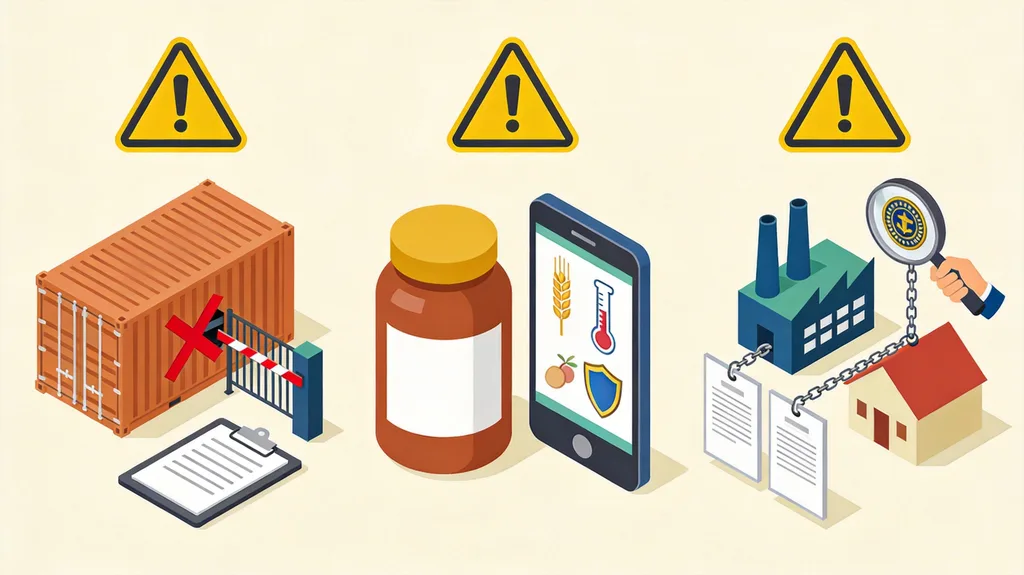
The shortcut that works: GACC factory registration is not legally required for CBEC — yet. Under Article 30 of GACC Decree 280 (effective 1 June 2026), CBEC retail imports "shall be handled in accordance with relevant provisions" — language that leaves room for future rule changes but does not currently impose the Decree 280 registration regime on CBEC sellers. General-trade importers must register through CIFER; CBEC sellers, today, do not.
The shortcut that does not work: treating platform listing as optional. Tmall Global, JD Worldwide, and Douyin Global all require GACC factory registration as an internal listing condition for food categories, regardless of legal status. The platforms will not carry food SKUs without a registration number on file, because a future rule change removing the exemption would otherwise force them to delist thousands of listings overnight. The legal exemption and the commercial reality point in different directions. Get registered. Registration is free through the official CIFER portal; budget three to four weeks for self-registration, and watch for fraudulent look-alike websites charging for the same service.
You can skip the physical Chinese back label — but not the Chinese electronic information. This is the single most common point of confusion for brands coming from general trade. CBEC goods are classified as personal-use items and do not need a printed Chinese label physically affixed to the bottle or outer carton — a major cost saving versus general trade, where GB 7718-compliant Chinese labels are mandatory, and translation errors are a leading cause of detention. What you do need is complete Chinese-language electronic product information on your platform store page: ingredients (with allergen declarations), net content, country of origin, producer or bottler name, date of minimum durability or use-by date, storage conditions, and usage instructions or warnings. Have this translated by a compliance professional, not by your TP's intern; ingredient-name errors are the most frequent reason Tmall Global rejects product pages.
Can't cut corners on:
- Third-party safety testing. Tmall Global and JD Worldwide now require internationally recognised third-party test reports covering pesticide residues, heavy metals and microbiological indicators. Reports must come from a laboratory the platform recognises — SGS, Intertek, Bureau Veritas and Eurofins are universally accepted.
- Origin documentation. Full-chain traceability evidence — certificate of origin, bills of lading, production-batch records — is now required to substantiate any country-of-origin claim on the product page.
- Cold-chain registration. If you sell frozen aquatic products or temperature-controlled foods of animal origin, your overseas cold store must now be GACC-registered as well as your factory. This is a 2026 change; some TPs are still catching on.
Cost & Timeline: First Six Months
| Item | Estimated Cost (USD) |
|---|---|
| GACC factory registration | $0 government fee; $1,500–4,000 if you use a compliance agent (recommended for first-time filers) |
| Domestic operating partner (TP) | Negotiable; expect 5–15% commission on GMV or $1,500–5,000 monthly retainer, often with a six-month minimum |
| First bonded-warehouse inventory shipment | $5,000–15,000 ex-works depending on SKU count and MOQ; sea freight adds $1,500–3,500 per 20ft container to a China east-coast port |
| Bonded-warehouse storage | $500–1,500 per month per 10 CBM for food-grade ambient storage; cold-chain runs 2–3x higher |
| Platform deposits and entry fees | $5,000–15,000 refundable deposit per platform, plus category-specific annual fees where applicable |
| Third-party testing | $500–1,500 per SKU, depending on test scope |
| Initial Xiaohongshu content seeding | $2,000–8,000 for a credible three-month launch campaign |
| Realistic total, first six months | $15,000–35,000 for a focused three-to-five-SKU launch on one primary platform |
Timeline from decision to launch:
- GACC factory registration: 3–4 weeks for a self-registration food category; 8–16 weeks for official-recommendation categories.
- TP onboarding and platform store opening: 3–6 weeks.
- Production, international freight and bonded-warehouse intake: 4–8 weeks by sea, 2–3 weeks by air.
- Product-page setup, Chinese content review and testing reports submitted: 2 weeks.
- Realistic first cleared sale: 3–5 months for a standard packaged-food launch on Tmall Global or JD Worldwide.
Two traps routinely catch first-time CBEC entrants. First, stocking out on a winning SKU: restocking a bonded warehouse from distant origins takes four to eight weeks door-to-door, and a stockout during a platform promotion damages your search ranking for months. Second, treating returns as an afterthought: CBEC return rates on food typically run 5–10%, and goods returned within 30 days qualify for a CBEC tax refund through the Single Window — but only if your TP has set up the workflow.
Next Step
CBEC is not a shortcut around compliance; it is a different compliance pathway — lighter on entry barriers, but specific about what it demands on the platform page, on traceability, and on partner qualification. The brands that succeed treat it as a structured market entry, not a side experiment.
If you are planning a China CBEC launch in the next six months, contact us for a free CBEC feasibility check. We will verify whether your product sits cleanly on the Positive List, identify the right platform and domestic-partner profile for your category, and outline the realistic timeline and budget for your first six months — including a red/yellow/green read on whether your SKUs are likely to trip at any of the registration, testing, or content-review gates.
Frequently Asked Questions
Do I need a Chinese entity to sell food via CBEC?
No, that is the core advantage. Under the 1210 bonded model, you ship bulk to a bonded zone; a Chinese domestic operating partner (the platform merchant of record) handles listing, customs clearance, and last-mile. You do not need to set up a WFOE, obtain a general-trade food import licence, or file product-formula registration for most categories.
Is GACC Decree 280 factory registration required for CBEC?
Legally, CBEC falls under a separate framework, and Decree 280 does not explicitly mandate GACC registration for CBEC goods. Commercially, every major platform (Tmall Global, JD Worldwide, Douyin Global) requires GACC registration as a condition for listing food. Get registered; a legal exemption doesn't help if platforms will not list you. For general food, this takes 3–4 weeks on a clean file.
What is the effective tax rate on food sold through CBEC?
Within the RMB 5,000 single-transaction and RMB 26,000 annual-buyer limits, the tariff is 0%, and import VAT is levied at 70% of the statutory rate. For most food 13% VAT, this gives an effective VAT of approximately 9.1% with no additional consumption tax. Alcohol has different math because of consumption tax — expect 20–25% effective depending on category.
Do CBEC products need a Chinese-language label on the bottle?
No — that is a key difference from general trade. CBEC products do not need a printed or stickered Simplified Chinese label on the physical packaging. You must, however, present Chinese-language product information on the platform listing page: ingredients, net weight, allergens, country of origin, producer details, importer/agent, storage conditions, and usage warnings before checkout.
What is a realistic budget for the first six months on CBEC?
Plan USD15,000-35,000 all-in. GACC registration is free of government fees, but most brands use an agent. Domestic operating partners work on retainer, commission, or hybrid. First inventory shipment into a bonded warehouse is usually the largest cash outlay at USD 5,000–15,000; expect bonded storage of USD 500–1,500/month and third-party test reports of USD 500–1,500 per SKU family. First sale is realistic 3- 5 months from decision.
Disclaimer: This article is provided for general informational purposes only and does not constitute professional compliance, legal, tax, or customs advice. Regulations, platform policies, and HS-code classifications change frequently; readers should verify current requirements with a qualified advisor before shipping. For tailored compliance and registration solutions, contact us at kevin@specitconsulting.com.
Need help navigating your market entry?
We've helped food exporters across 10+ countries enter 13 Asian markets. Get a free initial assessment based on public data — delivered in 3 working days.
Get Your Free AssessmentContinue Reading
▶Exporting Food to Asia in 2026: A Market Prioritization Framework for Craft Food & Beverage Brands
▶Food Import Detentions in Asia: 7 Real Cases and How to Avoid Them (2026)
▶Japan Food Import Requirements: A 6-Step Compliance Guide for EU Exporters (2026)
Questions about entering the Asian market?
Chat with us on WhatsApp →