

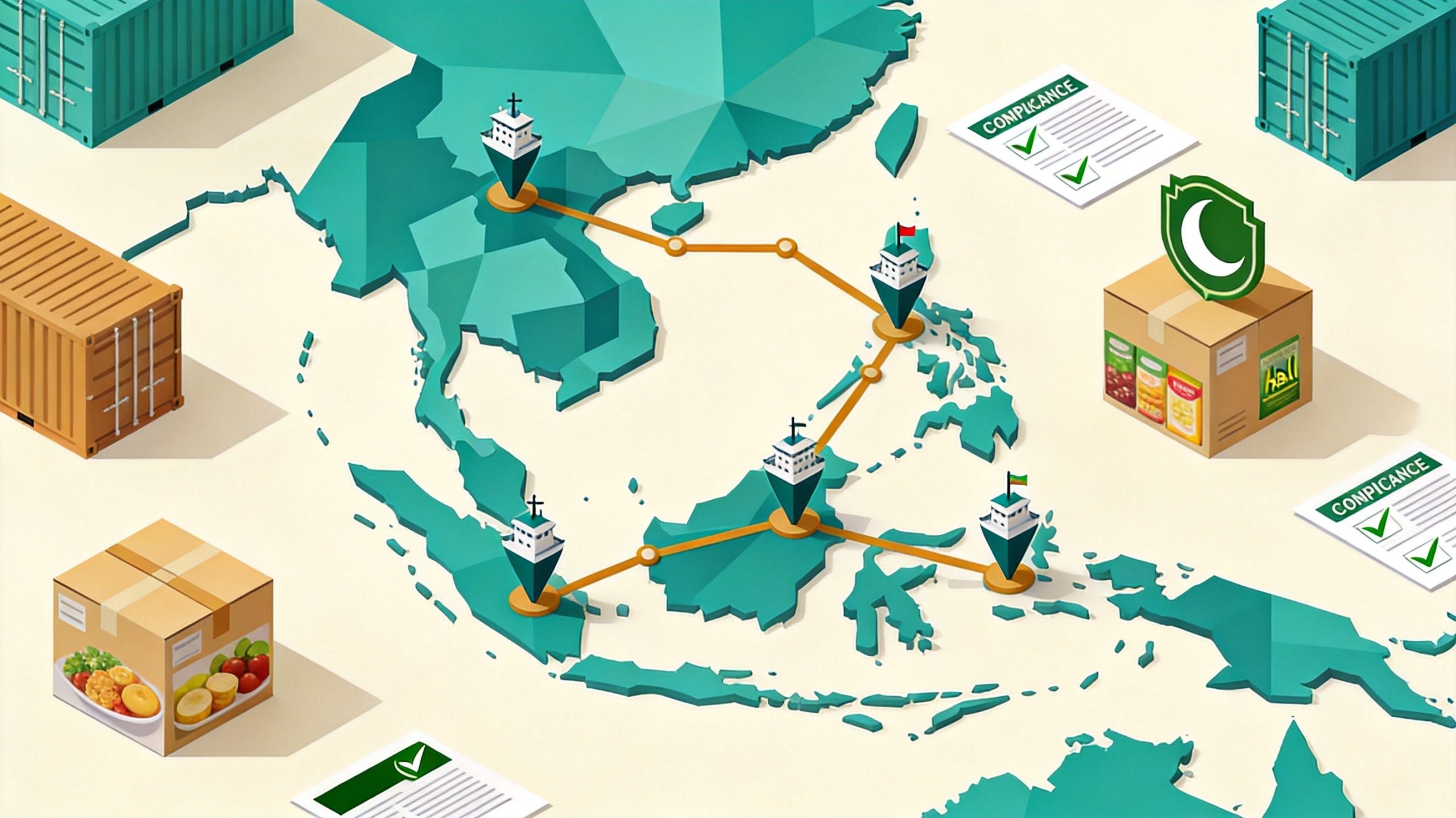
Export food to Southeast Asia, and you quickly discover it is not one market — it is six major ones. Singapore, Thailand, Vietnam, Malaysia, Indonesia and the Philippines each run their own regulator, registration system, labelling rules and language requirements. What is legal in one can get your shipment destroyed in the next.
But under RCEP and the broader ASEAN trade framework, the region is becoming accessible as a whole for European producers — if you get the sequencing right.
Why Southeast Asia, Why Now
When you export food to Southeast Asia, you are targeting roughly 660 million people and a middle class that is expanding faster than almost anywhere else. By 2030, Indonesia alone is projected to add an estimated 90 million middle-class consumers. Income growth is translating directly into demand for imported food: dairy, processed foods, chocolate, olive oil, wine, craft spirits, and premium packaged goods are all growing at 6–12 per cent annually across the region.
RCEP has been in force since 2022, and tariff schedules are continuing to phase down — a useful backdrop when you export food to Southeast Asia from outside the region. By full implementation, China will apply zero tariffs to 92.8 per cent of agricultural products from ASEAN, and ASEAN members are reciprocating for each other and for non-ASEAN RCEP partners including Japan, Korea, Australia and New Zealand. For European producers, the tariff picture is less direct — the EU does not have region-wide FTAs with ASEAN, though Singapore and Vietnam have bilateral agreements — but tariffs are no longer the main barrier. The real gate is registration and compliance.
The six major Southeast Asian markets differ dramatically in how hard they are to enter. Here is a compliance roadmap for European producers who want to export food to Southeast Asia without wasting a year on the wrong market.
Market Priority Ranking
Tier 1: Singapore — The Gateway

Singapore is the easiest Southeast Asian market to enter and the natural starting point for any European producer looking to export food to Southeast Asia.
English is the working language of regulation and retail. The Singapore Food Agency (SFA) runs a transparent system: licensed importers register with SFA, obtain an import licence, and apply for cargo clearance through TradeNet per shipment. There is no GACC-style factory registration, no pre-market product approval for most ambient food categories, and no mandatory local-language labelling requirement — English is sufficient.
Singapore's limitation is its domestic size: 5.9 million people. Its real value is as a regional distribution hub. A Singapore-based importer with regional logistics can move product into Malaysia, Thailand, Indonesia and Vietnam from a single bonded warehouse. A Singapore track record also makes distributors in harder markets more willing to take your brand seriously — they can see pricing, sell-through and consumer feedback without taking the first-mover risk themselves.
This is the market to enter first. Not because of the volume Singapore represents, but because it gives you a compliant foothold and a regional reference account for the rest of ASEAN.
Tier 2: Thailand, Vietnam, Malaysia — Transparent But Require Work
Thailand. The Thai FDA oversees food registration. Imported pre-packaged foods fall into one of four categories: specially controlled foods, standardised foods, foods requiring label approval, and general foods. Most shelf-stable European products fall into the general food or label-approval categories — a Thai-language label must be submitted and approved before import, but there is no lengthy factory registration. Thai-language labelling is mandatory. Alcohol requires additional licensing from the Excise Department. Registration typically takes two to four months depending on category.
Thailand's strength is its food-processing industry and tourism-driven HORECA channel. European products that slot into hotel restaurant supply, tourist-oriented retail, or modern trade (Tops, Villa Market, Gourmet Market) do well. Wine and spirits face steep excise taxes but have a meaningful on-trade presence in Bangkok and Phuket.
Vietnam. Vietnam is in a regulatory transition period. Decree 46/2025 (which would have introduced stricter pre-market approval) was paused in early 2026; Decree 15/2018 remains operative. Under the current rules, most pre-packaged foods follow the self-declaration pathway: submit a Vietnamese-language dossier and product test report, the authority archives and publishes it, and you can begin importing. No waiting for pre-approval. Registration requirements apply to health supplements, medical foods, and infant formula for children under 36 months.
This is a relatively permissive window. Expect it to tighten when the new food safety decree takes effect, currently projected for 2027. Vietnamese-language labelling is mandatory. Registration typically takes one to two months. European brands should take advantage of the current window to establish a presence before requirements harden.
Malaysia. Food imports must comply with MeSTI (Food Safety Industry Responsibility) requirements administered by the Ministry of Health. For products containing any animal-derived ingredients — including dairy, gelatin, certain flavourings and meat extracts — JAKIM Halal certification is mandatory. JAKIM's standards are among the strictest globally, recognised by over 80 foreign halal bodies. If your product contains no animal-derived ingredients and no alcohol, the pathway is considerably simpler: a food importer with a valid licence can bring in product under MeSTI compliance without halal certification.
Malay-language labelling is mandatory for retail products. Registration typically takes two to four months. Malaysia is the key ASEAN market for any brand seeking halal credibility — a JAKIM certificate is recognised across the Muslim-majority ASEAN markets and opens doors in the Middle East as well.
Tier 3: Indonesia — Long Timeline, Largest Payoff
Indonesia is the fourth most populous country in the world (278 million) and the largest economy in ASEAN. It is also the hardest Southeast Asian market to enter.
BPOM registration. All imported retail-packaged food must be registered with BPOM, the National Agency for Drug and Food Control. The process involves product classification, document review, laboratory testing, and a registration timeline that typically runs six to twelve months. The registration must be held by an Indonesian importer or a local entity.
Halal certification. From 17 October 2026, halal certification becomes mandatory for almost all food and beverage products sold in Indonesia under Law 33/2014 and the implementing regulations from BPJPH. This is a hard deadline — products without halal certification after that date cannot legally be sold at retail. Imported products have two routes: regular halal certification through the SIHALAL system (involving LPH inspection and MUI fatwa session), or Foreign Halal Certificate Registration (SHLN), a simplified pathway if your product already holds certification from a BPJPH-recognised foreign halal body. Many European halal certifiers are not yet BPJPH-recognised; verify this before you start.
Labelling. Indonesian-language labels are mandatory. Stickers are currently permitted for imported products, but the rules have tightened in recent years, and full printed Indonesian labelling is increasingly expected for major modern trade channels. Required information includes product name, full ingredient list, net content, manufacturer and importer details, BPOM registration number, and expiry date.
Indonesia is not a market to enter casually. The registration and halal timelines are long enough that you should begin the process in parallel with Singapore entry, not after — one of the biggest mistakes European producers make when they export food to Southeast Asia. By the time BPOM registration and halal certification come through — typically a year from kick-off — you will have a Singapore track record, regional references, and a better sense of pricing and positioning for the Indonesian consumer.
Watch List: The Philippines
The Philippines has a sizeable consumer market (115 million) with strong English-language familiarity and a growing middle class. But the FDA registration process is comparatively lengthy, and the penalties for non-compliance are severe: importing unregistered food can carry prison sentences of five to ten years and fines of up to PHP 5 million (approximately USD 90,000).
Food is classified as a "health product" requiring product notification or registration before import, and the importer must hold an FDA Licence to Operate. English and Filipino labelling are both accepted, making packaging compliance easier than for Thailand or Indonesia. Registration timelines and costs run three to six months — higher than Vietnam and Malaysia, lower than Indonesia.
The Philippines is worth considering after you have established Singapore and one Tier 2 market, rather than as a first-mover target when you export food to Southeast Asia for the first time.
Side-by-Side Comparison

| Market | Registration Timeline | Label Language | Halal Requirement | Compliance Cost |
|---|---|---|---|---|
| Singapore | 1–2 weeks | English | Voluntary | Low |
| Vietnam | 1–2 months (current self-declaration window) | Vietnamese | Voluntary | Low–Medium |
| Malaysia | 2–4 months | Malay | Mandatory for animal-derived products | Medium |
| Thailand | 2–4 months | Thai | Voluntary | Medium |
| Philippines | 3–6 months | English / Filipino | Voluntary | Medium–High |
| Indonesia | 6–12 months | Indonesian | Mandatory from 17 Oct 2026 | High |
Entry Sequence
The right sequence to export food to Southeast Asia is not "launch everywhere at once." It is a deliberate progression.
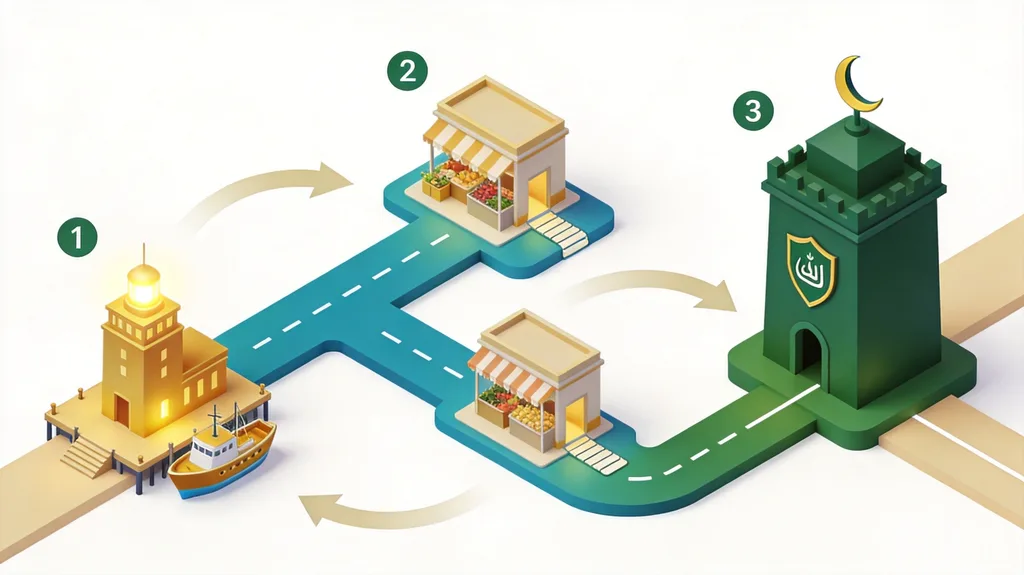
Step 1: Start with Singapore. Use it as your testimonial market and regional hub. The timeline is short, the cost is low, the language is English, and a Singapore distributor can serve as your springboard into Malaysia and Thailand. Aim for a distributor with regional logistics capability rather than one that covers Singapore only.
Step 2: Add Malaysia or Thailand. Pick one. Malaysia if you want halal credibility that will serve Indonesia later. Thailand if your product fits HORECA or tourism retail channels. You can run Vietnam in parallel as a low-cost test market — the current self-declaration window will not stay open forever.
Step 3: Begin Indonesia registration in parallel. This is the most common sequencing mistake we see: European exporters finish Singapore, then Thailand, then Malaysia, and only then start thinking about Indonesia. That adds two years to the timeline. BPOM registration and halal certification should begin the moment you decide to commit to ASEAN — potentially at the same time you enter Singapore. By the time Indonesia approval comes through, you will have regional references, pricing data, and distributor interest across the region.
What the Comparison Does Not Show
The table above captures registration, language, and halal. Three other factors shape real-world entry when you export food to Southeast Asia:
Distributor quality. A good distributor in one market is worth more than a weak one in three. Use the same importer due diligence framework across Southeast Asia that you would apply in China. Red flags are similar: unwillingness to share sales data, demands for exclusive territory without volume commitments, or trademark registration in their own name.
Tariff treatment. Check your specific HS code under RCEP schedules (if your product originates from an RCEP member), the EU–Singapore FTA (only relevant for Singapore), or the EU–Vietnam FTA. MFN rates for processed food into most ASEAN markets run 5–20 per cent, but preferential rates can reduce this significantly with a valid certificate of origin. We cover tariff planning in more detail in our FTA tariff analysis for food exporters.
Cold chain and retail structure. Fresh and chilled products require a cold-chain-capable importer with bonded cold storage. In Indonesia and Vietnam, this dramatically narrows your distributor options. Shelf-stable products are more forgiving.
Next Step
When you export food to Southeast Asia, the region is large enough to justify a dedicated entry plan but fragmented enough that a "launch across ASEAN" approach almost always fails. You need a market sequence, a registration timeline that accounts for Indonesia's long lead time, and a realistic view of which products actually fit each market's consumer preferences.
If you are considering Southeast Asia for your food brand, tell me your product category and current export markets. I can map your market priority, identify the fastest compliant entry route, and flag where halal, additive restrictions,s or labelling will create friction. Contact Specit Consulting for a six-market ASEAN entry assessment.
Disclaimer: This article is provided for general informational purposes only and does not constitute professional legal or compliance advice. Regulations, registration timelines and labelling requirements change frequently; specific products may be treated differently depending on HS classification, ingredient composition and port of entry. Halal recognition and BPJPH-recognised certifier lists should be verified directly with BPJPH before initiating registration. All regulatory references are current as of October 2026. For practical compliance support specific to your product category and target market, contact us at kevin@specitconsulting.com.
About Specit Consulting
Specit Consulting advises overseas food and beverage exporters on regulatory compliance and market entry across 13 Asian markets — China, Japan, Korea, Singapore, Thailand, Vietnam, Indonesia, Malaysia, the Philippines, Hong Kong, Macau, Taiwan, and India. We handle regulatory mapping and registration (including GACC Decree 280, Japan MHLW, Korea MFDS, Thai FDA, BPOM Indonesia and SFA Singapore), labelling compliance, halal certification navigation, health claims review, detention resolution and distributor due diligence. We do not sell freight or act as importer of record; we work alongside your chosen logistics partners and distributors to get products to market compliantly.
Further reading
- Asia Food Export Market Priority: A Decision Framework
- Canned Food in Asia: Where European Tins Actually Sell
- Asia Food Geographic Indication Labelling: Compliance Guide for EU Producers
- Red Flags When Evaluating a Food Importer in China: A Due Diligence Checklist
- Food Export Asia Self-Audit Checklist
- How to Export Food to China in 2026
FAQ
Do I need a local entity to export food to Southeast Asia?
No, in all six markets you can export through a licensed local importer without setting up your own entity. Indonesia requires the BPOM registration to be held by an Indonesian entity or appointed importer; the others allow the importer to hold registration.
How long does halal certification take for Indonesia?
Through the SHLN route with a BPJPH-recognised foreign certifier: two to four months if your certifier is already recognised. Through the regular SIHALAL route with LPH inspection: six to twelve months. Start well before the 17 October 2026 mandatory deadline — after that date, uncertified products already in circulation must be sold through existing stock only.
Can English labels be used in any ASEAN market?
Only Singapore accepts English as the primary label language without requiring a local-language translation. The Philippines accepts English. All other markets (Thailand, Vietnam, Malaysia, Indonesia) require local-language labels, either printed or via compliant stickers.
Is Vietnam really as easy as "self-declare and import"?
Under the current Decree 15/2018 framework for most pre-packaged foods: yes. But this is a transition period; stricter requirements are expected in 2027. If you plan to enter Vietnam, doing so during the current window saves time.
Which market should I enter first if I am a small European producer with a limited budget?
Singapore. Lowest cost, shortest timeline, English language, no factory registration, and a reference account that opens doors in the rest of ASEAN.
Need help navigating your market entry?
We've helped food exporters across 10+ countries enter 13 Asian markets. Get a free initial assessment based on public data — delivered in 3 working days.
Get Your Free AssessmentContinue Reading
▶Email Asian Food Importers: 5 Mistakes to Avoid
▶Canned Food in Asia: Where European Conservas, Confit and Tinned Seafood Actually Sell
▶Exporting Olive Oil to Asia in 2026: A Compliance Comparison for China, Japan and Korea
Questions about entering the Asian market?
Chat with us on WhatsApp →