

8 October 2026 | Shanghai, China
Opening Day. Your Samples Are in a Bonded Warehouse.
You have paid for the booth. You have flown the team in. The printed materials are on the stand. The buyers are walking the aisles.
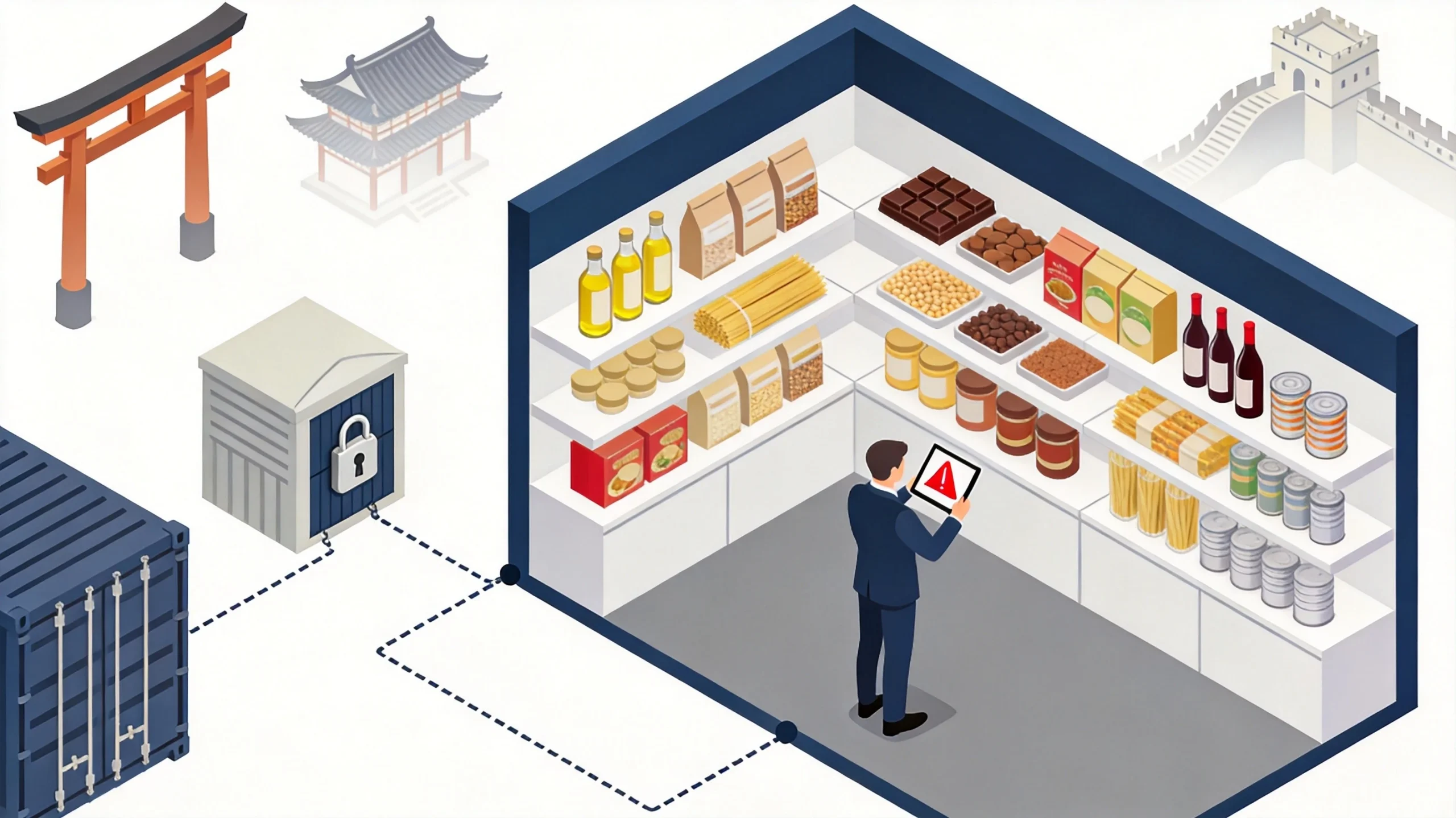
And your trade show food samples are sitting in a customs-bonded warehouse forty kilometres away, because the paperwork did not match the shipment.
This happens every year at Foodex Japan, FHA Singapore, Thaifex Bangkok, Seoul Food, and CIIE Shanghai. The product is fine; the logistics are not. For a breakdown of which Asian trade shows draw real, qualified food importers (and which are not worth the booth fee), see 3 trade shows where Asian food buyers actually show up.
We have seen Spanish olive oil producers spend 鈧?5,000 on a booth and flights, then pour supermarket-purchased oil for buyers on opening day because their pallet sat in Yokohama bond. We have seen a French confectionery brand carry 12 kg of chocolates through Incheon in hand luggage after their freight forwarder filed the wrong MFDS notification category. We have seen an Italian pasta maker's entire consignment destroyed in Shanghai because they shipped through a generic forwarder who had no exhibition filing.
None of these were product failures, tariff disputes, or import bans. They were paperwork problems, timeline problems, and forwarder selection problems. All are avoidable eight weeks before the show.
This guide covers the full timeline for shipping trade show food samples to Asia, the market-by-market rules for China, Japan, Korea, Singapore, and Thailand, the document pack that travels with every shipment, and the five mistakes we see most often. For the underlying regulatory framework (ATA Carnet eligibility by market, GACC registration scope, MHLW and MFDS notification rules), see our food samples Asia compliance overview. This article is the execution playbook.
The 8-Week Timeline
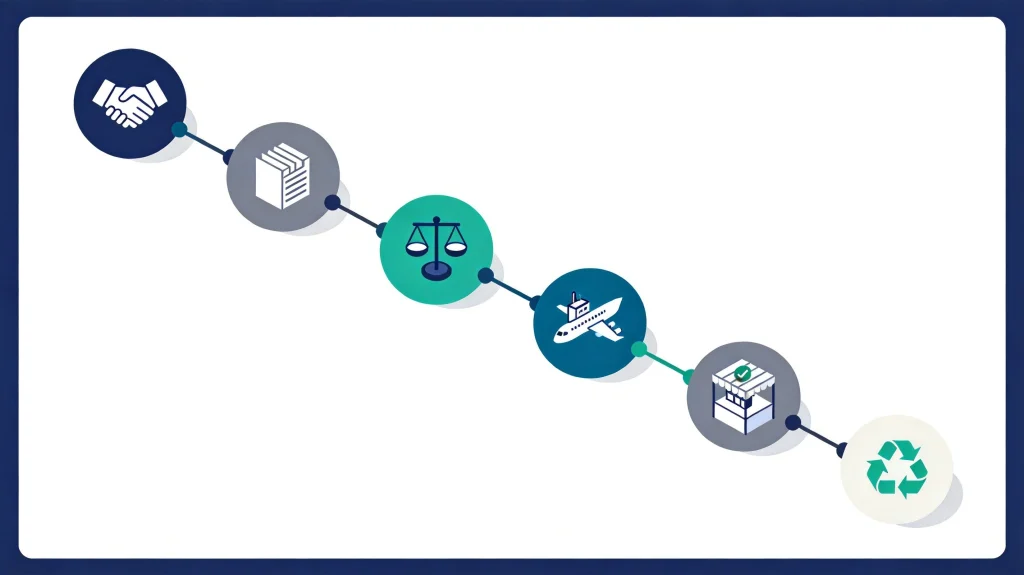
Trade show food samples are not something you arrange two weeks before a show. The timeline below is the realistic schedule for a European food brand shipping exhibit goods to an Asian exhibition. Compress it,t and you are gambling on the show opening without your product.
| When | Action |
|---|---|
| 8 weeks before | Confirm exhibition participation. Book the exhibition-designated freight forwarder for trade show food samples. Register for customs exhibition filing through the organiser. |
| 6 weeks before | Prepare the document pack. Confirm product eligibility for the target market. Begin quarantine applications if animal or plant products are involved. Request health/phytosanitary certificates from your competent authority. |
| 5 weeks before | Finalise trade show sample quantities by SKU. Produce outer carton labelling. Confirm cold-chain arrangements with the venue if refrigeration is needed. |
| 4 weeks before | Ship sea freight for heavy or pallet-level consignments (wine, oil, multi-SKU dry goods). Submit ATA Carnet application to your national chamber of commerce if using one. |
| 2鈥? weeks before | Air freight for trade show food samples departs origin. Forwarder files exhibition customs documents and import notifications. |
| 1 week before | Confirm arrival of trade show food samples at the show venue or bonded warehouse. Prepare SKU information cards and backup documentation in print and digital form. |
| During the show | Samples remain under customs supervision. Do not sell. Do not remove from venue without customs approval. |
| After the show | Choose disposal route: re-export, supervised destruction, or conversion to general trade. |
If you are shipping meat, dairy, seafood, honey, fresh produce, or any product requiring health certificates or quarantine pre-approval, add two extra weeks. EU member state competent authorities routinely take 2鈥? weeks to issue export health certificates. CIIE special concessions for products not yet granted Chinese market access can take six weeks. Japanese MHLW additive review for first-time exhibitors can take 2鈥? weeks of back-and-forth if your ingredient list raises questions.
The single most common cause of delayed samples is starting the documentation after booking the flight. You can book a booth six months out; the logistics work starts eight weeks before. Preparation matters beyond paperwork too. Before booking flights and booth design, make sure the show itself is worth attending 鈥?not every Asian food expo delivers qualified buyers.
Why You Must Use the Exhibition-Designated Freight Forwarder
It is tempting to use your regular courier or forwarder. Their rates look better. You know their contact person. They tell you they "do Asia all the time". For trade show food samples, this is usually a mistake, and it is the mistake that most often explains why a booth is empty on day one.
The exhibition-designated forwarder provides three things a general forwarder cannot replicate:
Exhibition customs filing. The show organiser holds a blanket guarantee with local customs. Goods are cleared under that guarantee, not under your own import declaration. A non-designated forwarder cannot access this filing. They will attempt to clear your consignment as ordinary commercial cargo, which requires a full import entry, a local importer of record with food business licences, and in some markets GACC or MFDS registration that your company may not hold.
Unified guarantee. Instead of you posting a cash deposit equivalent to duty and VAT for each shipment, the organiser's guarantee covers the whole exhibition. This removes a significant cash-flow burden and eliminates the risk of deposit-refund delays after the show.
On-site presence. Designated forwarders have staff at the venue for the duration of build-up and the show itself. If a consignment is held at 10 pm the night before opening, they have someone at the bonded warehouse who can file a correction and negotiate with the on-site customs team. A general forwarder has an office somewhere in the city and a phone number that goes to voicemail after 6 p.m.
For CIIE and SIAL Shanghai, using the official forwarder is effectively mandatory if you want product on the stand. For Foodex Japan, FHA Singapore and Thaifex, experienced exporters sometimes use their own freight forwarder for origin-to-port shipping, then hand the consignment to the show forwarder at the destination airport or port. That compromise works if both forwarders coordinate in advance. It fails if you surprise the show forwarder with a pallet that arrives under a different agent's air waybill.
The cost premium is typically 15鈥?0% over a generic forwarder quote. Against a total show investment of 鈧?,000鈥?5,000 in booth fees, flights and accommodation, saving 鈧?00 on freight to lose three days of buyer meetings is poor arithmetic.
Quantity Planning
Not all trade show food samples serve the same purpose. Plan quantities by function, not by total weight.
Tasting samples. Small portions opened at the booth for visitors to try. These are consumed during the show. Estimate based on expected footfall and tasting conversion rate, typically 200鈥?00 tasting portions per day for a mid-sized 9鈥?8 sqm stand at a major Asian show. Confectionery, snacks and beverages tend toward the higher end; olive oil, spirits and specialty products tend toward 150鈥?50 portions per day because tasting portions are smaller and visitor interest is more filtered. For category-specific guidance on exhibiting olive oil and spirits in Asia, see our olive oil Asia compliance guide and spirits and alcohol import Asia guide.
Buyer samples. Full-size retail units for qualified buyers to take away for internal evaluation. These are not consumed on site. Estimate 20鈥?0 units, depending on the number of pre-scheduled qualified meetings and the quality of visitor traffic at the show. Do not give full retail units to every passer-by; that is how you run out of buyer samples by midday of day one and look underprepared for your real meetings.
Display samples. Sealed retail units for the shelf or counter. These stay on the stand for the full show and are not given away. For trade show food samples, plan 3鈥? units per SKU for facings, plus one or two backup units in case of damage.
Two red lines when planning quantities.
First, never ship more units than you can justify as evaluation stock. There is no universal numeric threshold. Japan publishes a 10 kg guideline for notification-exempt display-only items; China customs officers exercise discretion at the port; Singapore and Hong Kong rely on the officer's judgment, but 100 identical units of a single SKU for a three-day show reads as commercial stock, not samples.
Second, never include units intended for post-show sale in your sample consignment. Diverting exhibition goods into the local market without converting to general trade and paying duty is a customs violation in every major Asian market. It will flag your company for enhanced inspection at future shows and can result in expulsion from the current one. If you plan to leave stock with a distributor after the show, that is a separate shipment under a separate entry route.
Market-by-Market Practicalities
Each major Asian food show has its own operational quirks. These are operational notes the official exhibitor manual does not tell you.
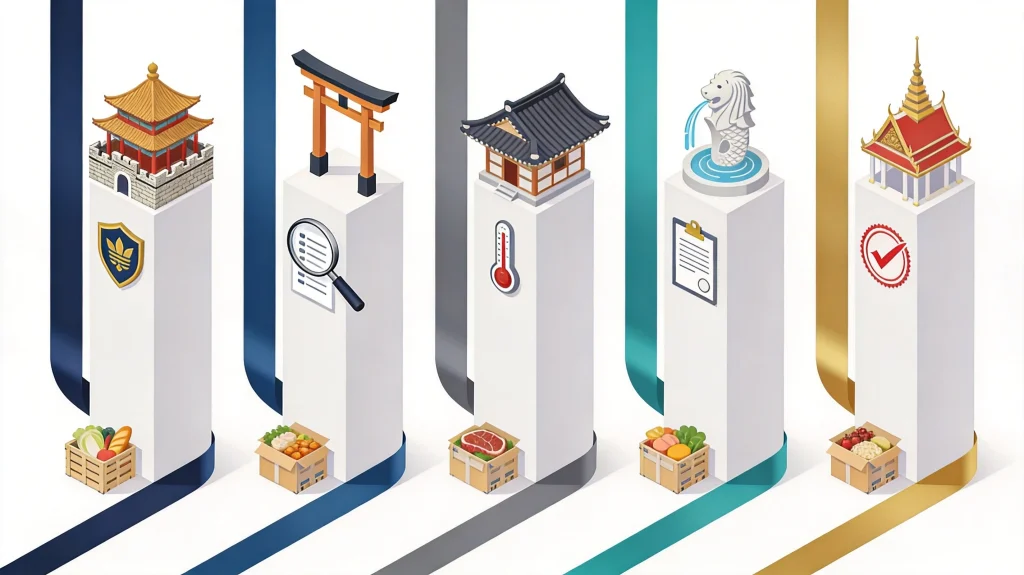
China (CIIE, SIAL China, FHC Shanghai)
Shanghai is the main entry port for trade show food samples in China. Other ports can handle exhibition goods but with less established processes and higher risk of delay.
GACC registration. Under GACC Decree 280 (effective 1 June 2026, replacing Decree 248), 17 food categories require overseas manufacturer registration with competent authority recommendation: meat and meat products, casings, bird's nest and bird's nest products, bee products, eggs and egg products, edible fats and oils, stuffed wheaten food, edible grains, grain flour and malt, dehydrated vegetables, seasoning powders, nuts and seeds, dried fruits, special dietary foods, health foods and dietary supplements, dairy products, and aquatic products. For exhibit goods in non-listed categories (confectionery, pasta, olive oil, wine, coffee, most shelf-stable processed foods), the exhibition filing pathway is used instead of full individual registration, and the product can enter under the show's unified guarantee. Products in the 17 listed categories still require valid GACC registration even for exhibition entry. If your factory is not registered for the relevant category, start the registration 3鈥? months before the show or limit your sample selection to non-listed SKUs. For the full registration framework, see our GACC registration compliance overview.
CIIE special access. CIIE operates a dedicated customs facilitation programme under which exhibit goods from non-quarantine-access origins may be admitted for display under a bio-security plan and simplified process, even if they have not yet been approved for general import into China. This concession does not extend to commercial sale after the show, requires advance application through the organiser around six weeks out, and does not extend to other Chinese food shows to the same extent.
Label exemption. Exhibit goods can apply for Chinese label exemption, but you must request it actively through the show forwarder's inventory list. It is rarely granted automatically. The exemption is conditional on declared quantity, non-sale purpose, and non-distribution to end consumers outside the venue. If you do not apply and you ship without Chinese labels, your products may be held pending label compliance.
Alcohol and tobacco. These categories are excluded from duty-free exhibition treatment in China. You will pay duty even on samples; plan for this in the budget and see our spirits and alcohol import Asia guide for category-specific duties and documentation.
Japan (Foodex Japan, Tokyo)
Foodex is the largest food exhibition in Asia and, in our experience, the best-run for sample logistics. Japanese quarantine stations are predictable, documentation requirements are published, and the show forwarder is experienced with food exhibitors. That predictability comes with strictness.
MHLW import notification. Every consignment that will be tasted, distributed to buyers, or used for any business purpose requires an import notification (椋熷搧绛夎几鍏ュ眾鍑? to the MHLW Quarantine Station. Display-only sealed items under 10 kg with no tasting or distribution may qualify for exemption from the notification, but for a working booth at Foodex you should plan to file the notification. The notification requires a full ingredient list, manufacturing process description, and additive declaration.
Additive positive list.聽Japan maintains a positive list of designated food additives, and it differs from the EU's list. This is the issue that most often holds up goods at Japanese quarantine. If your product contains a preservative, colouring, sweetener or processing aid approved in the EU but absent from Japan's list, the consignment may be rejected regardless of sample status. Have your ingredient list reviewed against the Japanese additive schedule at least eight weeks before the show, ideally before you finalise your SKU selection. For the full Japanese import notification framework beyond exhibition samples 鈥?HS classification, MHLW filing, and labelling end-to-end 鈥?see Japan food import: 6-step compliance guide. Producers of superfoods or novel ingredients should consult our聽superfood and novel ingredient Asia guide聽for additional clearance considerations.
Plant and animal quarantine. Processed, shelf-stable, hermetically sealed retail products (confectionery, pasta, canned goods, packaged olive oil, wine, spirits, biscuits, chocolate) are the lowest-risk categories. Meat, dairy, egg products and certain processed animal products require an EU-member-state health certificate in an agreed format. Fresh fruit, vegetables and seeds require phytosanitary certificates. Highly heat-treated items (retorted, UHT, fully baked) often qualify for reduced quarantine scrutiny, but confirm in writing with the quarantine station or your forwarder.
Tax bands. Consignments with a CIF value of JPY 10,000 or less (roughly USD 60鈥?0 depending on exchange rate) may qualify for duty and consumption-tax exemption for personal-use imports. Trade exhibit consignments of 30鈥?0 kg typically land in the simplified duty band of JPY 10,000鈥?00,000. Above JPY 200,000, full duty assessment applies. Alcohol and tobacco duties are never exempt.
Leftovers at Foodex are typically destroyed on-site by the organiser at the end of the show, included in your forwarder fee. If you want to re-export sealed leftovers, arrange this with the forwarder before the show closes.
Korea (Seoul Food & Hotel, Coex Food Week)
Korea sits between Japan and China in terms of friction. The processes exist but are less forgiving of documentation errors than Japan, and MFDS has a lower threshold for what triggers inspection.
MFDS import declaration (鞁濏拡霌膘垬鞛呾嫚瓿?. Required even for trade show food samples. There is a narrow exemption for "product samples or advertising items brought in free of charge with clear marking" under Attached Table 9 of the Special Act on Imported Food Safety Control, but at major shows the volume you will ship generally exceeds what Korean Customs accepts as advertising samples, so plan to file the declaration through the show forwarder.
ASF pork heat treatment certificate. Any items containing pork or porcine ingredients (including gelatine in some confectionery, lard in certain baked goods) require a heat-treatment certificate demonstrating 70掳C for 30 minutes or equivalent inactivation of African Swine Fever virus, issued by your competent authority. This requirement has been in force since 2019 and remains in effect as of 2026 for pork products from ASF-affected EU member states.
Korean allergen information. Even for exhibit goods, allergen information should be available in Korean for any items that will be tasted. Full Korean retail labels are not required for display samples, but a Korean information sheet listing the current 19 mandatory allergens: eggs, milk, buckwheat, peanut, soybean, wheat, mackerel, crab, shrimp, pork, peach, tomato, sulphite (鈮?0 mg/kg SO鈧?, walnut, chicken, beef, squid, shellfish (including oyster, abalone and mussel), and pine nut, is expected at the booth and may be requested by MFDS inspectors who visit during the show. MFDS has proposed adding sesame, perilla seed, almond and cashew to this list (August 2026 draft revision); watch for the final rule before your next Korea show.
Health functional foods (vitamins, supplements, functional beverages, probiotic products) are regulated separately under the Health Functional Food Act and require a separate import licence. Do not ship these as exhibit goods unless a Korean licence holder is involved. For health and nutrition claims you plan to make on packaging or booth materials, see our health and nutrition claims Asia guide.
Singapore (FHA-Food & Beverage)
Singapore is the easiest major Asian entry point for trade show food samples. No duty on food, no GST on most sample shipments under temporary import, English-speaking authorities, and a logistics-first regulatory environment.
No ATA Carnet for food. Singapore Customs explicitly excludes consumable goods (including food, alcohol and tobacco) from ATA Carnet treatment. Exhibit goods enter under a temporary import permit through TradeNet, arranged by the show forwarder.
SFA licence. The importer of record must hold a Singapore Food Agency licence. For exhibit goods, this is typically arranged through the exhibition forwarder, who holds a bulk licence covering exhibitors' goods. You do not need to register a Singapore entity just to exhibit.
English labelling. English labels are acceptable for trade show food samples in Singapore. There is no bilingual labelling requirement for non-sale items. This makes Singapore the lowest-friction market for sample display in Asia.
ASEAN hub. Many exhibitors use FHA as a logistics hub for the region: ship goods in to Singapore for the show, then forward smaller quantities onward to buyer meetings in Malaysia, Thailand, Vietnam or Indonesia, or carry smaller selections to those markets after FHA closes. Re-export from Changi Airfreight Centre is fast and reliable.
Thailand (Thaifex Anuga Asia, Bangkok)
Thailand is more paperwork-heavy than Singapore but less restrictive than China. Thai FDA involvement is the key extra step.
Thai FDA clearance. Exhibited goods are subject to Thai FDA requirements. Processed foods in retail packaging generally clear via the Aor.12 temporary import form within 5 working days when handled by the show forwarder, supported by a Certificate of Free Sale or health certificate from the exporting-country competent authority, a letter from the organiser confirming participation, and an importer letter undertaking that leftovers will be re-exported or destroyed within 30 days. Meat, dairy, supplements, and certain controlled categories take longer and may require pre-approval. The importer must be a Thai-registered entity; your show forwarder typically acts as the importer of record for a fee.
ATA Carnet does not cover food clearance. Even if you hold an ATA Carnet covering Thailand, Thai FDA requirements apply separately. The Carnet covers customs duty and temporary admission; it does not replace food-safety clearance, ingredient review, or import permits.
Thai-language labelling is not required for exhibit goods, but ingredient and allergen information should be available. Leftovers cannot simply be left in Thailand; a stock balance report must be filed with Thai FDA within 30 days of fair closure, documenting re-export or destruction.
The Document Pack for Trade Show Food Samples
Seven documents travel with every consignment; missing any one can hold the shipment. Prepare them as PDFs and also print two physical sets: one in the lead carton of the shipment, one in your carry-on luggage.
- Commercial invoice. Marked "Trade show samples, not for resale". Include HS code per SKU, a realistic nominal declared value (do not write zero or "no commercial value"; customs will treat that as undervaluation and flag for inspection), country of origin, and shipper/consignee details.
- Sample letter. On company letterhead, signed, stating: show name and dates, booth number, purpose per SKU (tasting / buyerevaluation/displayy), planned disposition after show (re-export / destruction/conversion), and a clear statement that the goods are not for sale to the public.
- Packing list. Itemised by SKU and by carton, with quantities, gross and net weights, batch numbers and best-before dates. The packing list must match the commercial invoice and the ATA Carnet goods list exactly if you are using one.
- Ingredient list. Full ingredient declaration for each SKU, with percentages for characterising ingredients, allergens highlighted, and additive declarations. For Japan, a Japanese translation speeds MHLW review; for Korea, a Korean allergen sheet is strongly recommended.
- Health / phytosanitary certificates. Where applicable for animal products (meat, dairy, egg, seafood, honey) and plant products (fresh fruit, vegetables, seeds, certain nuts). Original certificates must travel with the shipment; copies are not accepted.
- ATA Carnet if using one for non-food booth materials or for Japan/Korea legs. Fill out the goods list to match the packing list exactly; mismatches are the most common reason Carnets are rejected at entry.
- Exhibition participation certificate. Issued by the show organiser confirming your booth number and exhibitor status. Some organisers send this automatically; others require you to request it.
Keep a digital copy of every document on your laptop and in a cloud drive. If a forwarder emails you at 11 pm before opening day asking for an ingredient list, you want to be able to forward it in 30 seconds rather than tracking down someone in your office at 5 am European time to scan a document.
Labelling and Packaging for Trade Show Food Samples in Practice
A question we get from every first-time exhibitor: "Do my samples need a local-language label?" The short answer is no, not a full retail-compliant label, but you do need to present information clearly.
Do not apply retail labels to exhibit goods. Samples are not for retail sale. Affixing a full Chinese or Japanese retail label implies the product is cleared for sale and creates labelling compliance obligations you may not satisfy (nutrition panel format, specific font sizes, required disclaimer language). It can also confuse customs if the label has not received registration or approval. For health and nutrition claims appearing on any booth materials, cross-check against our health and nutrition claims Asia guide before printing.
Instead, prepare a per-SKU information card: a simple printed A5 or A4 sheet displayed beside each product, listing product name, full ingredient list, allergens in bold, net weight, country of origin, producer name and address, best-before date, and batch number. Print enough copies to give to buyers, distributors,s and any inspectors who visit the booth. For Japan, add a Japanese translation of ingredients and allergens. For Korea, add a Korean allergen sheet. For China, the information card in English is usually sufficient for exhibition samples with a label exemption.
Outer carton marking. Mark each outer carton clearly and in large print, on at least two sides:
- "TRADE SHOW SAMPLES 鈥?NOT FOR RESALE"
- Product name and SKU code
- Quantity per carton
- Country of origin
- Exhibition name and booth number
- Consignee (show forwarder) name and address
- "Keep refrigerated" / "Fragile" / "This side up" as applicable
Tasting-portion stickers. If you are decanting product into tasting portions at the booth, label each tasting cup or portion with the product name and a "SAMPLE 鈥?NOT FOR SALE" sticker in English and, if possible, the local language (Japanese, Korean, Chinese). This prevents opened portions from being mistaken for free retail products by venue staff or inspectors.
Cold chain. If your product requires refrigeration or freezing, book cold storage at the venue at least six weeks in advance. On-site cold storage at major Asian shows is limited and allocated on a first-booked basis. Coordinate temperature-controlled transport from the airport to the venue through the show forwarder.
On-Site Troubleshooting for Trade Show Food Samples
If trade show food samples are held, work through these four steps in order. Panic is the fifth step, and it does not help.
Step 1: Identify the exact hold reason. When trade show food samples are held, go first to the show forwarder's on-site desk, not to customs, not to the organiser's general information desk, not to your EU-based logistics contact. Ask for the specific customs or quarantine query in writing (email, not a verbal explanation). Holds fall into four categories: document deficiency, additive/ingredient question, quarantine/certificate issue, or value/classification dispute. You cannot resolve a problem until you know which category you are in. For guidance on what to do if detention escalates beyond the exhibition context, see our food import detention Asia guide.
Step 2: Provide the missing document. Most holds on trade show food samples are document-related, not product-related. A missing ingredient list, an unsigned sample letter, a Carnet goods list that does not match the packing list- these are resolved by producing the document from your digital file.
Step 3: Escalate through the organiser. The exhibition organiser's customs liaison officer exists specifically to resolve holds on trade show food samples; their job is to resolve exhibitor clearance issues during build-up. This person has relationships with the on-site customs team and can often negotiate a supervised release or a conditional clearance when the forwarder alone cannot. Use them.
Step 4: Request supervised release for display. If full release of trade show food samples for tasting and distribution cannot proceed because of a pending lab test or certificate issue, request supervised release so that sealed goods can be displayed at the booth under customs seal. You will not be able to open or taste them, but having product on the shelf is far better than an empty stand, and it keeps buyer meetings on schedule while the issue is being resolved.
Always carry backup samples in hand luggage. A small quantity, 2鈥? sealed retail units per SKU, in your checked baggage will cover the opening day if the main shipment is delayed. Declare them at the red channel with a copy of your sample letter and exhibition certificate. Meat, dairy, fresh produce, honey, seeds,s and other quarantine-controlled items should not be hand-carried without the required health/phytosanitary certificates.
Prohibited on the stand: selling for cash, removing goods from the venue without customs approval, and consuming opened products that remain under customs hold.
After the Show: Three Options for Leftover Trade Show Food Samples
Trade show food samples enter under temporary admission. Duties are unpaid, free circulation is not granted, and you cannot simply leave goods in the country. Three options exist, and you should decide before the show which you will use.
Re-export. Return sealed, unused goods to origin or to your next destination. Under an ATA Carnet, this is a straightforward exit stamp,p and the guarantee is released. Without a Carnet, the show forwarder handles the re-export documentation. Budget for return freight and confirm re-export timelines with the forwarder before the show closes.
Destruction. Opened, partially consumed, or perishable goods are destroyed under customs supervision, usually by the show forwarder at the end of the event. You receive a destruction certificate for your records. This service is typically included in the forwarder's fee and is the default for tasting leftovers.
Conversion to general trade. If you want to sell or donate remaining sealed goods in the local market after the show, you must convert them to a general trade import. That means paying full duty and VAT, meeting local labelling requirements, and for certain markets completing GACC/MFDS/FDA registration. For small leftover quantities,s this is rarely worth the administrative cost, but if you have a local distributor who wants to take on stock, the forwarder can arrange the conversion. Producers exploring e-commerce channels for post-show sales should also review our CBEC China cross-border e-commerce guide.
If you are moving from one Asian show to another (for example, Thaifex followed by FHA Singapore, or Foodex followed by Seoul Food), plan the logistics with the forwarder before the first show opens. You do not want to be re-exporting from Japan and re-importing to Korea in the space of a week with no continuity in documentation.
Logistics are only the first half of post-show work. The second half — and the part that actually generates revenue — is the follow-up sequence. We have written a separate guide on how to turn SIAL, Anuga and FHC business cards into qualified meetings within the 48-hour golden window, including the three-touch email cadence we use with clients.
Cost Budget for Trade Show Food Samples
First-time exhibitors routinely under-budget for sample logistics. A realistic cost range for a small EU food exporter shipping 30鈥?0 kg to a single Asian show:
| Cost item | Estimated range |
|---|---|
| Outbound air freight (EU to show city) | 鈧?00鈥撯偓900 |
| Exhibition forwarder handling + customs filing | 鈧?00鈥撯偓800 |
| Exhibition filing fee | 鈧?50鈥撯偓400 |
| ATA Carnet (if used) | 鈧?50鈥撯偓500 (plus refundable guarantee deposit) |
| Health / phytosanitary certificates (if required) | 鈧?00鈥撯偓300 per certificate |
| Cold storage at venue (if required) | 鈧?00鈥撯偓600 for show duration |
| On-site handling / booth delivery | 鈧?50鈥撯偓400 |
| Re-export or destruction of leftovers | 鈧?00鈥撯偓800 |
| Document translation (JP/KR ingredient sheets) | 鈧?00鈥撯偓300 |
| Total | 鈧?,700鈥撯偓4,600 |
For trade show food samples shipped as pallet-level consignments, sea freight is cheaper (鈧?00鈥撯偓500 per pallet to major Asian ports) but adds 4鈥? weeks of transit. Courier (DHL/FedEx direct to the show) for trade show food samples is possible for very small consignments under 10 kg but not recommended for anything requiring an import notification or health certificate, as courier clearance channels are not set up for exhibition food.
A concrete example. A Spanish olive oil producer shipping 60 kg (120 bottles, three SKUs) from Valencia to Foodex Japan in March 2026: outbound air freight 鈧?20, exhibition forwarder handling and customs filing 鈧?80, exhibition filing fee 鈧?20, ATA Carnet 鈧?10 (including chamber fee and guarantee deposit), Japanese ingredient-sheet translation 鈧?80, on-site booth delivery 鈧?20, destruction of opened tasting leftovers included in forwarder fee 鈥?total approximately 鈧?,130. A French confectionery brand shipping 35 kg of chocolates to FHA Singapore the same year paid approximately 鈧?,450 all-in (no Carnet required, no quarantine certificates, no translation needed). An Italian pasta maker shipping a 200 kg pallet of dry pasta and sauces to CIIE Shanghai via sea freight paid approximately 鈧?,800 including health certificates for dairy-containing sauces, cold-chain storage for fresh samples, and re-export of sealed display units. These are real-world figures from clients we have advised; your own costs will differ by product category, show city, forwarder, and whether quarantine certificates or cold chain are required. Always get a written quote from the exhibition-designated forwarder before booking.
The Five Most Common Mistakes
After reviewing logistics for dozens of EU exhibitors at Asian shows, five mistakes recur consistently. For the customs-side errors that most often get samples detained before the show even starts — including ATA Carnet misuse, de-minimis misdeclaration, and courier-vs-freight routing — see our companion checklist on shipping food samples to Asia for trade shows.
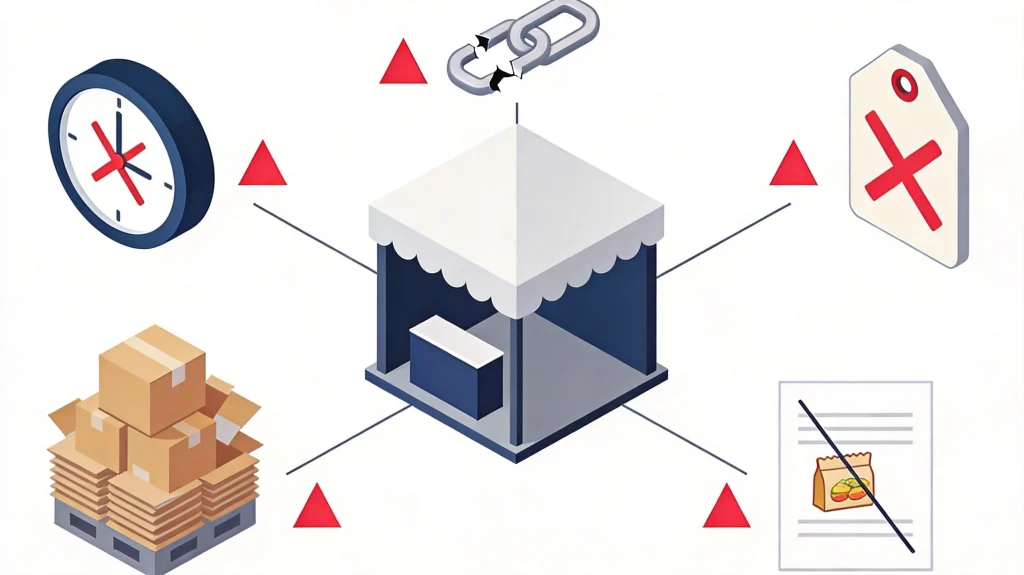
Starting two weeks before the show. The exhibition filing, quarantine applications, and health certificates cannot be completed in that window. Start eight weeks out; for high-risk categories, start earlier.
Using a non-designated forwarder. This locks you out of the exhibition guarantee, leaves you without on-site support, and cuts off access to the on-site customs team. This is the single most common cause of missed opening days.
Applying retail labels. Affixing full local-language retail labels to exhibit goods raises sale-intent questions and creates labelling compliance obligations you may not meet. Use SKU information cards instead.
Shipping too many identical units. Quantity above what is reasonable for evaluation and tasting is treated as commercial stock. The 200鈥?00 tasting portions plus 20鈥?0 buyer units plus 3鈥? facings per SKU guideline keeps you safely in sample territory.
Assuming the ATA Carnet covers food. The Carnet covers customs duty and temporary admission. It does not cover food safety clearance, animal or plant quarantine, import notifications, additive compliance or labelling in Japan, Korea or Thailand. In China and Singapore, food is excluded from ATA Carnet treatment entirely.
Next Step
Trade show food samples logistics are not a detail to leave to the final week of show preparation. They determine whether your stand has product on opening day.
If you are planning to exhibit at CIIE, SIAL China, FHC Shanghai, Foodex Japan, Seoul Food, FHA Singapore, or Thaifex Bangkok in 2026鈥?027 and want your samples on the stand when the doors open, contact us for a sample logistics review. We will map the entry route, the document pack, the forwarder handoff, and the 8-week timeline specific to your product category, target market, and exhibition 鈥?so your team arrives to a stocked booth instead of an empty one.
Get in touch at kevin@specitconsulting.com.
Disclaimer: This article provides general guidance on shipping trade show food samples to Asian trade shows and does not constitute professional compliance advice. Rules, fees, thresholds, and processes change by show, port, and year; always confirm current requirements with your exhibition-designated freight forwarder and the relevant customs authority before shipping. Actual compliance and logistics plans should be tailored to your product category and the specific event. For guidance specific to your shipment, contact Specit Consulting.
About Specit Consulting
Specit Consulting helps European, Australian, and Latin American food and beverage producers navigate Asian market entry across 13 markets 鈥?China, Japan, Korea, Taiwan, Hong Kong SAR, Macau, Singapore, Thailand, Vietnam, Indonesia, Malaysia, the Philippines, and India. Our work covers regulatory mapping, GACC and MHLW compliance, labelling review, detain resolution, and qualified importer sourcing for brands without an Asian office. We do not sell freight or logistics services; we tell you what needs to happen, which mistakes cost you the show, and who to work with on the ground.
Related reading:
Superfoods and Novel Ingredients in Asia: Maca, Chia, Lucuma and What Requires Pre-Market Approval
Shipping Food Samples to Asia: Compliance, Temporary Import & ATA Carnet Guide 鈥?the regulatory framework behind this execution playbook
Food Health and Nutrition Claims: What You Can (and Cannot) Say in China, Japan and Korea
Olive Oil Export to Asia: China, Japan and Korea Compliance Guide
Spirits and Alcohol Import to Asia: A Practical Compliance Guide
Asia Food Import Detention: Real Cases and What to Do When Your Shipment Is Held
FAQ
Can I use an ATA Carnet for trade show food samples in China?
Mainland China generally does not accept ATA Carnets for consumable food items. Exhibit goods at CIIE, SIAL and FHC Shanghai enter through the exhibition filing pathway under the organiser's unified guarantee. Non-food booth materials (display stands, equipment, signage) can and should use a Carnet.
Do trade show food samples need GACC registration?
For exhibition samples at approved Chinese shows, categories outside GACC Decree 280's 17-category official-recommendation list can enter under the exhibition filing without full manufacturer registration. The 17 categories: meat, dairy, aquatic products, bee products, bird's nest, eggs, edible oils, stuffed wheaten food, grains, grain flour and malt, dehydrated vegetables, seasoning powders, nuts and seeds, dried fruits, special dietary foods, health foods/supplements, and casings, still require GACC registration even as exhibit goods. Non-exhibition samples (buyer meetings, R&D) always follow standard registration rules.
How many trade show food samples can I bring?
Enough for tasting portions (200鈥?00 per day for a mid-sized stand), buyer evaluation units (20鈥?0), and display facings (3鈥? per SKU), but not more than can be justified as evaluation quantities. There is no universal numeric threshold, but 100 identical units of a single SKU for a three-day show is likely to be treated as commercial stock.
Can I sell leftover trade show food samples after the show?
Only if you convert them to a general trade import, pay full duty and VAT, meet local labelling requirements, and complete any required registration (GACC for China, MFDS notification for Korea, etc.). Informal cash sales at the booth, or giving samples to a local contact without conversion, constitute customs violations.
What if my trade show food samples are held at customs?
Contact the exhibition-designated forwarder first, then the organiser's customs liaison officer. Most holds are document-related and can be resolved on-site. Request supervised display release if full clearance is delayed, so at minimum sealed product can be on the shelf during buyer meetings.
Need help navigating your market entry?
We've helped food exporters across 10+ countries enter 13 Asian markets. Get a free initial assessment based on public data — delivered in 3 working days.
Get Your Free AssessmentQuestions about entering the Asian market?
Chat with us on WhatsApp →