

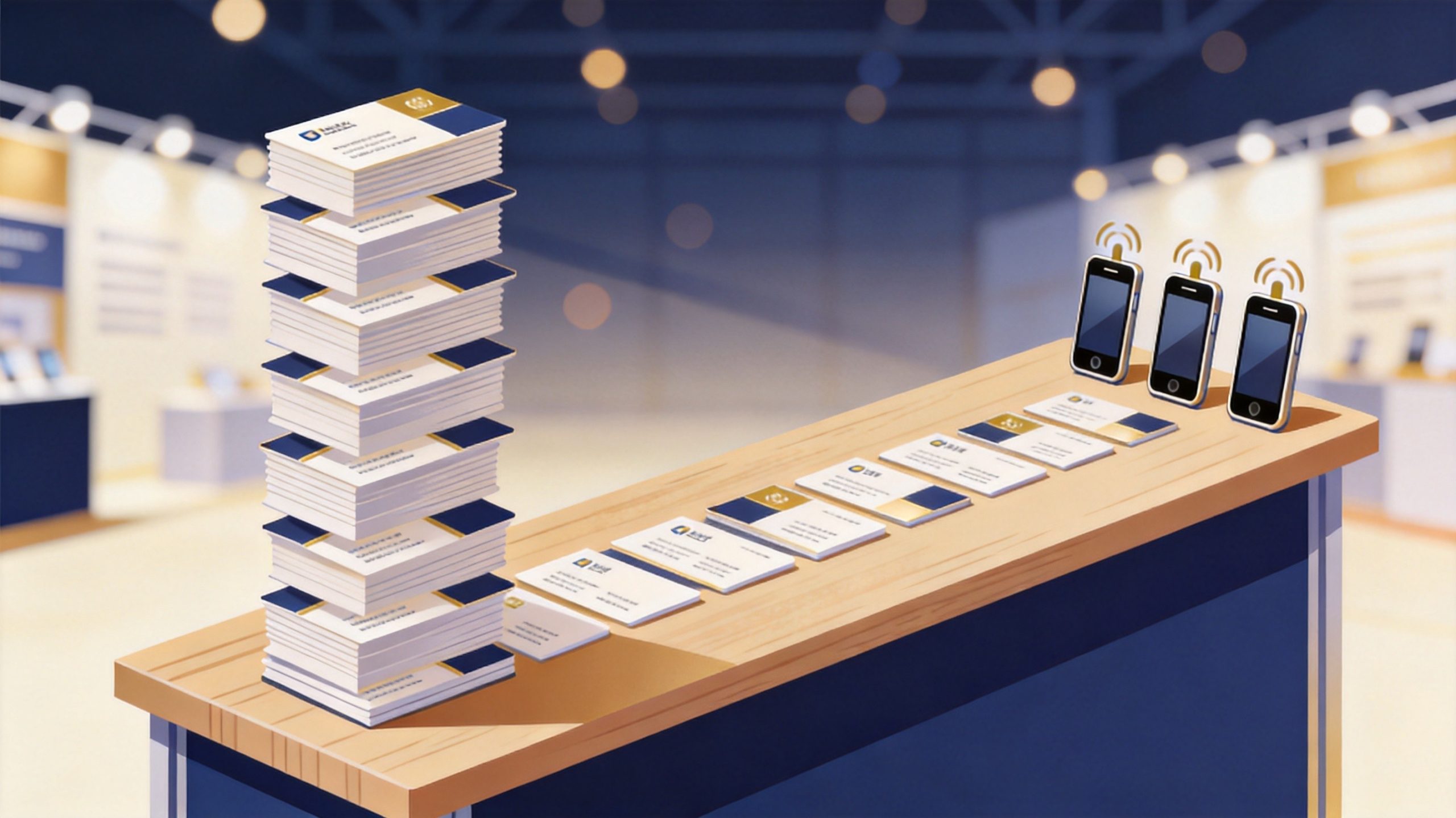
You collected 80 business cards at SIAL Paris. Three weeks later, fewer than five have turned into calls.
This is not a lead quality problem. It is a timing and follow-up problem.
We have helped food and beverage exporters through six major trade shows this year — SIAL Paris, Anuga, ProWein, FHA, Vinexpo and Gulfood — and the pattern is consistent every time. The exhibitors who walk away with meetings are not the ones with the best booth or the fanciest brochure. They are the ones who treat the show as the starting line, not the finish line.
Most exhibitors treat the show as the event and follow-up as an afterthought. The ones who convert treat follow-up as the actual work.
Here is the sequence that works.
The Golden Window: When to Send the First Email
Trade show follow-up is where most exhibitors lose. At SIAL, the average visitor speaks to 30-50 suppliers in a single day. By the time they land back home, most of those conversations have blurred into a single impression of "lots of olive oil and cheese."
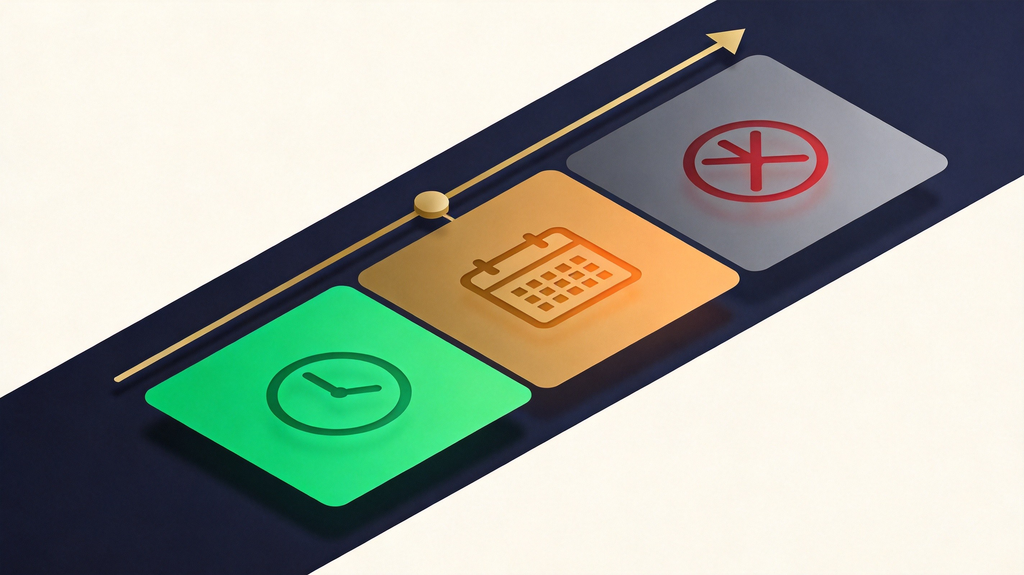
Within 48 hours. The conversation is still fresh. They remember your face. Reply rates are highest — we see 25–35% across client sends.
Within 7 days. Still viable if your email references something specific from the conversation. Reply rates around 10–20%.
After 30 days. Cold. They have forgotten you. You are competing with every other supplier who emailed them. Reply rates drop to 2–5% — basically a cold email.
The 48-hour window is not a suggestion. It is the difference between a warm follow-up and a cold email.
Wait a week, and you are fighting memory loss. Wait a month, and you are sending to someone who vaguely remembers your logo. Neither is where you want to be.
Send the first follow-up within 48 hours. Not a pitch. A reference point.
The First Follow-Up Email: Short, Specific, No Attachments
This is where most exhibitors go wrong. They send a catalogue. They send a company profile. They attach a 12-page pitch deck. The buyer opens it, sees 3MB of PDF, and archives it.
Do not send any of those things in the first email.
A first follow-up that gets replies does four specific things:
- It references something specific they said. Not "great meeting you" but "you mentioned you were looking at Japan and were unsure about the additive list." This proves you paid attention, not just scanned their badge.
- It connects your service to their problem in one line. No fluff.
- It asks for permission before sending anything. Nobody likes being attached to.
- It requires no commitment. "When you have five minutes" is a low bar.
We consistently see 2-3x higher reply rates on this format versus generic follow-up emails. The difference is specificity.
When to Move from Email to WhatsApp, LinkedIn, or WeChat
Email works for the first two touches. After that, you need to go to the channel the buyer actually uses.
- First follow-up → Email. Professional, non-intrusive, and gives them time to respond on their schedule.
- Second follow-up (no reply) → Email + LinkedIn connection request. LinkedIn adds a face to the name; the connection note can reference SIAL.
- Third follow-up → WhatsApp (if you have the number). Direct and immediate. WhatsApp is the default business channel across Southeast Asia.
- After they reply → Ask. "What is the best channel for a quick 15-minute call?" Do not assume email is their primary channel — in Asia, it often is not.
One thing we see European exporters miss constantly: channel norms vary by market, and assuming email is universal costs you replies.
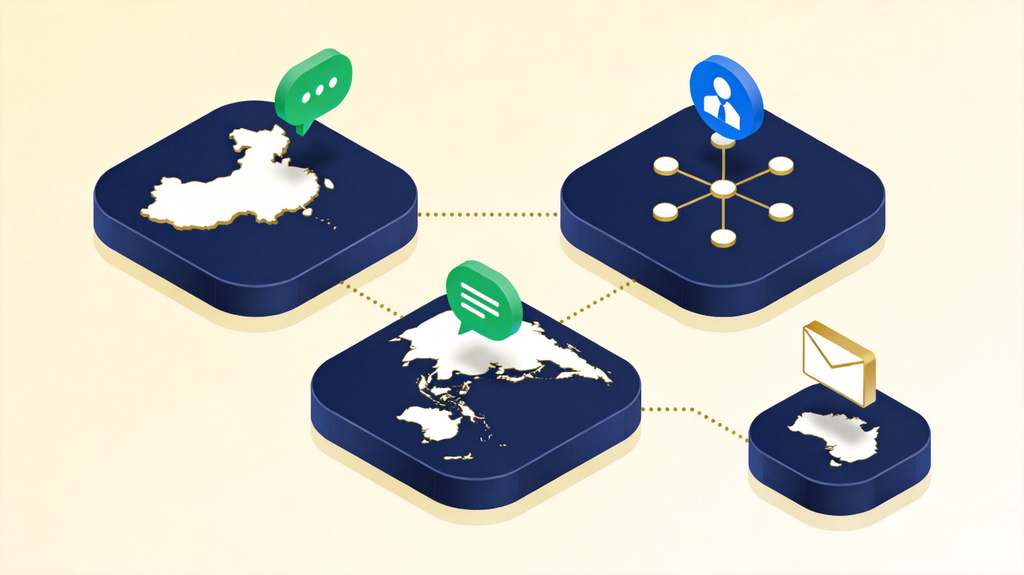
- Singapore, Malaysia, Thailand, Indonesia: WhatsApp is the default. If you have the number, use it after the second touch.
- China: WeChat is essential. Email open rates from Chinese importers are notoriously low — if you have a WeChat contact, that is where the conversation happens.
- Korea and Japan: LinkedIn works, but slower than most Europeans expect. KakaoTalk (Korea) and LINE (Japan) are the domestic chat apps, but you usually need an existing contact to connect there.
- Australia and New Zealand: Email and LinkedIn both work well.
The rule is simple: once they reply, ask. "What is the best channel for a quick 15 minutes — email, WhatsApp, or a call?" Most people will tell you directly.
The Three-Touch Cadence: Why Most People Stop Too Early
The data on this is clear: most B2B deals close after the second or third contact. Most exporters send one email and stop.
That is leaving meetings on the table.
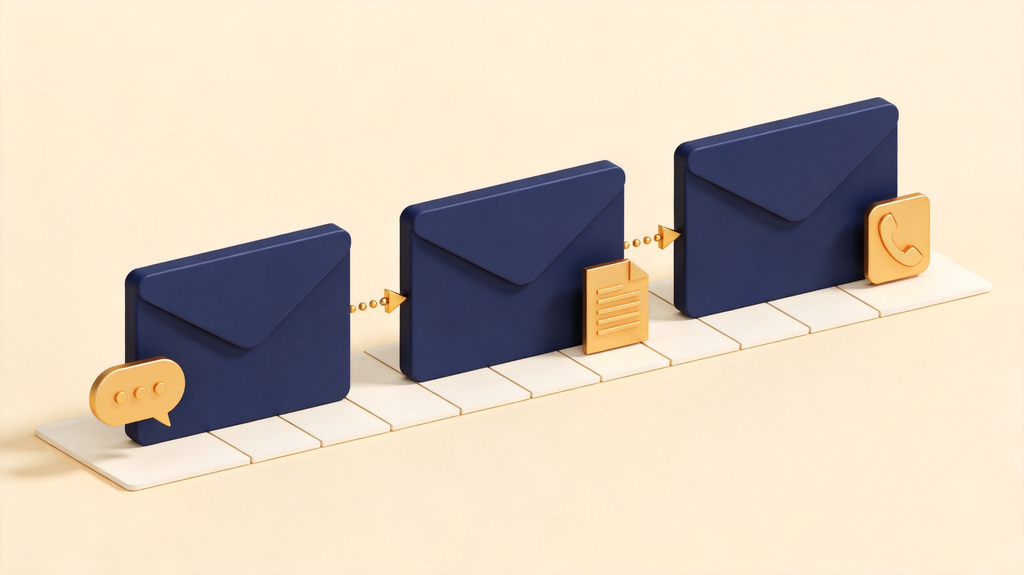
Here is the cadence we recommend:
- Touch 1 — Within 48 hours of the show. Specific reference to your conversation (the template above). No attachments, no pitch.
- Touch 2 — 7 business days later if no reply. Short value add — a relevant article, a market insight, a regulatory update that ties to something you discussed. This is where a useful piece of content does the heavy lifting.
- Touch 3 — 14 days after Touch 2. Direct ask — a 15-minute call, or a meeting at the next show you both attend.
If no reply after three touches: stop. Add them to a quarterly check-in list. Do not keep emailing. You are training their inbox to ignore you.
Touch 2 is where the article hook works best. For example: if you spoke about Japan and they mentioned struggling with MHLW import notifications, sending our 6-step guide to Japan food import requirements with a one-line note ("thought this might be useful given what you mentioned about Japan") is far more effective than "just checking in."
We have seen this single tactic — adding a relevant, useful article in the second follow-up — lift reply rates by 40% across our client batch sends. It works because it gives value before asking for anything.
The exporters who follow up three times with relevant content get more meetings than the exporters who send one perfectly crafted email and disappear.
Pre-Heating for FHC Shanghai (10-12 November 2026)
FHC Shanghai runs 10-12 November 2026 at SNIEC, Pudong. ProWine Shanghai runs alongside it. If you collected cards at SIAL and have not converted them yet, this is your next built-in excuse to re-engage.
Do not wait until November to start. The work starts now.
Six weeks before the next show in your pipeline (e.g., FHC Shanghai, ProWine, or another event both you and the contact attend): Send a short note to contacts who did not reply. Give them a specific reason to reconnect — "we will both be at [show]" is the most natural one — keep it low-pressure, and offer to send something useful even if they are not attending.
Two weeks before the show: Send a reminder to anyone who said yes. Confirm the time and location. Send a calendar invite. Do not rely on them remembering.
At the show: Book the meeting before you arrive. Pre-scheduled 15-minute slots produce far more meaningful conversations than walking the floor hoping to bump into people.
The One Thing Most Exporters Get Wrong
They treat the trade show as the event.
The show is where you collect the raw material. The follow-up is where the business happens.
A great booth with no follow-up system is an expensive business card collection exercise. A mediocre booth with a tight 48-hour/7-day/21-day follow-up cadence will outperform it every single time.
We saw this firsthand at SIAL 2026. One olive oil client with a standard shell-scheme booth and a disciplined three-touch sequence booked 14 qualified meetings in the three weeks after the show. A competing olive oil producer with a premium corner booth, branded espresso machine,e and zero follow-up system booked two.
The difference was not the product. It was not the booth. It was what happened in the 48 hours after the show closed.
The exporters who understand this — and who build their three-touch cadence before the show even starts, with specific content ready to go for Touch 2 — are the ones who leave with meetings, not just business cards.
If you are looking at a stack of SIAL cards and wondering where the calls are, we can help. Send us your follow-up sequence (even just the emails you have been sending), and we will do a quick audit — identifying where leads are dropping off and what to change before FHC Shanghai. Email Kevin — 48-hour response, no obligation.
About Specit Consulting: We help food and beverage exporters enter and grow across 13 Asian markets — China (GACC registration, labelling, import clearance), Japan (MHLW notifications, additive compliance, JAS labelling), Korea (MFDS registration, KFDA requirements), Southeast Asia (Indonesia BPOM, Thailand FDA, Singapore SFA, Vietnam MOH, Malaysia Ministry of Health, Philippines FDA), India (FSSAI), and the Middle East (SFDA, Dubai Municipality, ESMA). We handle regulatory compliance, qualified importer sourcing, and on-ground distributor matching. We do not do freight forwarding, and we are not an importer of record — we are the people who make sure your products clear customs and reach the right shelves.
Disclaimer: This article reflects trade show follow-up practices and market channel observations based on our on-the-ground experience with food and beverage exporters across SIAL Paris, Anuga, ProWein, FHA, Vinexpo Asia, and Gulfood 2025-2026. Response rate figures are drawn from our client batch-send data across 500+ follow-up emails and are indicative, not guaranteed. Regulatory requirements, channel norms,s and show dates may change; always verify current rules with the relevant authority or a qualified advisor before making market entry decisions. This content is for general information only and does not constitute legal advice. As of October 2026.
Further Reading
- Japan Food Import Requirements: A 6-Step Practical Guide
- South Korea Food Import: MFDS Registration Process & Requirements
- Exporting Food to China: GACC Registration in 2026
- The Future of Imported Wine in Asia: A 2026-2030 Outlook
- GACC Rejected a Client's Registration — What Went Wrong
FAQ
How soon after a trade show should I send the first follow-up email?
Within 48 hours. This is the golden window when buyers still remember your conversation. After 7 days, response rates drop significantly. After 30 days, you are effectively sending a cold email.
What should the first follow-up email include?
Three things: a specific reference to your conversation (something they actually said), a one-line connection between their problem and your service, and a low-commitment next step. No catalogue, no brochure, no pitch deck.
Should I send attachments in the first follow-up email?
No. Attachments trigger spam filters and create friction. Reference something specific, offer to send material if they are interested, and wait for permission.
How many follow-up emails should I send before stopping?
Three touches over roughly three weeks: Touch 1 within 48 hours, Touch 2 at 7 days (value add), Touch 3 at 21 days (direct ask). After three touches with no reply, move them to a quarterly list and stop the active sequence.
When should I switch from email to WhatsApp or LinkedIn?
After the second unanswered email. In Asia, WhatsApp is the default business channel in Singapore, Malaysia, Thailand, and Indonesia. WeChat is essential for China. LinkedIn works for Korea and Japan but is slower.
What is the best channel for following up with Chinese importers?
WeChat. Email open rates from Chinese importers are consistently low compared to European buyers. If you collected a WeChat contact at the show, that is where the real conversation happens. If not, email plus a LinkedIn request is the next best option.
How do I use FHC Shanghai as a follow-up hook?
Six weeks before the show, email your SIAL contacts who did not reply. Ask if they will be at FHC and offer to book 15 minutes. This gives a concrete reason to re-engage without sounding like "just checking in."
Why do generic follow-up emails get such low response rates?
Because they could have been sent to anyone. "Great meeting you at the show" proves you scanned their badge. "You mentioned you were looking at Japan and were unsure about additive approvals" proves you paid attention. Specificity is what gets replies.
Should I add value in the second follow-up email?
Yes. This is the single highest-impact tactic. Send a relevant article, regulatory update, or market insight — something that helps them regardless of whether they reply. We have seen this lift reply rates by approximately 40% in our client sends.
What is the biggest mistake food exhibitors make after trade shows?
Treating the show as the finish line instead of the starting line. The booth is where you collect raw material. The follow-up sequence — especially the first 48 hours — is where the business happens.
Need help navigating your market entry?
We've helped food exporters across 10+ countries enter 13 Asian markets. Get a free initial assessment based on public data — delivered in 3 working days.
Get Your Free AssessmentQuestions about entering the Asian market?
Chat with us on WhatsApp →