

2 September 2026 | Shanghai, China
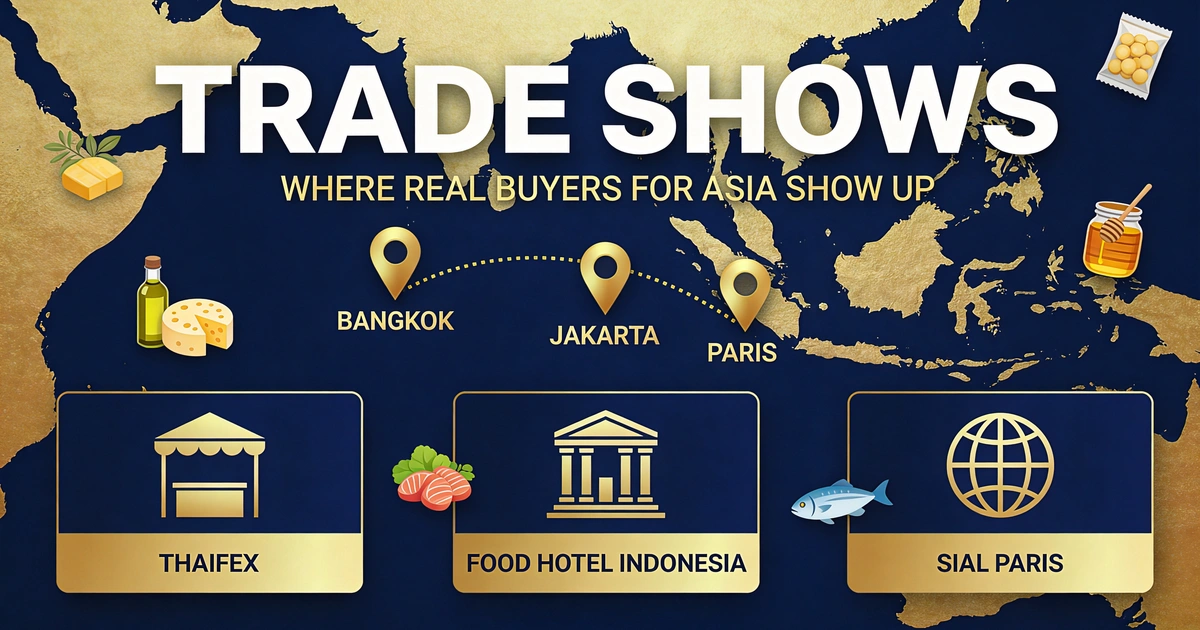
Trade shows are where the food business happens. You can send emails and run LinkedIn campaigns, but nothing replaces standing in front of a buyer who can actually sign a deal. Here are three shows where real, qualified buyers for imported food consistently show up.
THAIFEX Bangkok: Where ASEAN-Wide Deals Get Done
THAIFEX in Bangkok is the largest food and beverage trade show in Asia — 140,000 square metres, over 3,500 exhibitors, and buyers from 148 countries. It is not just a trade show; it is Thailand’s national food strategy on display. What makes THAIFEX different is buyer quality. The Thai government uses it to showcase the country’s food ecosystem, and that attracts serious regional buyers. Importers at THAIFEX have gone on to sign distribution deals after meeting on the floor — they were not browsing, they were sourcing.
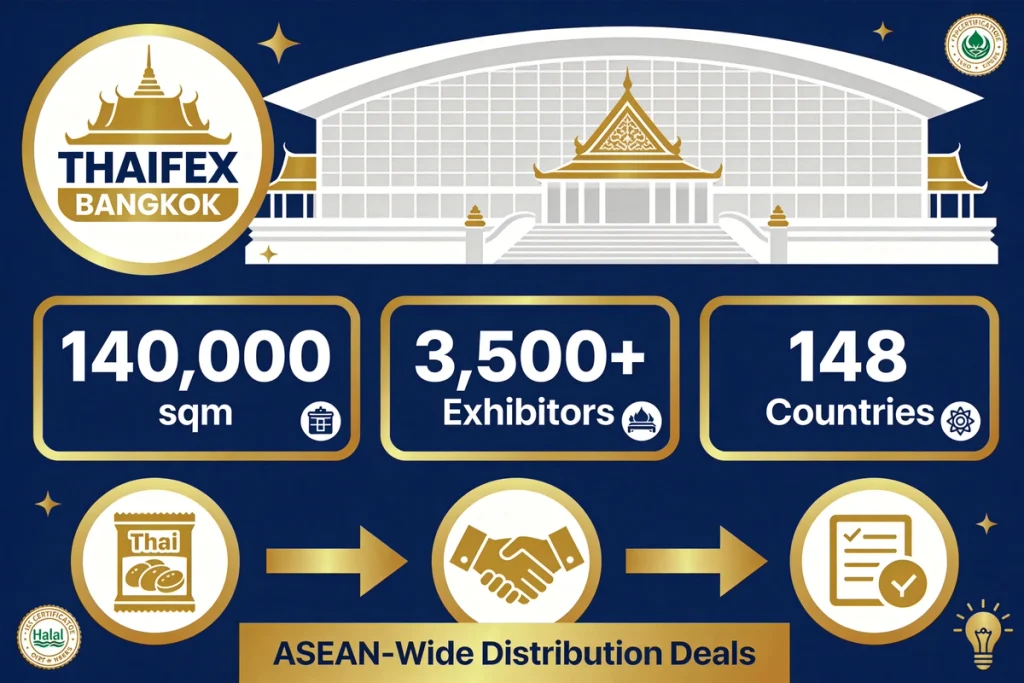
The show brings together 1,400 Thai companies and 2,200 international exhibitors, with dedicated zones for halal products, future food, and innovation. If you are selling packaged food to ASEAN, this is the floor to walk.
THAIFEX is typically held in May or June in Bangkok. thaifex.com
Food Hotel Indonesia: Only BPOM-Registered Importers Walk This Floor
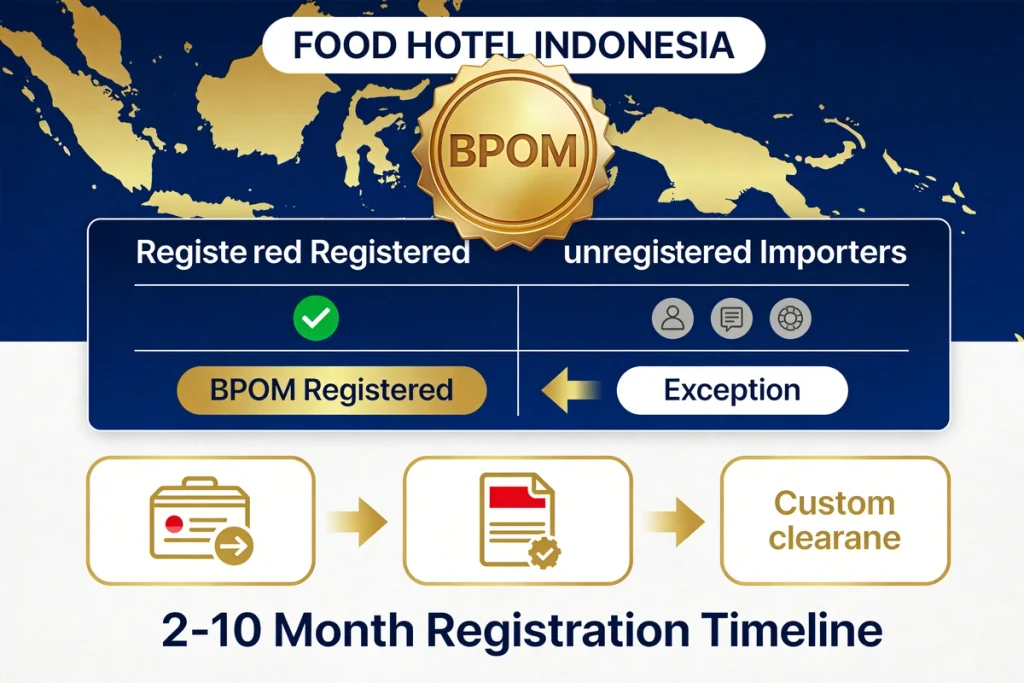
Indonesia is a massive food market, but the regulatory barrier is real. BPOM registration is mandatory for all imported food and beverage products, with registration timelines ranging from two to ten months for new products. The importers who attend Food Hotel Indonesia already know this. Many are already registered with BPOM, or actively working through the process.
That is the difference between this show and others: you are not pitching to people who are just curious. You are pitching to people who already have the infrastructure to bring products in. Most importers at this show are either BPOM-registered or actively in the process — unregistered buyers are the exception, not the rule.
Food Hotel Indonesia is typically held in November in Jakarta. foodhotelindonesia.com
SIAL Paris: Where Asian Buyers Come to Source
SIAL Paris is not in Asia, but it is where Asian buyers come to source. It takes place in France, but the buyers come from everywhere. SIAL Paris 2024 drew 7,000 exhibitors from 130 countries and 285,000 professional visitors, 75% of whom were international.
The Asian buyers are there — from Japan, South Korea, Singapore, and Southeast Asia. They come because they are looking for products not yet available in their markets. The scale is different: 280,000 square metres of exhibition space and 400,000 products on display. If you are serious about selling to Asia, this is where you meet the buyers who are willing to travel.
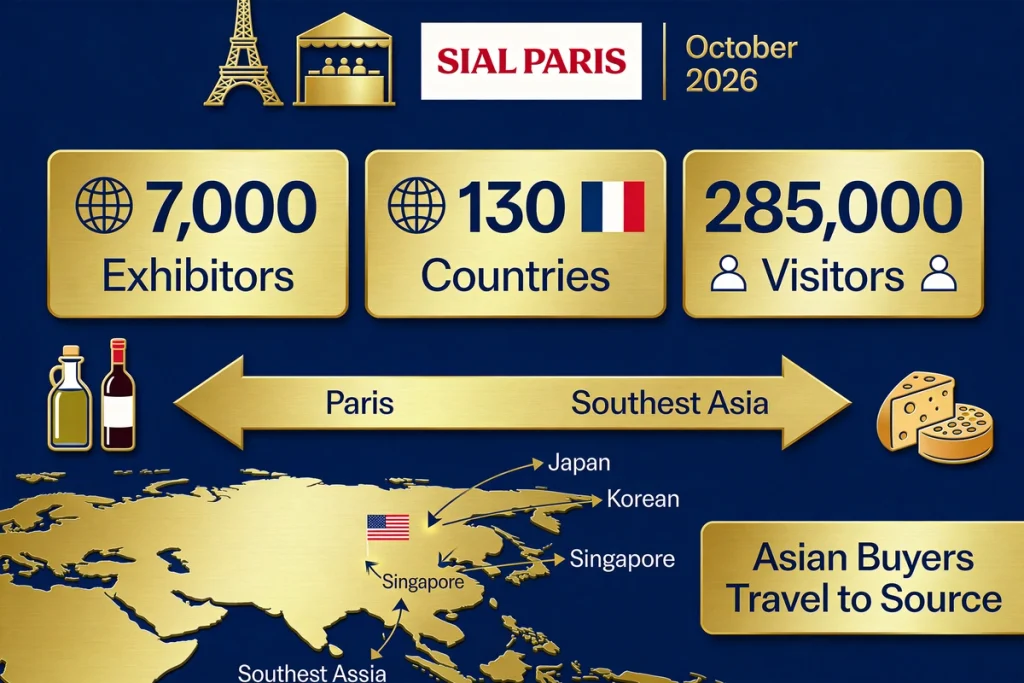
SIAL Paris is a biennial event; the next edition takes place in October 2026 in Paris. sial-paris.com
What to Do Before You Go
The difference between a productive trade show and an expensive booth rental is preparation. The buyers at THAIFEX, Food Hotel Indonesia, and SIAL Paris are real, qualified, and ready to talk business. But they are not waiting for you. They have schedules, shortlists, and limited time. An exporter who arrives without research, without compliance documentation, and without a follow-up plan will walk the same floor as a prepared competitor and leave with nothing while the competitor leaves with signed deals.
What separates the two is what happens before the show. Product samples must be ready for tastings, with packaging that presents well. A compliance summary — one page showing GACC registration, BPOM status, or MHLW compliance — lets a buyer assess you in minutes instead of weeks. An importer shortlist, built from the exhibitor and buyer lists most major shows publish in advance, means you spend your time on qualified targets rather than hoping for foot traffic. Opening questions that qualify buyers quickly — “What markets are you currently sourcing for?” or “What is your main challenge with imported food right now?” — turn casual conversations into commercial intelligence. And a post-show follow-up system that contacts buyers within 48 hours captures the momentum before it fades.
The trade show is the midpoint, not the starting line. The exporters who treat it as one step in a longer process are the ones who come home with distribution agreements.
Takeaway
Pick your shows strategically. THAIFEX for ASEAN-wide exposure, Food Hotel Indonesia for BPOM-registered importers who can actually clear product, SIAL Paris for Asian buyers actively seeking new brands. And once you're standing in front of a buyer, what you say in your follow-up email matters just as much as the meeting itself — European exporters consistently make the same five outreach mistakes. Prepare before you board: samples, compliance summary, importer shortlist, qualifying questions, and a follow-up system. The buyers are there — but they are not waiting for you. Show up prepared, or stay home and send another email that never gets opened.
Need help building your trade show shortlist and preparation plan for Asia? See our Importer Sourcing & Profile service — or contact us directly.\
For a complete walkthrough of the four sample-entry routes across China, Japan, Korea, and ASEAN — including when ATA Carnets work for food and when they do not — see our guide to shipping food samples to Asia. For a dedicated guide to trade show sample logistics and ATA Carnet procedure at exhibitions, see our trade show food samples shipping guide.
About Specit Consulting
We help food and beverage brands enter and grow in the Chinese and wider Asian markets through trade intelligence, importer identification, and market research.
✉ info@specitconsulting.com
Disclaimer: This article reflects general market observations and is intended for informational purposes only. Exhibition figures and buyer attendance numbers are indicative and subject to change.
Need help navigating your market entry?
We've helped food exporters across 10+ countries enter 13 Asian markets. Get a free initial assessment based on public data — delivered in 3 working days.
Get Your Free AssessmentContinue Reading
▶What CIIE Exhibitors Learn After Their First Year in China
▶Your Expo Trip Starts Before the Flight: How to Make Every Day Count
Questions about entering the Asian market?
Chat with us on WhatsApp →