

9th October, 2026 | Shanghai, China
A food distributor agreement in Asia looks straightforward in the template the distributor sends over: territory, exclusivity, minimum volume, price, term, termination. Twelve to eighteen months after signing, the same European exporter is on a call explaining that their distributor is well behind the MOQ written into the contract, has registered the brand trademark in their own name, is refusing to return unsold stock after termination, or is asking for a permanent 35 per cent margin increase because market entry cost more than they expected.
None of these outcomes come from bad luck. The root cause in nearly every case is a food distributor agreement in Asia clause that was left ambiguous, copied from a European template, or signed without local review. They come from clauses that were not written into the original agreement. In our review of distribution agreements for European food and beverage brands entering Asia, around 80 per cent of post-signing disputes trace back to eight clauses. The common mistake is applying an EU template to an Asian market, where the commercial logic, legal framework, and enforcement realities work differently.
This article walks through those eight clauses, with country-specific points for China, Japan, and Korea that we see mishandled repeatedly.

Clause 1: Exclusivity Scope
Exclusivity is the most negotiated clause and the one most often mishandled. It has three dimensions, and each must be defined separately.
Product scope. Are you granting exclusivity for your full portfolio, or at the SKU level? A distributor may have a route to market for your premium extra-virgin olive oil but no established channel for your infused or flavoured variants. We generally recommend SKU-level exclusivity at the outset, with a defined pathway to add SKUs once the first range hits its volume targets. This avoids giving away the whole portfolio on day one.
Territory. "Asia" functions as a sales region rather than a legal territory. A court will not enforce a clause that grants exclusivity across a continent. List countries individually. If you intend to include Greater China, define it explicitly ("Mainland China, Hong Kong, Macau, and Taiwan") or state which territories are excluded. Hong Kong and Macau are often handled by separate distributors with their own on-trade and travel-retail networks, and bundling them into a Mainland grant can block a better partner.
Channel. On-trade, modern trade, traditional trade, e-commerce, and duty-free are distinct channels in most Asian markets, each requiring different capabilities and contacts. Granting exclusivity across all channels to one distributor is rarely justified. Define which channels are exclusive and which remain open; for e-commerce in particular, consider whether cross-border platforms (Tmall Global, Rakuten, Coupang) require a separate operator.
A Spanish olive oil client once granted "China and Southeast Asia" exclusivity to a Shanghai-based distributor, only to find six months later that the distributor had no presence in Thailand or Vietnam and was blocking a Thai partner who had already placed a firm order. The contract did not specify countries, and the distributor held the rights for the entire region. It took seven months of negotiation to carve the Southeast Asian territories out.
Clause 2: Minimum Purchase Volume
Exclusivity without a minimum purchase amount (MPA) has no enforcement value. A distributor can hold your brand rights and do very little.
Take-or-pay versus best efforts. A take-or-pay clause requires the distributor to pay for an agreed volume whether or not they take delivery. A best-efforts clause only obliges them to try, which is difficult to prove in any jurisdiction. For any grant of exclusivity, take-or-pay is the appropriate standard.
Escalation schedule. Set volumes that increase over the contract term: Year 1, Year 2, Year 3. Start the first year at a level the distributor can realistically achieve; an over-ambitious Year 1 target that gets missed weakens your enforcement position for the entire term.
Remedies for non-performance. Build a graduated response rather than jumping straight to termination. A typical structure is a written warning period (60 to 90 days) with a cure plan, followed by automatic conversion to non-exclusive status if volumes remain below threshold, followed by termination right.
Clause 3: Price and Incoterms
Incoterms. EXW, FOB, CIF, and DDP allocate cost and risk at different points in the supply chain. EXW places all logistics, insurance, and import responsibility on the distributor from your factory gate. FOB and CIF divide responsibility at the named port. DDP places maximum obligation on you, including import clearance and duty in the destination market. For China in particular, if the distributor holds the import licence and GACC registration, DDP is rarely appropriate because you do not control the import compliance chain.
Price adjustment. Include an explicit mechanism for adjusting prices when currency exchange rates or raw material costs move beyond an agreed threshold, commonly plus or minus 5 per cent over a rolling quarter. Without such a clause, you either absorb the margin hit or renegotiate under pressure mid-term.
Marketing cost allocation. Be explicit about who pays for listing fees, in-store promotions, slotting allowances, and trade marketing spend. In most major Asian retail markets, modern-trade listing fees are a real and recurring cost, and the assumption that "the distributor handles marketing" rarely matches reality. We have seen European exporters sign agreements that are silent on listing fees, only to receive a six-figure invoice after the distributor had already paid a Chinese hypermarket chain to secure shelf space.
Resale price maintenance. Under China's Anti-Monopoly Law (2022 revision, Article 18) and Japan's Antimonopoly Act, imposing a fixed minimum resale price on a distributor carries real enforcement risk. Publishing a recommended retail price is generally acceptable; contractually enforcing a minimum resale price carries material enforcement risk. As of February 2026, China's SAMR clarified the safe-harbour thresholds in its amended Provisions on Prohibition of Monopoly Agreements: for resale price maintenance, the exemption applies only where both parties hold under 5 per cent market share in the relevant market, and annual turnover of the covered products is below RMB 100 million. For most European food brands entering Asia, these thresholds are unlikely to apply, so the clause should be approached with caution and reviewed by local counsel. In Japan, the JFTC issued updated Distribution Guidelines on 8 July 2026, further clarifying the narrow circumstances in which manufacturer "designated pricing" does not constitute illegal RPM (principally consignment sales and certain cases where the manufacturer bears all pre-sale inventory risk and cost).
Clause 4: IP and Trademark Ownership
This is the single most expensive clause to get wrong in Asia.
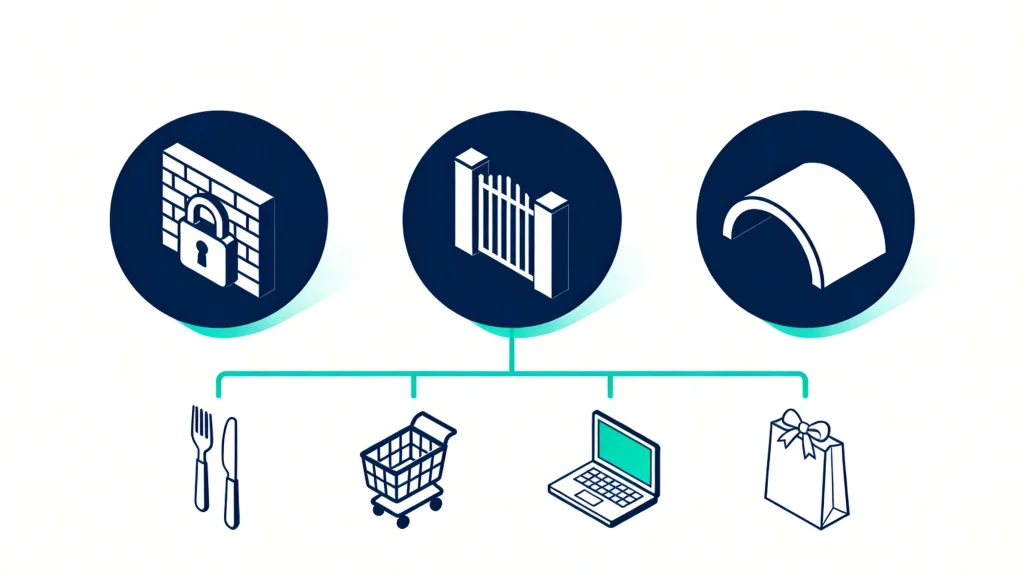
Trademark registration. Your trademark, Chinese character brand name, local domain names, and social media accounts must be registered in the exporter's name, or in the name of an entity you control, never in the distributor's name. This applies in every market you grant rights for. Register before you sign; do not rely on a clause that says the distributor "will" register on your behalf.
Anti-squatting. Include an explicit prohibition on the distributor registering your trademark, any confusingly similar mark, or your brand name in Chinese or other local scripts, in any class of goods or services. In China, trademark squatting remains a live commercial risk, and a distributor who registers your mark in their own name gains significant leverage if the relationship sours. The cost of opposing a bad-faith filing through the China National Intellectual Property Administration (CNIPA) runs into tens of thousands of euros and can take two to three years.
Material licence. Define the scope of the licence granted to the distributor to use your packaging, brand assets, and marketing materials. Limit it to the purposes of the agreement and the duration of the agreement, with all materials reverting to you on termination.
Clause 5: Compliance Responsibility
Registration and labelling. Assign responsibility clearly. For China, GACC overseas food manufacturer registration under Decree 280 is the exporter's obligation; the distributor can assist with documentation but cannot register on your behalf. Labelling compliance is typically shared: you provide the source content and artwork, and the distributor ensures it meets local language and format requirements before import. For Japan, food labelling compliance is governed by the Food Labelling Act (Shokuhin Hyoji Ho) and requires Japanese-language labels meeting the standards set by the Consumer Affairs Agency.
Recall cost allocation. Define who bears recall costs and in what circumstances. If a recall results from a product defect originating at your facility, the cost is yours. If it results from the distributor's storage, temperature abuse, or relabelling, the cost is theirs. Recall procedures in Japan fall under the Food Sanitation Act; in Korea, they are governed by MFDS regulations and can involve mandatory public announcements within 24 hours.
Liability cap. Include a cap on contractual liability, along with explicit carve-outs where the cap does not apply, such as gross negligence, wilful misconduct, or IP infringement. Food safety incidents in markets like Japan and Korea can trigger regulatory action as well as civil claims, so the cap should be considered alongside your product liability insurance.
Clause 6: Inventory and Returns
Minimum remaining shelf life. Specify the minimum remaining shelf life required on delivery into the market. For most ambient food products, 75 to 80 per cent of total shelf life is a common standard. This protects the distributor from receiving short-dated stock and gives them time to move product through wholesale and retail. For products with short shelf lives such as chilled dairy, the threshold may need to be higher.
Slow-moving stock. Define return or exchange rights for products that do not sell through within an agreed period, subject to condition and shelf-life remaining. This gives the distributor confidence to place initial orders and gives you visibility into which SKUs are working.
Stock buyback on termination. Define whether the distributor is entitled to return unsold inventory on termination, and at what price. The answer often depends on the reason for termination (for cause versus convenience); define both scenarios in advance rather than negotiating them under dispute conditions.
Clause 7: Termination and Transition
Grounds for termination. Specify the events that trigger termination for cause: material breach, insolvency, change of control, and persistent volume failure under the MPA clause. Change of control matters; if the distributor is acquired by a competitor or by a company that already represents a competing brand, you want an explicit exit right.
Notice period.聽Templates from European law firms often propose 6 to 12 months. In our experience reviewing signed agreements across China, Japan, Korea and ASEAN, the practical market norm for standard food distribution agreements is closer to 3 months in the contract, with many working relationships ending on roughly 30days's notice when both sides cooperate on transition. A 6-month notice period is generally more constructive for both sides: it gives you time to onboard a new distributor and transition retail accounts without supply gaps, and it gives the outgoing distributor a clear window to run down stock rather than dumping remaining inventory at distressed prices, which can trigger a price war that damages your brand position in the market for years. There are two caveats. If the distributor has invested in cold-chain infrastructure or built your brand presence at high cost, expect to negotiate a longer notice period or a compensation payment in lieu. If the relationship is ending due to material breach 鈥?unpaid invoices, regulatory failure, or sale to a competitor 鈥?shorter notice is justifiable, but document the breach carefully before you serve notice.
Transition obligations. During the notice period, the distributor should continue normal supply and cooperate in handing over the customer base. Define what "handover" means in practice: contact details for all active accounts, order history, pricing arrangements, promotional plans, in-market inventory positions, and (where applicable) transfer of GACC registration support documents and labelling approvals.
Clause 8: Dispute Resolution

Arbitration venue. For European exporters, SIAC (Singapore International Arbitration Centre) and HKIAC (Hong Kong International Arbitration Centre) are generally more neutral and predictable than local courts in the distributor's home jurisdiction. Both are New York Convention signatories with established procedures for cross-border commercial disputes, and awards are enforceable in China, Japan, and Korea under the Convention. SIAC and HKIAC both have updated rules in force (SIAC Rules 2024, HKIAC Administered Arbitration Rules 2024) with provisions for emergency arbitrators and expedited procedure for lower-value disputes.
Governing law. A neutral governing law, such as Singapore law or English law, is often preferable to the distributor's local law and is usually more acceptable to the distributor than your home-country law. Avoid split governing-law clauses that apply different laws to different parts of the agreement; they create additional dispute complexity and cost.
Bonus Clauses Worth Adding

A few clauses that do not make the eight but pay for themselves in practice:
Right of first refusal on new products. If you launch a new SKU or product line within the territory, the distributor has the first option to distribute it, but on commercial terms to be agreed separately. This protects their incentive to invest without locking you into terms for products that do not yet exist.
Audit rights. A right to audit the distributor's sales records relating to your products, at your cost and with reasonable notice (typically 10 to 15 business days). This gives you visibility into whether reported volumes match actual sell-through.
Sub-distributor approval. A requirement that the distributor obtain your written approval before appointing sub-distributors. This prevents your brand from being distributed through channels or partners you have not vetted, a particular risk in markets with fragmented traditional-trade networks such as Indonesia and Vietnam.
Next Step
Most distribution disputes do not come from bad faith. They come from clauses that were not properly defined at the outset. A clause-by-clause review before signing costs far less than a dispute or arbitration after the relationship has soured.
If you are negotiating a distribution agreement for China, Japan, Korea, or ASEAN and want each clause assessed against local market practice before you sign, contact Specit Consulting for a distributor agreement review at kevin@specitconsulting.com. We review each clause against local commercial practice, flag the items that need renegotiation, and identify which standard clauses are enforceable in each jurisdiction.
Disclaimer: This article is provided for general informational purposes only and does not constitute professional compliance or legal advice. Distribution agreements should be reviewed by qualified local counsel in the relevant jurisdiction before execution. Legal and regulatory references are current as of October 2026; rules change,e and specific cases may differ. For practical compliance and market-entry support specific to your product category and target market, please contact us.
About Specit Consulting
Specit Consulting advises overseas food and beverage exporters on regulatory compliance and market entry across 13 Asian markets, including China, Japan, Korea, Singapore, Thailand, Vietnam, Indonesia, Malaysia, the Philippines, Hong Kong, Macau, Taiwan, and India. Our work covers regulatory mapping and registration (including GACC registration under Decree 280 (effective 1 June 2026, replacing Decree 248), Japan MHLW, Korea MFDS, and Thai FDA), labelling compliance, health claims review, detention and customs-hold resolution, and distributor due diligence. We do not sell freight or act as an importer of record; we work alongside your chosen logistics partners and distributors to get products to market compliantly.
Further reading
- Shipping Food Samples to Asia in 2026: Temporary Import, ATA Carnet, Labelling and Trade Show Logistics
- How to Export Food to China in 2026: GACC Registration, Labelling and Customs
- Exporting Olive Oil to Asia in 2026: A Compliance Comparison for China, Japan and Korea
- Food Health and Nutrition Claims in Asia: What Exporters Can and Cannot Say
- Red Flags When Evaluating a Food Importer in China: A Due Diligence Checklist
- What to Do When Your Food Shipment Is Detained at an Asian Port
- Sending food samples to Asian buyers before you sign 鈥?customs pitfalls, duty-free thresholds, and a pre-shipment checklist to make sure your first buyer-meeting samples actually arrive
- Canned Food in Asia: Where European Conservas, Confit and Tinned Seafood Actually Sell
FAQ
Can "Asia" be used as an exclusivity territory in a distribution agreement?聽
It has no enforceable legal meaning as a single territory. List countries individually and define "Greater China" explicitly if you intend to include Hong Kong, Macau, and Taiwan alongside Mainland China.
How long should the notice period be for terminating an Asian food distribution agreement?
European templates often propose 6 to 12 months, but the practical market norm across most Asian food markets is 3 months contractually, with many transitions completed in roughly 30 days when both sides cooperate. A 6-month notice is generally more constructive for both sides, preventing supply gaps and post-termination price wars. Expect longer if the distributor has made significant cold-chain or brand-building investment.
Should I choose SIAC arbitration or a local court for disputes with an Asian distributor?聽
SIAC (Singapore) and HKIAC (Hong Kong) are generally more neutral and predictable than local courts in the distributor's jurisdiction for European exporters. Both have established cross-border procedures, and their awards are enforceable under the New York Convention across China, Japan, and Korea.
Is it legal to fix my distributor's resale price in China or Japan?聽
Resale price maintenance is restricted under China's Anti-Monopoly Law (2022 revision, Article 18) and Japan's Antimonopoly Act. Publishing a recommended retail price is generally acceptable; contractually enforcing a minimum resale price carries enforcement risk. China's February 2026 safe-harbour thresholds for RPM (under 5 per cent market share and under RMB 100 million annual turnover) will not apply to most small European food exporters with low in-market share but significant parent-company turnover in other segments. Confirm the clause with local counsel before signing.
Need help navigating your market entry?
We've helped food exporters across 10+ countries enter 13 Asian markets. Get a free initial assessment based on public data — delivered in 3 working days.
Get Your Free AssessmentQuestions about entering the Asian market?
Chat with us on WhatsApp →