

7 September, 2026 | Shanghai, China
If you are planning to export food and beverage to China — or revisiting a market you entered years ago — the rules changed on 1 June 2026. GACC Decree 280 replaced Decree 248, restructuring the entire overseas food manufacturer registration framework. Most online guides still reference Decree 248. This article reflects the current framework.
What We Saw on the Ground
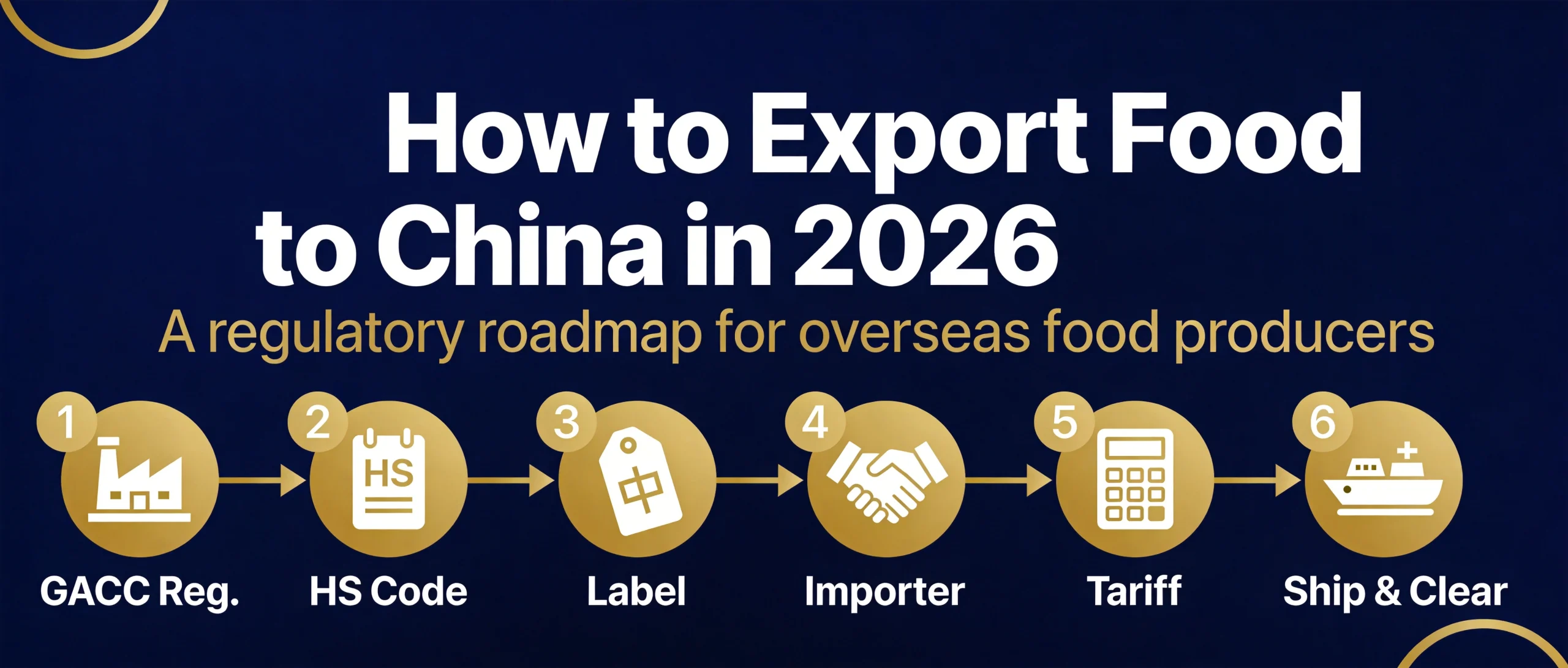
The process breaks into six steps. The order matters.
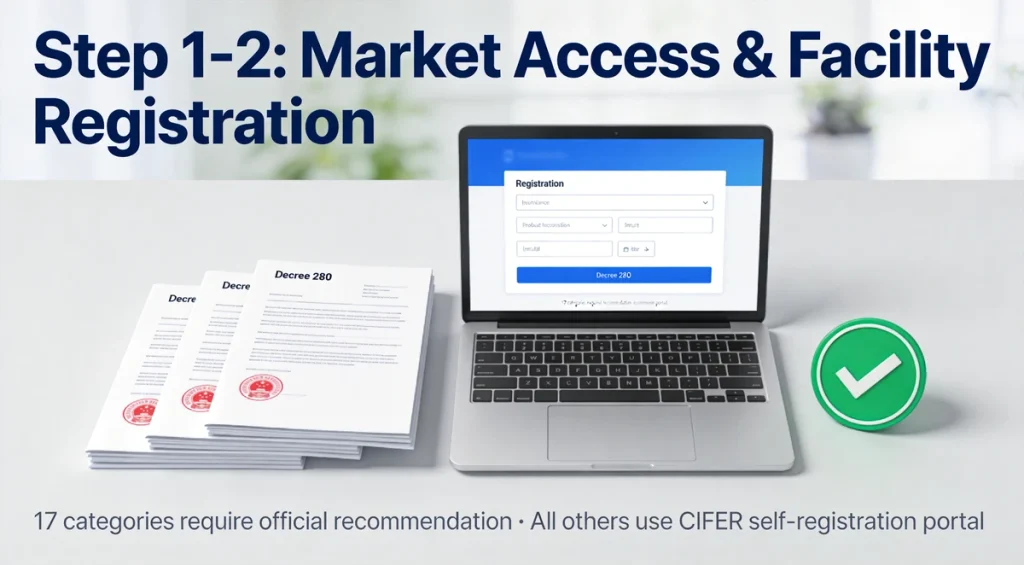
Step one is market access. Before you prepare a single document, confirm your product can legally enter China at all. Market access is not binary even within a single country: product categories not historically consumed in China — including many "superfood" botanicals — may require new food raw material (NFRM) approval rather than a standard GACC registration. Our guide to novel food ingredient approval in Asia uses maca, chia, and lucuma to illustrate three distinct approval pathways. GACC only allows imports from countries whose food safety systems have been assessed for specific product categories. The Catalogue of Countries/Regions Meeting Assessment Requirements is the place to start. If your country is not listed for your product category, no amount of paperwork will get your shipment through. Some categories — meat, dairy, and aquatic products especially — require bilateral protocols before any registration can begin. Beyond the access question, certain product categories carry additional certification burdens even when access is granted. Organic products are a prime example: the China, Japan, and Korea organic certification requirements differ to the point where an EU or USDA organic seal has no legal standing in any of the three markets without additional steps.
Step two is facility registration. Under Decree 280, 17 categories require official recommendation from the competent authority in your country before GACC will process the application. Everything else — coffee, tea, confectionery, snacks, beverages, and most FMCG products — goes through the CIFER self-registration portal. The process is straightforward: create an account, upload your business licence and compliance declaration, and wait for review, typically within 20 working days. No fee is charged. What changed under Decree 280: oilseeds, fresh vegetables, and unroasted coffee and cocoa beans moved to a separate agricultural framework; registration validity is now five years with automatic renewal, except for meat and bird's nest products; revocation grounds expanded from 7 to 9; and cold-storage facilities now require separate registration. GACC Decree 280 rejection data shows registration errors remain a leading cause of border failure. GACC registration support can help navigate the correct path.
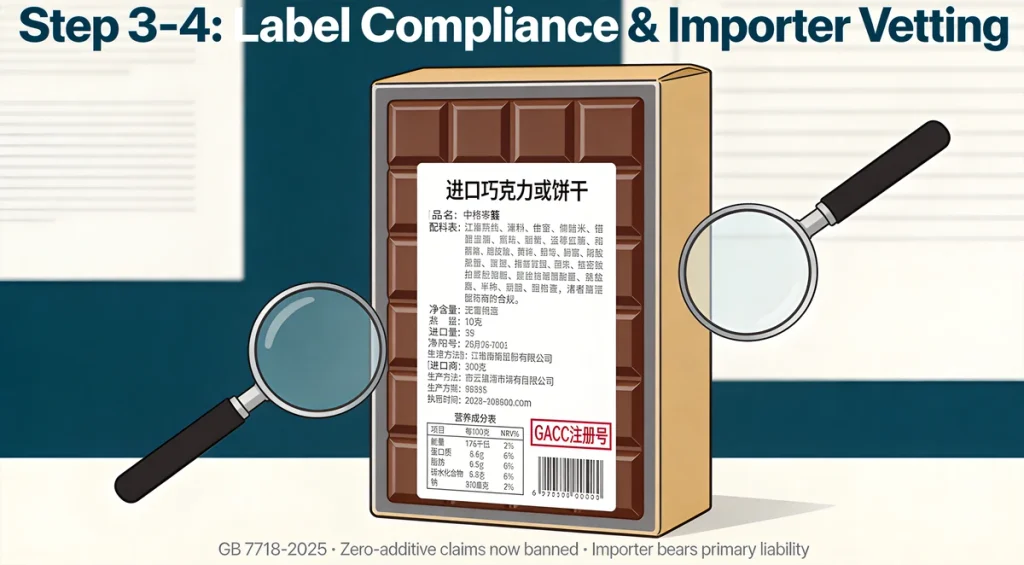
Step three is label compliance. Your label is not a translation task — it is a regulatory document. GB 7718 and GB 28050 govern label content, and the new GB 7718-2025 introduces stricter allergen and nutrition rules. Mandatory elements include Chinese product name, ingredient list, net content, country of origin, importer information, GACC registration number, nutrition panel, production date, shelf life, and storage conditions. "Zero additive" claims are now banned. Do not carry marketing claims from your home market onto the Chinese label. Chinese labelling requirements are strict and frequently updated. Labelling and regulatory requirements across Asia vary by market — what passes in China may not pass in Japan or Korea.
Date marking is changing significantly under GB 7718-2025 — a mandatory dual-date requirement (production date + expiry date, both in YYYY-MM-DD, printed in a dedicated high-contrast field) takes effect on 16 March 2027. If you are also shipping to Japan or Korea, note that those markets require entirely different date formats, terminology and supporting evidence; see our date marking comparison across China, Japan and Korea for the full breakdown.
Step four is importer vetting. Under China's Food Safety Law, the Chinese importer bears primary legal responsibility. Your importer must be registered with GACC and must file the import declaration. Do not assume your buyer will handle compliance — many importers expect the exporter to provide fully compliant documentation. Finding qualified food importers is the first step; importer identification and sourcing require separate due diligence before you commit.
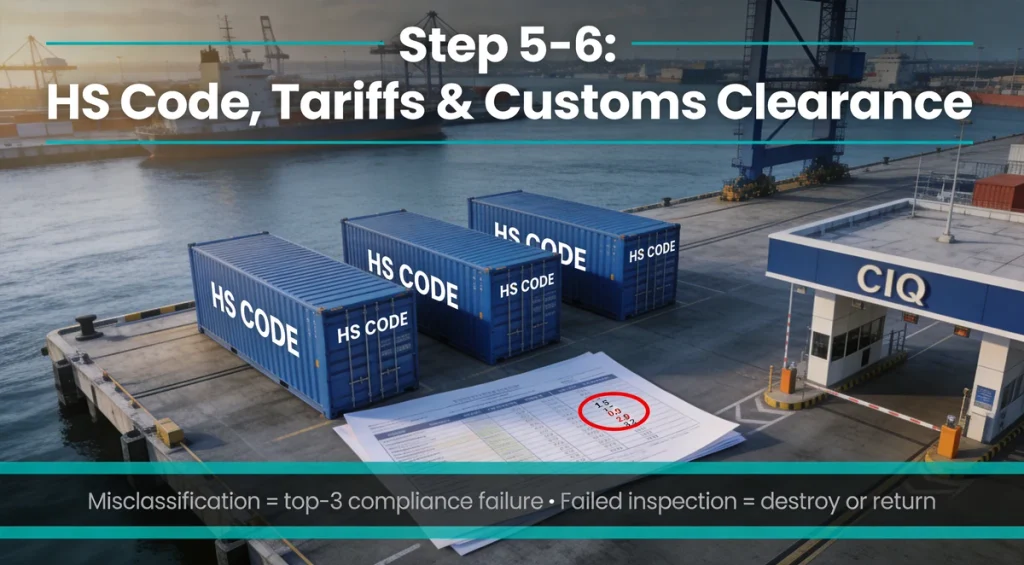
Step five is HS code classification and landed cost. Your HS code determines tariff rate, inspection intensity, and whether any preferential FTA rate applies. Misclassification is one of the top three compliance failures for new exporters in Asia. What exporters actually pay at the border often differs from what they assumed. Import duties and tariffs should be verified before you quote a price.
Step six is shipping and clearance. Expect documentary review, physical inspection, and lab testing — especially for first-time exporters and high-risk categories. Failed inspection means destroy, return, or re-process under customs supervision.
Why This Matters for You
Expect six to twelve months from the first decision to the cleared first shipment for general trade. Cross-border e-commerce is faster but limited to specific categories. Start early, move through the steps in sequence, and do not skip the unglamorous ones.
The most common mistakes are structural, not technical. Registering the wrong entity — a trading company instead of the production facility — invalidates the entire registration. Misclassifying the product between the 17-category and self-registration paths sends the application down the wrong track from day one. Assuming registration alone clears a shipment ignores that importer filing, customs codes, and label compliance are separate steps. And using additive or contaminant levels that are legal at home but not permitted under GB 2760 or GB 2762 is a border rejection waiting to happen.
What changed in 2026 is not just the regulation — it is the enforcement. With over 96,000 overseas facilities now registered, the system has matured. The gate is real, and it operates on documentation, not goodwill.
Takeaway
Follow the sequence. Check market access first, because if your country-product combination is not listed, nothing else matters. Register the correct facility through the correct path — official recommendation or self-registration — and do not assume your home market classification carries over. Prepare your label as a compliance document, not a translation. Vet your importer properly, because they carry the legal liability and expect you to deliver compliant documentation. Run your HS code and landed cost before you quote a price. Budget six to twelve months for the full process, not two to three.
The exporters who treat this as a system to be navigated are the ones who reach the shelf. Other Asian markets are tightening compliance in parallel — Indonesia's mandatory halal certification deadline arrives 18 October 2026, requiring overseas producers to either certify through an Indonesian LPH or register existing foreign halal certificates via RSHLN.
Need help with your China food export plan? Contact Specit Consulting for an initial assessment based on public data.
About Specit Consulting
We help food and beverage brands enter and grow in the Chinese and wider Asian markets through trade intelligence, importer identification, and market research.
Disclaimer: This article provides general compliance information based on regulations effective as of September 2026. It does not constitute professional compliance advice for any specific product or company. Always verify current requirements against your specific product circumstances before making regulatory decisions.
Need help navigating your market entry?
We've helped food exporters across 10+ countries enter 13 Asian markets. Get a free initial assessment based on public data — delivered in 3 working days.
Get Your Free AssessmentContinue Reading
▶Exporting Food to Asia in 2026: A Market Prioritization Framework for Craft Food & Beverage Brands
▶Food Import Detentions in Asia: 7 Real Cases and How to Avoid Them (2026)
Questions about entering the Asian market?
Chat with us on WhatsApp →