

4 September 2026 | Shanghai, China
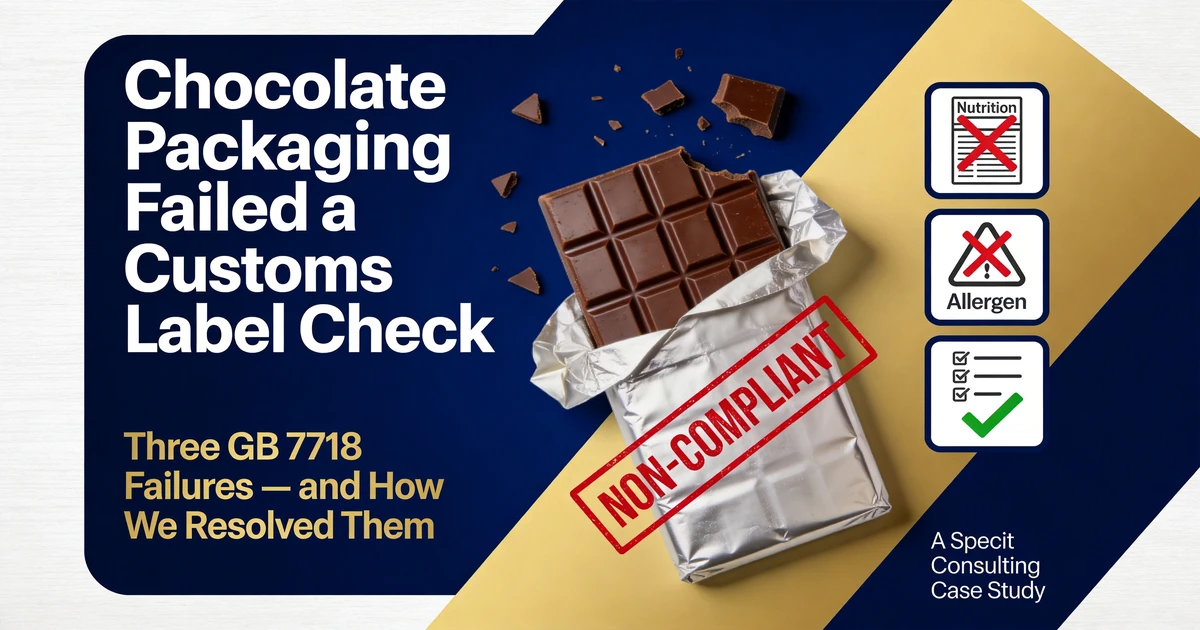
A European chocolate brand shipped its first container to China. The product was premium. The packaging was beautiful. The shipment was held at Shanghai port — not because of quality, but because the label did not match the GACC registration.
The container sat at the port while the exporter and importer tried to understand what went wrong. The label looked fine to the importer. It was in Chinese. It listed the ingredients. But looking fine is not the same as being compliant.
Three Label Failures That Held the Container
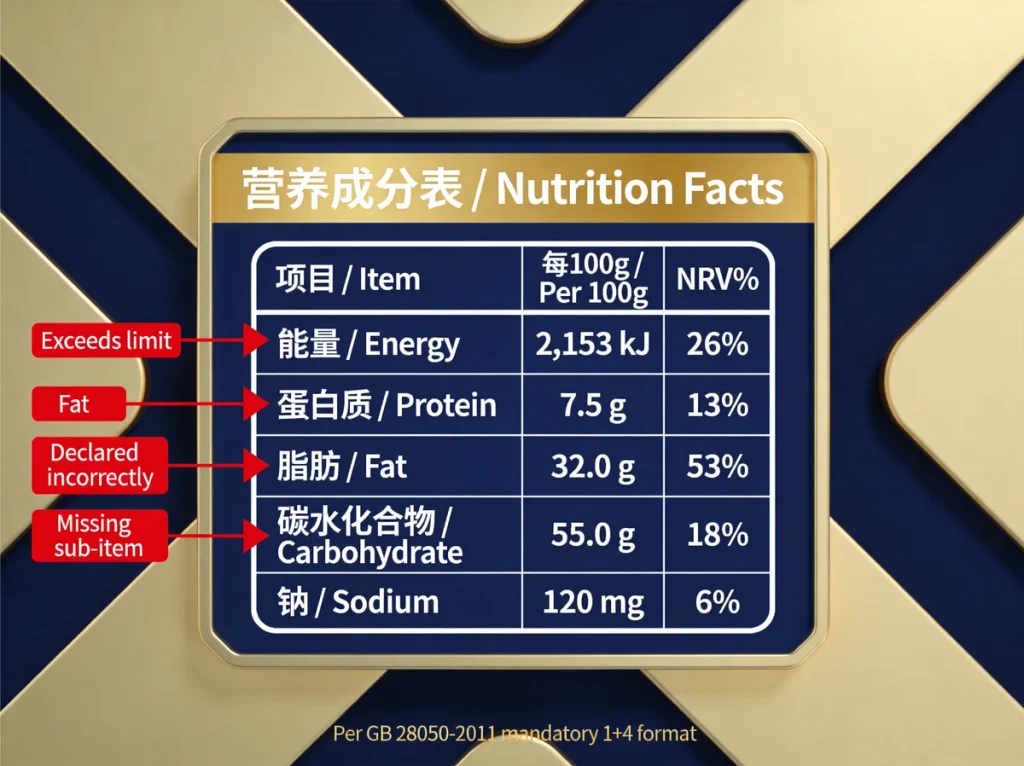
Nutrition panel format. China’s nutrition labelling standard, GB 28050-2011, prescribes a fixed layout: nutrients must appear in a specific order, under a standardised heading, with defined rounding rules. The client’s label had the right data in the wrong sequence. Under GB 28050, that is non-compliant — and customs can flag it.
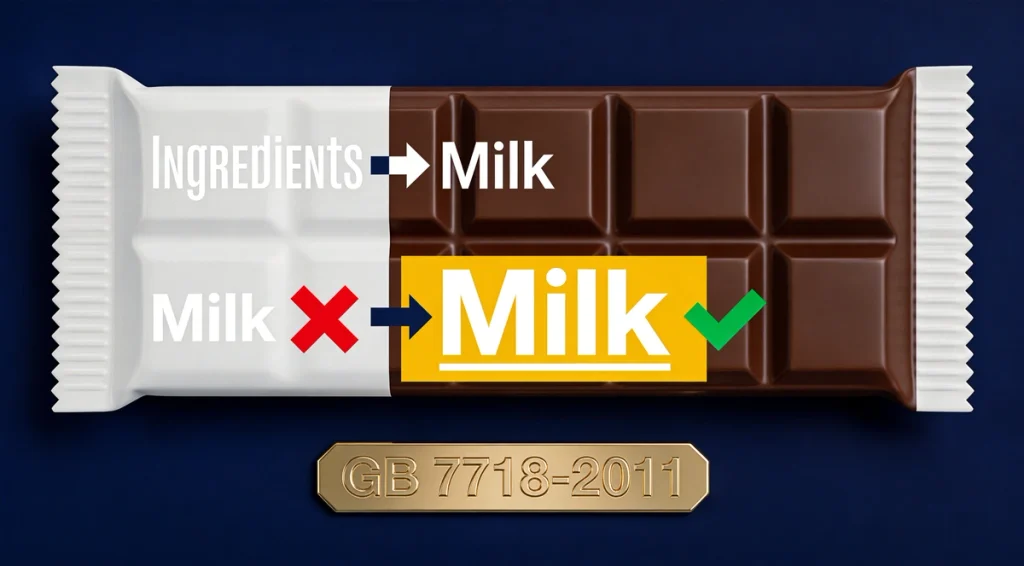
Allergen declaration. GB 7718-2011 requires that allergens be declared in the ingredient list with emphasis (bold, larger font, or underlined). Chocolate, milk, and soy must be highlighted — not merely listed. The client’s label mentioned milk in the ingredients but without the required emphasis format. The regulation expects more than inclusion; it expects a specific presentation.
Country-of-origin placement. GB 7718-2011 requires imported prepackaged food to indicate the country of origin on the label clearly. The client had placed it on the back panel, separated from the primary display area. While the regulation does not prescribe a specific panel position, the mismatch between the label layout and the GACC registration filing — which referenced a different layout — created a discrepancy that customs flagged.
The core issue was misalignment between the label and the GACC registration. The product was registered under a specific category with specific labelling requirements. When the physical label does not match what was filed, customs has grounds to hold the shipment. Rectification options exist, but they cost time and port storage fees — and the clock runs while the container waits.
How We Fixed It
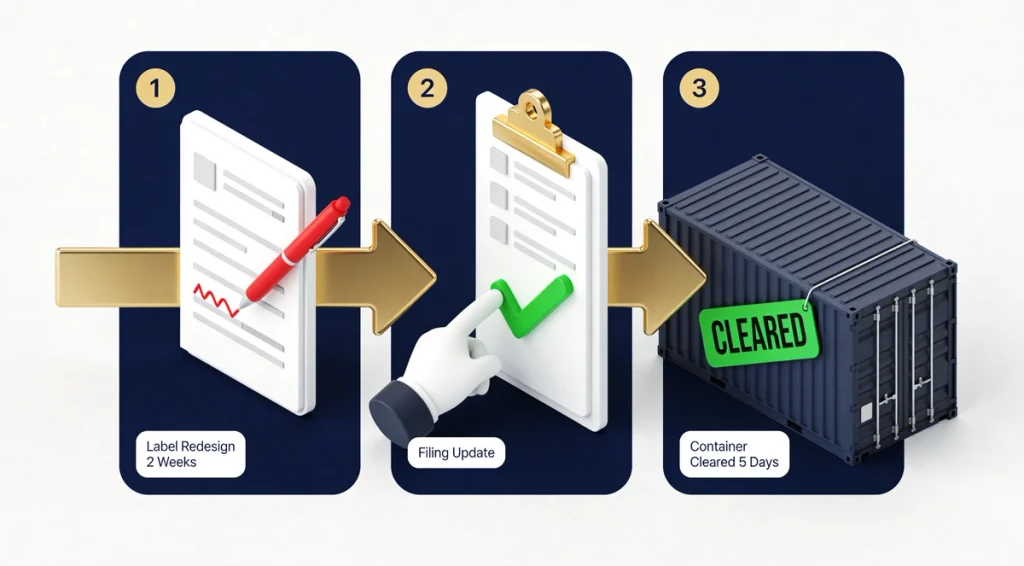
We reviewed the label against the GACC registration, GB 7718-2011, and GB 28050-2011. The process:
- Label redesign — within two weeks, we restructured the label to match the GACC registration and comply with both standards: correct nutrition panel order per GB 28050, allergens emphasised per GB 7718, and country of origin positioned consistently with the filing.
- Filing update — we submitted the revised label to the importer for approval and coordinated with the customs broker to update the declaration.
- Release — the container cleared within five business days after the corrected documents were submitted.
The client lost time but not the shipment. The cost of the redesign was a fraction of what a return shipment or continued port storage would have been.
The Lesson: Compliance Is Not Translation
This case reflects a pattern we see regularly. Exporters treat label translation as a post-production task — something the translation agency handles after the design is finalised. Most translation agencies focus on language accuracy, not regulatory alignment. They produce a correct Chinese translation, but not necessarily a compliant Chinese label.
A compliant label is a regulatory document. It must match the GACC registration, follow the layout prescribed by GB 28050-2011 for nutrition information, and include all mandatory elements specified in GB 7718-2011. If any element is misaligned, customs may flag it — often before the importer does.
The timing matters. Label errors are cheaper to fix before printing than after shipping. A review that takes a few days before production can prevent a hold that lasts weeks at the port.
Takeaway
Before you print the label, verify three things against the Chinese regulations:
- Nutrition panel: Check the format, order, and rounding rules against GB 28050-2011. Right data in the wrong order is still non-compliant.
- Allergen declaration: Confirm allergens are emphasised in the ingredient list per GB 7718-2011 — not merely listed.
- GACC registration alignment: The physical label must match what was filed with GACC. Any discrepancy — layout, content, or sequence — can trigger a customs hold.
A label review before printing costs a fraction of what a container hold costs after shipping. The exporters who get this right clear customs in days. The ones who don't learn it at the port. Label compliance is just one step — for the six-step China export process, start from market access and work through in sequence. Japan is also tightening its food labelling framework, with cashew allergen declarations becoming mandatory from March 2028 and QR code supplementary labels expected from FY2027. See our breakdown of Japan's 2027 food labelling changes for exporters shipping to the Japanese market
Need your Chinese label reviewed before you print? See our Labelling and Regulatory Requirements service — or contact us directly.
For a deeper look at what can go wrong even when labels and filings appear to be in order, see our analysis of food import detention in Asia, based on anonymised cases we handled directly in 2025–2026.
About Specit Consulting
We help food and beverage brands enter and grow in the Chinese and wider Asian markets through regulatory compliance, importer sourcing and qualification, and market entry strategy. Vet your importer before signing.
✉ info@specitconsulting.com
Disclaimer: This article reflects general market observations and regulatory understanding as of September 2026. It does not constitute legal or regulatory advice. Always confirm current requirements with the relevant authority or a qualified regulatory consultant.
Need help navigating your market entry?
We've helped food exporters across 10+ countries enter 13 Asian markets. Get a free initial assessment based on public data — delivered in 3 working days.
Get Your Free AssessmentContinue Reading
▶Food Import Detentions in Asia: 7 Real Cases and How to Avoid Them (2026)
▶Japan Food Import Requirements: A 6-Step Compliance Guide for EU Exporters (2026)
Questions about entering the Asian market?
Chat with us on WhatsApp →