


The most common first-step mistake in Asia is going straight to retail. Retail looks attractive: volume, brand visibility, reorder predictability, retailer marketing support. But retail also means listing fees, high minimum order quantities, unsold-goods return policies, and Net 60–90 payment terms. For a small producer with limited cash flow and a brand no Asian consumer has ever heard of, retail can kill the business before it starts.
HoReCa vs retail food Asia is not a theoretical debate — it determines how much capital you need, how fast you get paid, how strict your compliance must be on day one, and what kind of importer you should be talking to at trade shows like FHC Shanghai or ProWine. HoReCa — hotels, restaurants and cafés — is very often the better first channel for small international brands. The ITC's guide to distribution channels also recommends matching channel to importer specialism rather than chasing the biggest contract first. Here is how the two channels compare, who they suit, and how to decide on HoReCa vs retail food Asia for your own brand.
Channel Comparison at a Glance
A quick side-by-side before we go deeper. This is the framework we use with every client weighing HoReCa vs retail food Asia for the first time, and each factor is explained in detail later in the article.
Volume. HoReCa delivers lower volume per account (a single restaurant may order five to twenty cases at a time, a hotel group maybe a container per quarter across multiple properties), but you can build volume across dozens of accounts without committing to a national retail listing. Retail delivers higher volume per SKU once listed, but only after you pass the buyer meeting, pay the listing fee and survive the first reset.
MOQ. HoReCa MOQs are low. A chef who likes your olive oil or chocolate can start with a single case. Retail MOQs are high — per SKU, per store, per DC, and often measured in pallets rather than cases.
Listing fee. HoReCa has no listing fee. You do not pay to get on a menu. Retail — particularly in Japan, Korea and the premium supermarket channel in Greater China — almost always involves slotting fees, new-item setup fees, anniversary fees and promotional spend.
Margin. HoReCa supports premium pricing because your product is being used in a finished dish or poured by the glass; the customer is paying for an experience, not comparing unit price on a shelf. Retail margins are more competitive and under constant pressure from private label and competitor promotions.
Payment terms. HoReCa typically pays Net 30 in established food-service relationships. Retail routinely pays Net 60–90, and some chains deduct from future payments rather than paying on a fixed schedule.
Speed to market. HoReCa is fast — a chef can put your product on the menu in days once samples are approved. Retail is slow — the retail buyer cycle from first meeting to shelf is typically six to twelve months for an imported brand.
Label requirements. HoReCa is often more flexible: B2B food-service packaging does not always require the full consumer-facing label in the first meeting, though the import compliance must still be correct and the distributor must hold the appropriate import licence. Retail labels are strictly audited against Food Labeling Act (Japan), MFDS regulations (Korea) and TFDA rules (Taiwan) before the product ships.
Relationship model. HoReCa is chef- or F&B-manager-driven; one person's opinion of your product can put you on the menu. Retail is category-manager-driven; the decision goes through a committee, a vendor setup process, a planogram and a ranging review.
HoReCa Deep Dive
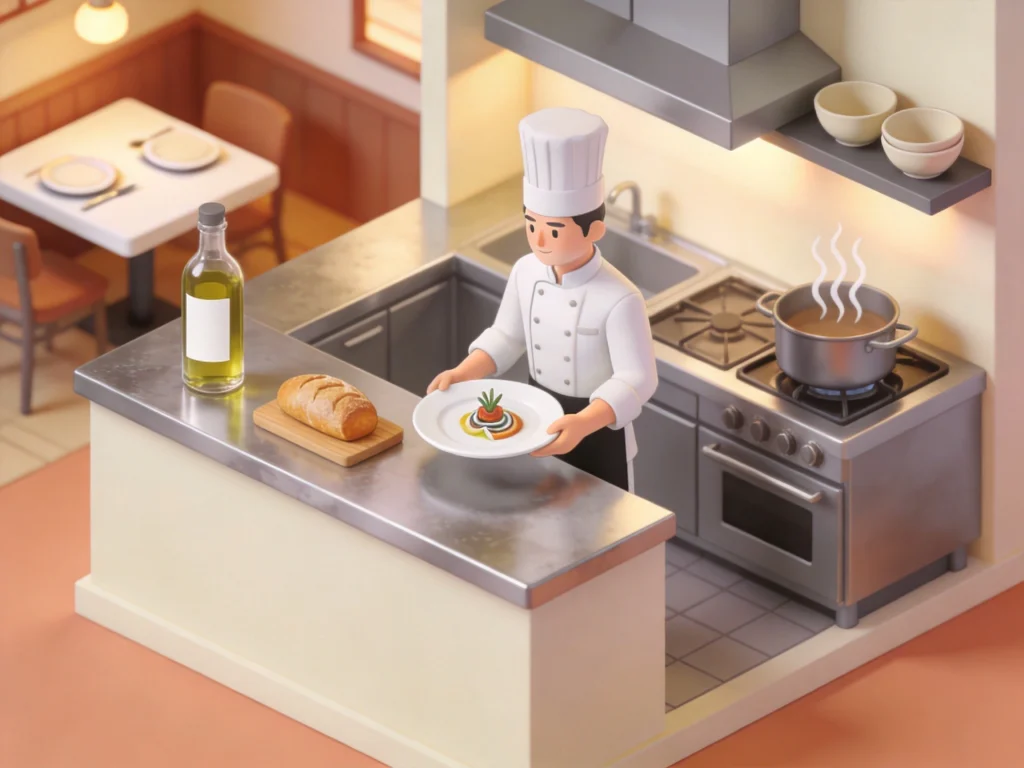
Who it includes. Five-star hotels and hotel groups, independent fine-dining restaurants, western restaurant chains, café chains and speciality coffee shops, airline catering, cruise lines, duty-free food and beverage outlets, and contract catering for corporate and institutional accounts.
The advantages. Low MOQ means you can launch with a fraction of the inventory a retail listing requires. Net 30 payment terms protect your cash flow. There are no listing fees or slotting allowances. Most importantly, chef endorsement builds your brand story: when a respected chef uses your olive oil, your cheese or your chocolate in a dish, that endorsement carries weight with retail buyers, food writers and consumers. Premium pricing is sustainable because the product is embedded in an experience rather than placed next to a cheaper competitor on a shelf. Small-batch production works well because HoReCa buyers are often looking for distinctive products rather than the cheapest commodity.
The disadvantages. HoReCa is fragmented. You do not close one national deal; you close fifty or a hundred individual accounts one chef at a time. Volume per outlet is low, so you need more accounts to build meaningful revenue. Menus turn over every three to six months, which means you are only as secure as the next seasonal menu change. The end consumer rarely asks who made the olive oil on their salad or the chocolate in their dessert, so pure HoReCa gives you limited brand visibility to the buying public. Sampling and menu training are mandatory — you or your importer will spend time in kitchens, not just in boardrooms.
Best-fit categories. Extra-virgin olive oil, cheese and charcuterie, wine and spirits, premium chocolate and confectionery, speciality coffee, artisan bread and bakery, premium meat and seafood, and any product where provenance and taste drive the chef's decision. If your product sits in this list, the HoReCa side of the channel decision is where your HoReCa vs retail food Asia analysis should begin.
Importer profile. A specialist food-service distributor, often mid-sized, with strong personal relationships in the chef community and a portfolio of premium international brands. These importers are typically smaller than national retail distributors, but their relationships run deeper and their salespeople spend time in kitchens rather than in buyer offices — exactly the profile you need when the HoReCa side of HoReCa vs retail food Asia is your starting point.
Retail Deep Dive
Who it includes. Hypermarkets and warehouse clubs (Costco, Carrefour, Lotte Mart, Aeon, RT-Mart), high-end and imported-food supermarkets (Dean & DeLuca, City'Super, Meidi-ya, SSG Food Market, Apita), convenience stores for single-serve and impulse products, online grocery (Coupang, Rakuten Seiyu, PChome, Hema, Tmall Supermarket), and speciality stores focused on a single category (wine merchants, cheese shops, organic stores).

The advantages. Retail delivers volume. Once you are listed in a chain, reorders are predictable, your product reaches the end consumer directly (building brand recognition that HoReCa cannot), and the retailer co-invests in promotions, catalogue placement and seasonal features. A strong retail listing creates leverage with distributors in neighbouring markets and gives you a story to tell at trade shows.
The disadvantages. Listing and slotting fees are real and significant in Japan, Korea and Greater China — they can run to tens of thousands of dollars per SKU per chain. MOQs are high: per SKU per DC, often multiple pallets, with reset windows that mean you produce three to six months of stock at a time. Unsold-goods return policies (particularly in Japan and Korea) mean you can be asked to take back or credit slow-moving stock. Payment terms are Net 60–90 as standard, stretching cash flow for the entire length of the pipeline. Label audits are strict and done before shipment — a single missing allergen or incorrect nutrition value can hold a container at port. Finally, private label risk is real: if your product works well, the chain may ask you to produce a private-label version, and if you refuse, the category may close to you. JETRO's guide to selling to Japanese retailers notes that category captaincy and private-label pressure are standard features of the Japanese retail landscape.
Best-fit categories. Proven home-market CPG brands with existing velocity data, mass-appeal snacks and confectionery, shelf-stable dry goods with long shelf life, price-competitive commodities, and products designed for retail from the outset (multi-language packs, stable cases, scan-ready case packs). For CPG that already moves at velocity in multiple markets, the HoReCa vs retail food Asia answer is usually straightforward — start with retail.
Importer profile. A larger distributor with a national distribution centre network, established category-captain relationships with the major chains, a dedicated retail sales team and the working capital to carry inventory for Net 60–90 terms. These importers are harder to reach as a first-time exporter but move serious volume once you are listed, which is why many brands end up hybrid rather than choosing a pure HoReCa vs retail food Asia path.
The Hybrid Path: HoReCa First, Retail Second

For most premium international food brands entering North Asia, the recommended path in any HoReCa vs retail food Asia comparison is not HoReCa or retail — it is HoReCa first, then retail six to twelve months later. This hybrid approach resolves the most common pain points of a pure HoReCa vs retail food Asia decision for small producers.
The logic is simple. Six to twelve months of HoReCa presence builds three things that retail buyers ask for in the first meeting: chef endorsement (social proof that a discerning professional uses your product), press (reviews, awards, menu mentions), and real sales velocity data (even if it is small, it is real). Walking into a Lotte or Aeon buyer meeting with a few dozen of the city's best restaurants already using your olive oil, cheese or chocolate is a fundamentally different conversation from walking in unknown with a sell sheet and a price list.
This is the classic launch path for premium olive oil, international cheese, craft chocolate and new-world wine in the region — and it is where HoReCa vs retail food Asia decisions get made in practice. The key requirement is an importer that has both HoReCa and retail networks, or a willingness to work with two separate importers (and to structure your exclusivity carefully so that neither channel is locked up without performance). If you give a single HoReCa-only importer full exclusivity including retail, you can block your own retail entry.
Third Option: Duty-Free and Cross-Border E-Commerce
Two channels sit outside the HoReCa/retail binary and are worth considering as complements.
Duty-free. Airport duty-free (Japan Narita/Haneda/Kansai, Korea Incheon/Gimpo, Greater China international terminals) and travel retail move relatively small volumes but at premium margins, and they position your brand among established international names. Duty-free is most relevant for chocolate, confectionery, premium biscuits and gift-box products rather than for ingredients.
Cross-border e-commerce (CBEC). Platforms like Tmall Global, Coupang Wow and Rakuten Ichiba allow a lighter-compliance route into Greater China, Korea and Japan respectively. Products sold cross-border do not always need a full local-language label at launch (a Chinese/Korean/Japanese-language product detail page is usually sufficient), and the registration burden is lower. The trade-off is that CBEC volumes are typically modest, there is no offline discovery, and competition from other international brands on the same platform is intense. CBEC is best used as a listening post and brand-building channel, not as your primary revenue plan, and not as a way around the core HoReCa vs retail food Asia decision.
For more detail on how to time your launch against trade shows and buyer meetings, see our trade show follow-up guide and our first-container timeline.
Decision Framework: 6 Questions to Choose Your First Channel
Ask these six questions before you sign with an importer. The answers point you to the right channel — and to the right type of partner. This is the decision framework we walk every new client through when the HoReCa vs retail food Asia question comes up.
- Is your product premium or mass? Premium, provenance-driven, story-led product → HoReCa first. Mass-market, price-competitive, shelf-stable CPG → retail ready.
- What is your MOQ tolerance? If you can only commit to one to two pallets for the first shipment → HoReCa. If you can produce a full 20-foot container and hold inventory for six months → retail.
- Can you survive six months of zero retail turnover? Retail takes six to twelve months from contract to first reorder after launch. If your cash flow requires revenue within 90 days → HoReCa.
- Is your importer strong in HoReCa or in retail? Match your channel to your importer's strength. A food-service specialist cannot magically get you an Aeon listing, and a retail distributor will not spend time walking chefs.
- Is your product an ingredient or a finished consumer product? Ingredients used by chefs (olive oil, cheese, butter, chocolate couverture, premium flour) → HoReCa. Finished consumer products ready for the shelf (snack bars, biscuits, confectionery boxes, ready-to-drink beverages) → retail.
- Are you willing to invest in chef education and sampling? HoReCa requires time in kitchens, staff training, menu development support and regular sampling visits. If you or your importer are not prepared to do that work → HoReCa will underperform, and you should start with retail or online.
For help qualifying whether an importer you met at a show is genuinely HoReCa-capable, retail-capable or neither, see our 10 red-flags checklist for vetting Asian food importers.
FAQ
Can I launch HoReCa and retail at the same time in Asia?
Technically yes, but it usually fails for small brands because each channel demands a different price point, a different pack size, a different sales approach and a different kind of distributor. If you try both on day one you are likely to under-resource both. Start with one, nail it, then add the second.
What is a realistic first HoReCa order in Asia?
A single premium hotel or restaurant group may start with five to twenty cases per SKU for a trial. A specialty food-service distributor may take one to two pallets across your range for their first warehouse order. Plan on a first container of mixed SKUs rather than a single-SKU bulk order. These tiered starting points — cases for HoReCa, pallets for specialty distributors, mixed-SKU containers for retail — are exactly the MOQ structure your quotation must reflect, alongside correct Incoterms, named-port CIF figures and shelf-life-at-arrival language. We break down how to structure tiered MOQ, FOB vs CIF, and first-order pricing rules when you quote Asian food importers in our pricing guide.
How do I get into Asian duty-free?
Duty-free is operated by a small number of concessionaires (Dufry, Lagardère, Lotte Duty Free, Shilla, China Duty Free Group). Entry is typically through a local distributor with existing duty-free relationships, not directly. Treat duty-free as a channel for year two, after HoReCa or retail has built brand recognition.
an cross-border e-commerce work as a standalone first channel in Asia?
For a small brand testing demand, CBEC can be a low-risk way to learn the market and gather consumer feedback without committing to full registration. Do not rely on it as your primary revenue channel — the margin structure, platform fees and competitive intensity make it hard to build a sustainable business on CBEC alone.
How long does it typically take to move from HoReCa into retail in Asia?
Six to twelve months of active HoReCa presence is a realistic runway before retail buyer conversations become serious. Use that time to collect chef testimonials, press mentions, sales data and any local awards or certifications that strengthen your buyer story.
If you are planning your first entry into Japan, Korea or Greater China and want a channel-fit assessment for your specific category and SKU range, send us your product list and target market. We will give you a clear recommendation — HoReCa, retail, duty-free, CBEC or a hybrid sequence — within 48 hours, based on nineteen years of helping small food and beverage producers answer the HoReCa vs retail food Asia question and execute their first Asia channel.
Specit Consulting helps global non-Asian food and beverage brands navigate regulation, Chinese-Asian language labelling, product registration and importer introductions across Japan, Korea and Greater China. Based in Shanghai, active across the region since 2007.
Disclaimer: This article is provided for general informational purposes only and does not constitute legal advice, regulatory guidance or a professional recommendation on any specific distribution arrangement or channel strategy. Channel structures, listing-fee practices, payment terms and regulatory requirements vary across Japan, Korea, Taiwan and mainland China, and they change over time. The third-party resources linked in this article (ITC, JETRO) are provided for reference only and do not constitute endorsement. Always engage qualified local legal and commercial counsel and verify current channel economics with your importer before committing to a channel strategy or signing a distribution agreement. Specit Consulting accepts no liability for decisions made on the basis of this article. For advice specific to your brand and category, contact us directly.
Further Reading
- Vetting an Asian Food Importer: 10 Red Flags Before You Sign
- First Food Shipment Asia Timeline: Contract to Retail Shelf
- Food Distributor Agreements in Asia: Key Clauses to Negotiate
- 5 Questions to Ask an Asian Food Importer at a Trade Show
- How to Follow Up After a Food Trade Show in Asia
Need help navigating your market entry?
We've helped food exporters across 10+ countries enter 13 Asian markets. Get a free initial assessment based on public data — delivered in 3 working days.
Get Your Free AssessmentContinue Reading
▶Japan Food Distribution: HORECA vs Retail vs Online Channel Strategy
▶GACC Registration: 5 Mistakes That Get Your China Filing Rejected
Questions about entering the Asian market?
Chat with us on WhatsApp →