

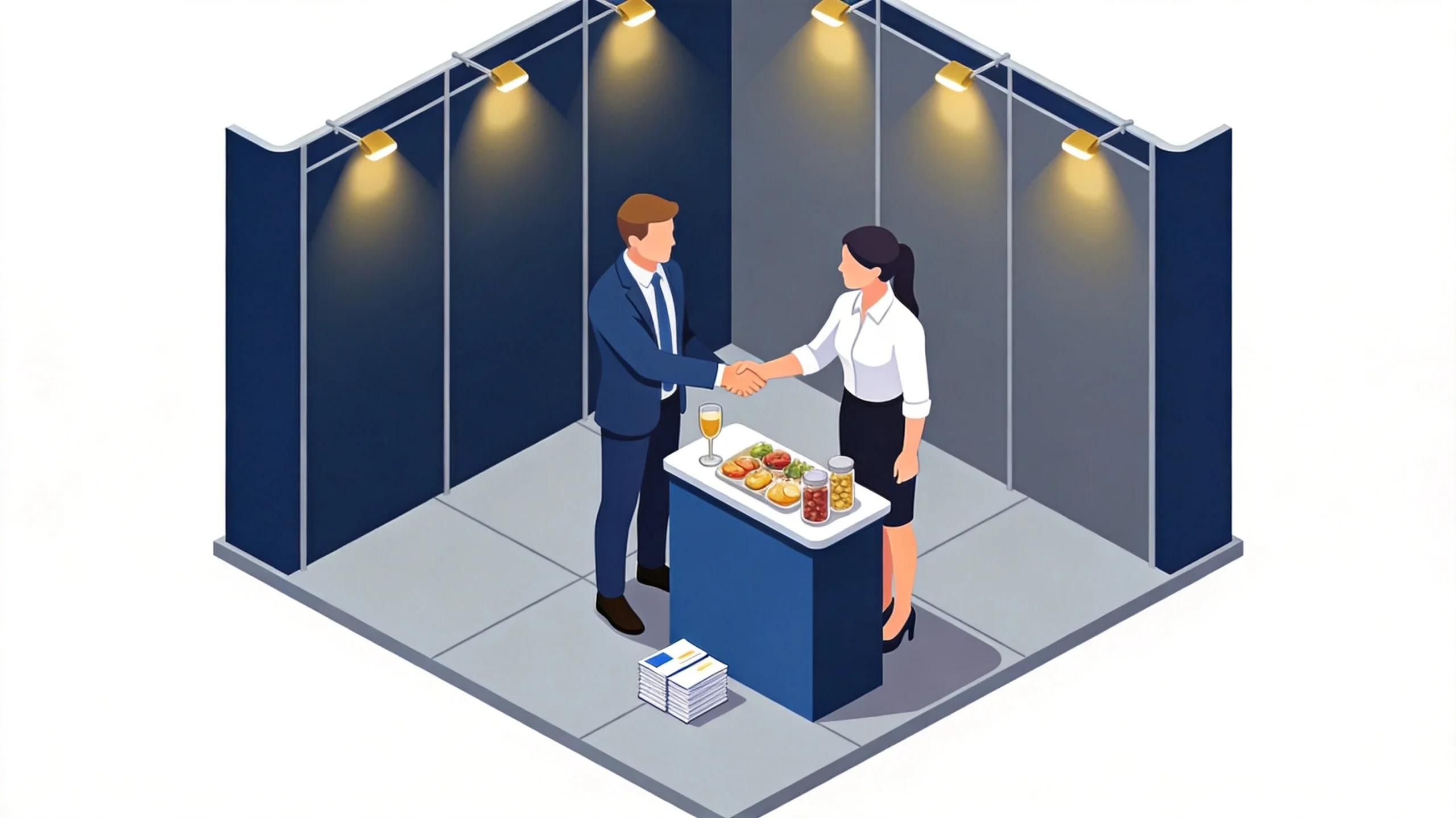
Every food brand that has walked the floor of an Asian food importer trade show knows the feeling. You spend three days shaking hands, pouring samples, swapping business cards, and leaving with 40 or 50 new contacts. Three weeks later, half the emails bounce. A quarter reply once, then go silent. The small handful that do respond want exclusivity for five countries, a price 40% below your distributor price, or both.
FHC Shanghai — which opens on 10 November 2026 — will be no different. Over 3,000 exhibitors and 180,000 trade buyers will pass through SNIEC across three days, according to official show figures. The international pavilions alone host 40+ country groups with several hundred pre-packaged food and beverage brands, many of them European SMEs exploring Asia for the first time. Most of those brands will leave Shanghai with stacks of business cards and no concrete next step.
The difference between a trade show that pays for itself and one that becomes an expensive tourism exercise is not your booth, not your packaging, and not how many samples you give away. It is the five or six conversations where you actually qualify the person across the table, understand what they can realistically do, and leave with a specific commitment — not "send me a catalogue" but a concrete next action with a date attached. The booth-level errors that turn a promising show into an expensive tourism exercise — from handing samples to unqualified visitors to pitching before listening — are covered in detail in our guide to the common mistakes at Asian food trade shows.
This article lays out five questions that consistently separate real Asian food importers from business-card collectors at any trade show, and explains how to ask each one naturally without sounding like you are running an interrogation.
For broader context on how Asian food import works — compliance, tariffs, labelling and channel structure — see our guides to exporting food to China under Decree 248/249, Korea MFDS registration, and FHC Shanghai 2026 exhibitor checklist.
Why Asian Food Importer Trade Show Conversations Go Nowhere
Before the five questions, it is worth understanding why the default trade show conversation with an Asian food importer produces so little. The pattern is almost always the same:
The buyer approaches your stand. You offer a sample. They taste, say something positive, ask about your country, your story, your awards. You give them the elevator pitch. They ask for the price. You give them a broad range. They nod, take a catalogue and a business card, say they will follow up after the show, and move to the next stand.
That conversation tells you almost nothing. It does not tell you whether they import similar products. It does not tell you which channels they serve. It does not tell you whether they work with brands your size, or whether they only handle multinational accounts. It does not tell you whether they can register a new foreign product with the local regulator, or whether they expect you to handle compliance. It does not tell you what a realistic first order looks like for them.
Worst of all, it creates a false positive. You leave thinking you had a "good meeting." They leave thinking they tasted a nice product. There is no shared commitment to a next step, no information exchanged that changes either side's behaviour, and no reason for either of you to prioritise this relationship over the twenty other conversations you each had that day.
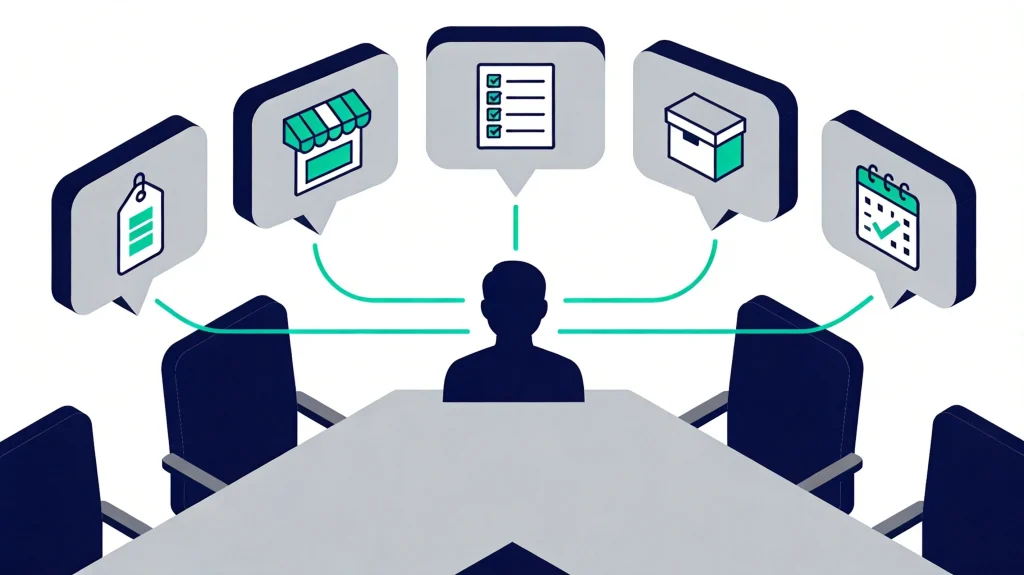
The fix is not a more aggressive pitch. The fix is asking five specific questions in a natural sequence — questions that a casual browser cannot answer convincingly, but that a real importer will answer in specific detail. Each question does one specific job. Together, they qualify the buyer, surface the real constraints on both sides, and anchor a concrete next step before you hand over any pricing.
Question 1: "Which brands do you currently import that are closest to mine?"
This is the single highest-value qualifying question you can ask an Asian food importer at a trade show, and most brands never ask it.
What it does: It immediately tells you whether this person imports your product category at all. A general trading company that imports French wine and Italian pasta but has never worked with olive oil, biscuits, chocolate, sauce, or whatever you sell is a very different prospect from a specialist importer who already carries four or five brands in your category. It also reveals their taste in brands — are they working with premium European SMEs or with commodity-tier suppliers? Do they represent competitor brands from your country? Are their brands positioned similarly to yours in terms of price and quality, or are they at a very different tier?
How to ask it naturally: After they taste and give you positive feedback, say something like: "I'm curious — do you work with many brands in this category already, or is this new for your portfolio?" Then follow with: "Which brands do you carry that would be the closest fit to what we do?"
What a real importer will say: They will name specific brands. They will tell you which country those brands are from, roughly how they are positioned in the local market, and how long they have been working with them. They may volunteer why they are looking for something new — one brand's quality dropped, a competitor brand is leaving the market, they want to fill a gap in a particular price segment. These are all positive signals.
What a business-card collector will say: Vague answers. "We work with many European brands." "We import food products from all over." "We are always looking for interesting new products." If they cannot name two or three brands they actually carry — brands you can verify later on their website — you should treat this conversation as a lead for post-show email nurturing, not as a qualified prospect.
The follow-up question if they name a brand you know: "How is that brand performing for you?" This gets them talking about volume, velocity, ty and challenges, which is immediately useful for your own planning. If they say a competitor brand is "doing well, but we'd like something more premium" or "volume is good, but we have quality issues", you have an opening.
What to do with the answer: Write it down on the back of their business card immediately after they leave. If you have time between meetings, check the brand they named on their website before the end of the show — it tells you a lot about their positioning and whether you are talking to the right partner.
Question 2: "Which channels would you take us into first — and how long does that usually take from first order to shelf?"
This question does two things at once. It tells you how well they know the local market structure for your category, and it surfaces their realistic timeline.
What it does: A real importer does not answer "we'll get you into all channels." They will tell you something specific. For Japan, they might say: "We'd start with 30-40 independent wine shops and specialty grocery stores in Tokyo and Osaka first — that usually takes four to six months from the first container. Department store food halls come later, after there is some retail velocity. We don't go to convenience stores on a new import." For Korea, they might say: "We'd launch through our online channels first — Naver Brand Store and Kakao Gift — then move to selected Hyundai and Shinsegae department stores once we have ratings and reviews. Full retail rollout is nine to twelve months."
Those are real answers. They show the importer has thought about where a new brand of your type actually goes, and they are not pretending to control every channel on day one.
How to ask it naturally: After discussing their portfolio, ask: "If we decided to work together, what would your first move be — which channels would you take us into first?" Then follow with: "How long does that usually take from the time you receive the first container to the product being onthe shelf?"
What to listen for:
- Channel specificity. "Premium grocery" is vague. "Seijo Ishii, National Azabu and Kinokuniya in Tokyo, then Hirota and Hanshin in Osaka" is a real answer.
- Realistic timelines. Anyone who tells you "we can get you into retailers within a month" is either talking about channels that require almost no compliance work (duty-free, B2B food service, grey market e-commerce) or is oversimplifying the regulatory pathway. For a brand new pre-packaged food import into Japan or Korea, from first shipment to retail shelf is typically 4-8 months depending on product category and certification status. Japan's MHLW import food inspection procedures and Korea's MFDS imported food safety management system both require advance facility registration and label compliance review before product can clear customs.
- Honesty about limitations. The best importers will tell you what they cannot do. "We don't have good c-store access — that would need a different partner." "We don't handle China GACC registration in-house; we work with a compliance agent." Those are positive signals — it means they know their boundaries.
Red flags to watch for:
- "We can do all of Asia" — no importer can do Japan, Korea, China, and Southeast Asia well simultaneously with a single brand. That is either a very large trading house that will not prioritise a small SME brand, or a broker who plans to pass your product on to sub-distributors you will never meet.
- "We can have you on shelf in 60 days" — physically possible only if you already have a compliant label, a registered facility, and an import licence ready in that market. For a first-time brand, this is unrealistic.
- Excessive focus on "online" or "cross-border e-commerce" without mentioning retail or food service — that is fine as a first step, but if it is their only channel, understand that you are looking at a low-volume, low-margin entry, not a real market launch.
Question 3: "What do you typically need from a new brand before you can place a first order?"
This is the compliance and readiness question. It is the question that prevents the common post-show disappointment of sending a price list and samples, then hearing six weeks later that "our regulator requires X certificate you don't have" or "we need Chinese-language labels designed and approved before we can order."
What it does: It forces the importer to spell out what they actually need from you to move forward. Different markets have very different requirements, and different importers within the same market have different expectations about who pays for what. A good importer will give you a clear list: facility registration, health certificate, certificate of origin, analysis report, label artwork in local language, allergen declarations, organic certification if applicable, shelf life data, and possibly a product sample for internal testing.
How to ask it naturally: "We want to make it as easy as possible for you. What do you typically need from a new European brand before you can place that first order — certificates, documentation, samples, anything specific we should prepare?"
What a real importer will say: They will have a checklist. They may say something like: "For Japan, we need: a full ingredient list with percentages, a spec sheet, a COA for the first shipment, a health certificate from your competent authority, a sample of the product for our food lab to check additives against the Japanese positive list, and label artwork in Japanese — which we can do for you if you give us the English files. For Korea, we also need the MFDS overseas facility registration, which we handle, but we need your facility information."
That is the kind of answer you want. It shows they have done this before and know what their regulator requires.
What a business-card collector will say: "Just send us the catalogue and price list, we'll take it from there." That tells you they have no intention of placing an order in the foreseeable future. If they cannot describe the compliance pathway, they are not a serious importer — or they expect you to do all of it and absorb all the cost before they commit to anything.
Critical follow-up: "Who typically handles the label design and compliance work for new brands — you, or do you expect the brand to provide a finished local-language label?" This one question saves weeks of post-show confusion. In some markets (Japan especially), many importers have in-house label teams that handle Japanese back labels for a fee. In other markets (China), the label must be pre-approved before shipment, which means you must provide it. Getting this clear on day one prevents a common impasse.
What to do with the answer: This becomes your post-show action list. If a serious importer tells you they need five specific documents, that is what you prepare and send to them first — before the catalogue, before the price list, before samples. They have told you exactly how to move forward.
For a full breakdown of what documentation Japan, Korea, and China require, see our Japan food import rejected and Korea MFDS registration guides.
Question 4: "What does a realistic first order look like for you in this category — and what would make you reorder?"
This is the volume question, and it is the one that most brands handle badly.
What it does: It replaces the vague "we order in containers" or "we do good volume" with a concrete number, and it reveals the importer's performance expectations. The reason this matters is not just for your production planning — it is that many first-time exporters have wildly unrealistic expectations about what a "good" first order is in Asia, and many importers are deliberately vague about volume because they do not want to commit.
How to ask it naturally: "To be honest with you, we work best when both sides have realistic expectations. For a brand like ours in this category, what does a typical first order look like for you — pallet, half-container, full container? And what has to happen for you to place a second order?"
What a real importer will say: They will give you a number. For premium European packaged food (olive oil, biscuits, chocolate, preserves, sauces) into Japan, a realistic first order is often in the range of one to five pallets, or a 20-foot container shared with other brands. For wine, 200-600 cases per year per brand is normal for a small specialist importer. For Korea, initial orders tend to be smaller (pallet-level) while the importer tests the product in a few key accounts. For China through general trade (not CBEC), first orders are larger, but the compliance burden is correspondingly heavier.
They will also tell you what triggers a reorder. "If we can move 80% of the first order in the first four months on shelf, we reorder." "If we get above a certain sell-through rate in the department stores, we expand." "If the online reviews are good and we can hit 200 orders a week on Naver, we go to retail."
That information is gold. It tells you what success actually looks like for them, and it lets you evaluate whether the effort is worth your while. It also tells you whether they are thinking like a long-term partner or whether they are buying one pallet to try and will forget about you.
What to watch for:
- No volume answer at all. "Volume depends on the market" is not an answer. If they cannot give you even a rough range for a first order, they are either not a real importer or they have no intention of placing an order with you.
- Unrealistically large first orders. If someone says they want three 40-foot containers for their first order and they have never imported your category before, that is a red flag. It could be a broker fishing for your best FOB price to shop around to distributors, or a trading company that is going to sit on inventory and blame you for slow movement. Real importers start small and scale.
- No reorder criteria. "We'll see how it goes" is not a plan. A serious importer has a clear threshold for what makes a brand work for them.
The other thing this question does is signal that you are a professional, not a tourist. When you ask about realistic first orders and reorder criteria, you immediately separate yourself from the dozens of brands that just hand over a price list and hope.
Question 5: "What is the one thing that has to go right for this to work between us — and what is the next step if we both want to move forward?"
This is the commitment question. It is the question that turns a pleasant conversation into an actionable lead.
What it does: It forces both sides to identify the single biggest risk or requirement, and it anchors a specific next action with a date. Without this question, you leave the booth with a vague "send me information" or "we'll be in touch after the show." With this question, you leave knowing exactly who does what, by when.
How to ask it naturally: "I've really enjoyed this conversation — I think there could be a fit. Before we wrap up, can I ask you one thing: what is the one thing that has to go right for this to work for you? And if we both want to take this forward, what is the best next step?"
What a real importer will say: They will give you a specific condition and a specific next step. For example:
- "The price has to work. We've had trouble making European EVOO pencil at under JPY 2,500 retail. Send me your FOB, and I'll run the numbers — if the landed cost makes sense, I'd like to set up a call in two weeks to talk about terms."
- "We need a Japanese label before we can present this to our buyers. If you can get us the label files and spec sheet within two weeks, I'll put you on the agenda for our next buyer meeting."
- "Our concern is exclusivity — we can't commit to a brand that works with three other importers in Japan. If you're willing to talk about a Japan-exclusive arrangement for 12 months, I'd like to set up a video call with our buying team in early November."
These are real next steps. They involve a specific deliverable from you and a specific commitment from them — a call, a buyer meeting, a follow-up with numbers.
What to do right after they answer: Take out your calendar (phone or physical) and confirm the next step while you are still standing in front of them. "So — I'll send you the spec sheet, CO, and ingredient list by Friday,riday 8 November. You'll have your food lab check the additive list, and we'll schedule a call for the week of 18 November. Does that work?" Get a verbal "yes" and write down the date on their business card in front of them. This single act — anchoring a specific date while face to face — doubles follow-through rates compared with "I'll send you an email."
What if they say "send me a catalogue" or "we'll be in touch"? That is not a next step. That is a brush-off. Push gently: "I'm happy to send the catalogue — but to make sure I send you the right information, is there anything specific you'd like to see, or someone else on your team I should include?" If they still give you a generic answer, treat them as a low-priority lead for post-show nurture, not as a committed prospect. Move on to the next stand.
The Sixth Question You Should Always Ask Yourself
After each conversation at the booth, ask yourself one question before the next person approaches: "Would I take this meeting if I were in their office in Tokyo/Seoul/Taipei, not on a trade show floor?"
If the answer is yes — if this is someone who imports your category, who works with brands your size, who was able to answer the five questions above with specifics, and who committed to a concrete next step — then this is a priority lead. Follow up within 48 hours of the show closing, while the conversation is fresh. Send exactly what you promised. Reference a specific detail from your conversation (a brand they mentioned, a channel issue they described, a concern about pricing) so they remember you.
Suppose the answer is no — if they could not answer the questions, if they could not name brands in your category, if they wanted "all of Asia" or "60-day shelf placement" or a 40% discount off your distributor price — then they are not a qualified prospect. Send them a polite catalogue email after the show, but do not prioritise them over the handful of people who actually passed the five-question test.
How to Structure a 15-Minute Asian Food Importer Trade Show Meeting
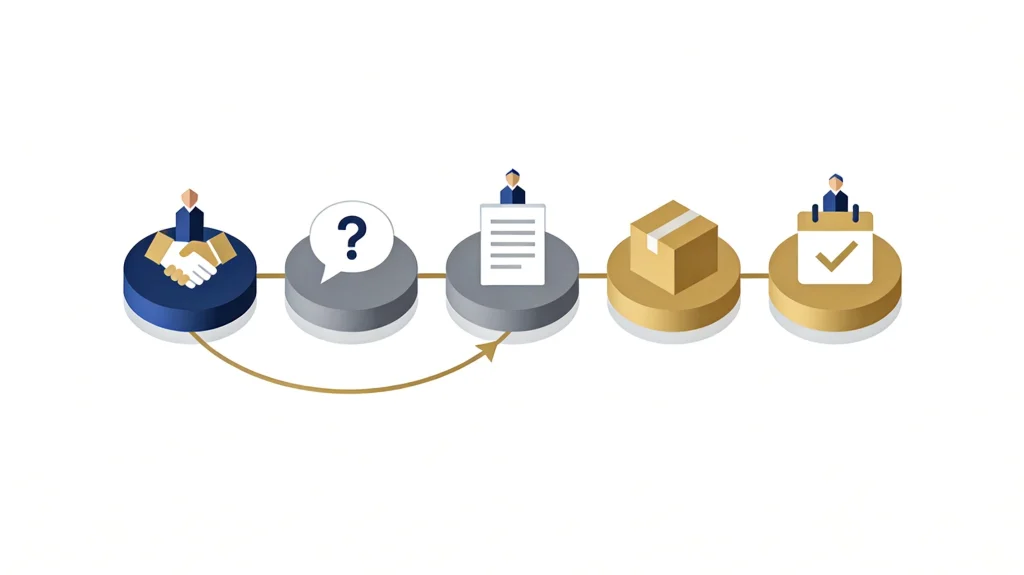
To put this into practice, here is a working structure for a 15-minute conversation at an Asian food importer trade show booth:
Minutes 0-2: Greeting and sample. Offer the product, exchange names and companies, and let them taste. Do not pitch yet — let them react.
Minutes 2-4: Question 1 (portfolio). After positive feedback, ask about their current portfolio and the brands closest to yours. Listen and take mental notes. If they are a real importer, they will answer specifically.
Minutes 4-7: Question 2 (channels and timeline). Ask which channels they would take you into first and how long it takes. Their answer tells you whether they know the market.
Minutes 7-10: Questions 3 and 4 (compliance needs and volume). Ask what they need from you before a first order, and what a realistic first order and reorder looks like. This is where you gather the concrete information you need to decide whether to pursue them.
Minutes 10-13: Your elevator pitch — now that you know who they are. Most brands lead with this. Do not. After 10 minutes of listening, you can tailor your pitch to what they just told you. If they mentioned they are looking to replace a competitor brand with quality issues, talk about your quality control. If they mentioned premium grocery in Tokyo, talk about your positioning. If they mentioned price sensitivity, address price. This is when your pitch actually lands, because you are no longer talking to a generic buyer.
Minutes 13-15: Question 5 (commitment and next step). Anchor a concrete next action with a date. Exchange contact details. Write your notes on the back of their card before the next person walks up.
Common Mistakes to Avoid
Pitching before listening. If you spend the first eight minutes talking about your brand story, your awards, your family history, your organic certification, and your 90-year-old olive trees, you have no time left to learn anything about the person across the table. Your story matters, but it lands much better after you know what they care about.
Giving pricing too early. Do not give FOB or distributor pricing in the first five minutes. If they press you, say: "I want to understand your channel and volumes first so I can give you a price that actually makes sense for both of us — can we come back to that in a minute?" Pricing out of context is meaningless, and it anchors the conversation on cost before you have established value.
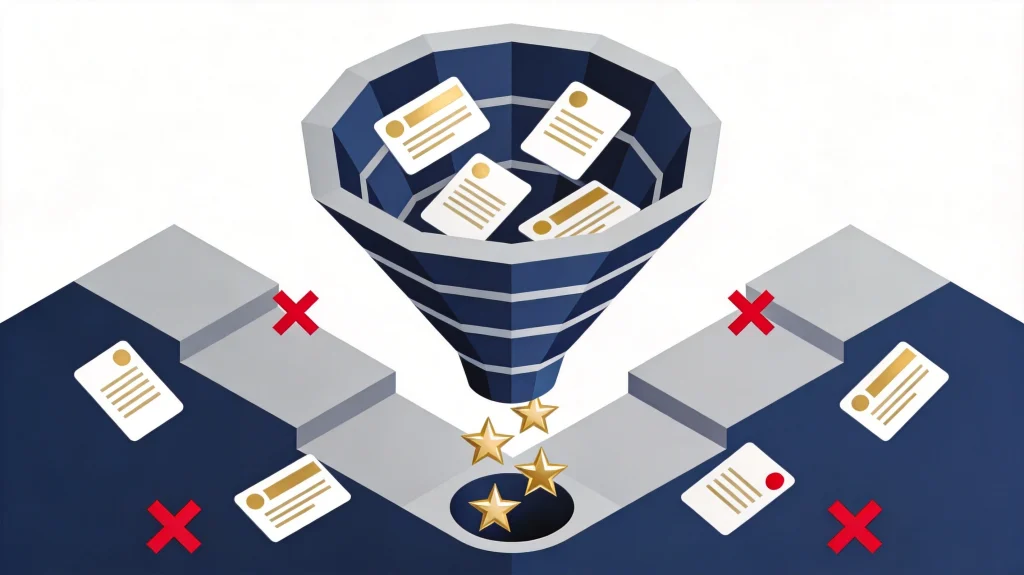
Treating every card as a lead. It is better to leave a trade show with five qualified prospects who each have a concrete next step than with fifty business cards that go nowhere. Quality beats quantity, every single time.
Forgetting to write things down. You will have 30+ conversations over three days. You will not remember who said what unless you write it down immediately. Keep a pen in your pocket and a notebook or card box at the booth. After each conversation, spend 60 seconds writing: company name, person's name, key brands they carry, channels they mentioned, biggest concern they raised, next step,p and date.
Promising exclusivity too early. It is normal for Asian importers to ask for exclusivity. It is not normal to grant it on a trade show floor. The right answer is: "Exclusivity is something we can discuss once we both understand the channel plan and volume commitments — let's not rush that on day one." A serious importer will respect that.
Failing to follow up within 48 hours. The best importers at FHC will have talked to 50+ brands by the end of day two. If you wait until the following week to send your follow-up email, you are forgotten. Send your follow-ups from your hotel room each evening, or at minimum on the last day of the show. Reference a specific detail from the conversation to trigger recall.
For a complete pre-show preparation checklist covering booth, materials, logistics, cs and pre-show outreach, see our FHC Shanghai 2026 exhibitor checklist. For post-show follow-up sequencing and timing, see our guide to trade show follow-up emails that actually get replies.
The Bottom Line
The five questions are:
- Which brands do you currently import that are closest to mine? — Qualifies whether they are a real player in your category.
- Which channels would you take us into first, and how long to shelf? — Reveals their market knowledge and realistic timeline.
- What do you need from a new brand before you can place a first order? — Surfaces compliance requirements and prevents post-show surprises.
- What does a realistic first order look like — and what triggers a reorder? — Anchors volume expectations and performance metrics.
- What has to go right for this to work — and what is the next step? — Commits both sides to a concrete action with a date.
None of these questions are aggressive or rude. Asked in a natural, conversational way, they signal that you are a professional who has done this before — which is exactly what serious Asian food importers look for at every trade show. They meet hundreds of brands every trade show. The ones that stand out are not the ones with the fanciest booth or the loudest pitch. They are the ones that ask intelligent questions, listen to the answers, and leave with a real plan.
FHC Shanghai opens in twelve days. Use the next week and a half to practise these five questions with a colleague. Get comfortable asking them naturally, without sounding scripted. Identify the two or three people on your team who will run booth meetings, and make sure everyone is using the same structure. Decide in advance what a qualified lead looks like, and what your first follow-up email will say.
The brands that come away from FHC with real importer relationships are not the ones that poured the most olive oil or handed out the most brochures. They are the ones that used their fifteen minutes per meeting to actually qualify the person across the table.
FAQ
Should I give FOB pricing at the booth if the buyer asks?
Avoid it in the first five minutes. Pricing without context on channels, volumes, and compliance responsibilities anchors the conversation on cost before you have established value. A simple redirect works well: "I want to understand your channel and volumes first so I can give you a price that makes sense for both of us — can we come back to that once I know a bit more about how you'd launch us?" Share a price range only after Questions 2 and 4 (channels and volume) have been answered.
How many qualified leads should I realistically expect from a three-day show like FHC?
Five to eight committed prospects with a concrete next step and date is a strong outcome. Fifty business cards with no follow-up plan is a weak outcome. Quality always beats quantity at Asian trade shows — importers see dozens of brands per day and remember the ones who asked intelligent questions, not the ones who pitched the loudest or handed out the most samples.
What if a buyer pushes for an exclusive territory agreement on the spot?
Do not grant exclusivity on a trade show floor. The right answer is: "Exclusivity is something we can discuss once we both understand the channel plan and volume commitments — let's not rush that on day one." A serious importer will respect this. If they walk away over it, they were not a serious long-term partner.
How soon after the show should I follow up?
Within 48 hours — ideally from your hotel room each evening, or at minimum on the last day of the show. Reference a specific detail from your conversation (a brand they carry, a channel concern, a pricing issue they raised) so they remember you. The best importers will have spoken to 50+ brands by the end of day two; a generic "great meeting you" email sent a week later will be ignored.
Should I bring printed catalogues and price lists to the booth?
Have them available, but do not hand them out to everyone who stops to taste. Reserve full catalogues and price sheets for buyers who have answered the five questions and committed to a next step. For everyone else, a one-page brand sheet or QR code is sufficient. Handing a full catalogue to a browser signals you have no qualification process and turns your expensive print run into brochure-floor litter.
Disclaimer: This article is provided for general informational purposes only and does not constitute legal, regulatory, tax or professional advice. Food import regulations, labelling requirements, tariff classifications, additive positive lists and certification procedures change frequently and vary across jurisdictions. Specific compliance questions should be directed to qualified local regulatory counsel, licensed customs brokers or accredited import consultants in the target market. Specit Consulting provides market entry advisory services for global food and beverage brands entering Japan, Korea, China, Taiwan, wan and Southeast Asia; this article reflects general industry experience and is not a substitute for market-specific professional advice or engagement with local authorities.
Get Your FHC Booth Ready
If you are exhibiting at FHC Shanghai, SIAL, or another Asian food trade show this season and want a structured approach to qualifying importers before you land — including a pre-show outreach plan, booth meeting script, and post-show follow-up sequence — book a free 20-minute consultation with our team. We help small and mid-sized food brands prepare for Asian trade shows and convert booth conversations into signed importer agreements.
For a complete pre-show checklist covering booth setup, materials, logistics, and pre-show buyer outreach, download our FHC Shanghai 2026 Exhibitor Checklist.
Related Articles
Japan MHLW Food Import: Top Reasons for Border Rejection
How to Export Food to China in 2026: 6 Steps Under Decree 248 & 249
Korea MFDS Registration: 5 Reasons Food Imports Get Rejected
FHC Shanghai 2026: Complete Exhibitor Preparation Checklist
Trade Show Follow-Up: Why 80 Cards Become 5 Calls
FTA Food Tariffs Asia 2026: How to Stop Paying MFN Rates
Need help navigating your market entry?
We've helped food exporters across 10+ countries enter 13 Asian markets. Get a free initial assessment based on public data — delivered in 3 working days.
Get Your Free AssessmentContinue Reading
▶FOB CIF Pricing for Asian Food Importers: FOB, CIF or DDP?
▶Wine & Spirits Import in Japan, Korea, Taiwan & Singapore: A Small Winery Guide
▶FHC Shanghai 2026: 5 Pre-Show Actions Food Brands Must Finish 2 Weeks Out
Questions about entering the Asian market?
Chat with us on WhatsApp →