


You exchanged cards at the show. You sent the first quotation. And 80% of the buyers disappeared.
It is rarely the price. It is the quotation.
If you want to quote Asian food importers in a way that gets a response instead of silence, the document needs to answer seven specific questions before the buyer has to ask. A quotation is not a price list. It is a document a buyer has to take to their internal team — procurement, finance, logistics, category management — and defend. If the terms are unclear, the currency is ambiguous, the MOQ does not match their channel, or the validity date has already passed, the buyer cannot evaluate you. So they do not.
When you quote Asian food importers the wrong way, you do not just lose one order. You lose the reference account that would have unlocked the second and third. Most international producers who fail to quote Asian food importers effectively make the same structural mistakes: they lead with a single number, they ignore Incoterms, they quote full-container MOQs to buyers who have never sold their product, and they bury the costs that actually matter.
Here is what a quotation to an Asian food importer needs to contain, and where most exporters get it wrong.
Incoterms: FOB vs CFR vs CIF vs DDP
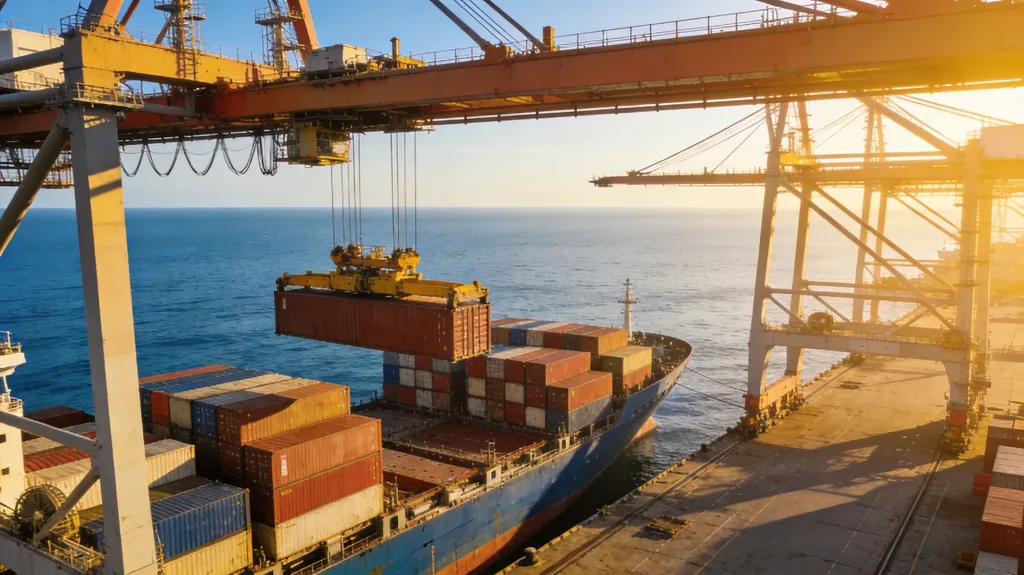
The Incoterm you choose determines what the buyer pays for and where risk transfers. It also signals whether you understand how they buy. The International Chamber of Commerce publishes the authoritative Incoterms definitions that buyers and freight forwarders reference worldwide; getting this wrong is the fastest way to look like an amateur. Before you quote Asian food importers, decide which Incoterm matches both the product and the relationship stage.
EXW (Ex Works). The buyer collects from your factory door. Almost never the right choice for Asia. EXW places all export clearance, inland transport, and loading risk on the buyer. In practice, it creates friction, signals inexperience, and makes it harder for the buyer to compare your price against competitors who are quoting on standard terms. Avoid EXW when you quote Asian food importers; FOB is the minimum acceptable baseline.
FOB (Free On Board). You deliver the goods past the ship's rail at the port of loading; the buyer arranges ocean freight and insurance. FOB is the best default for first orders. It lets the buyer control logistics — most established Asian importers already have freight forwarders and consolidators who negotiate rates a small international producer cannot match. FOB also protects you from freight volatility and demurrage risk, because once the container is on the vessel, it is the buyer's problem. And importantly, an FOB price looks lower on a comparison sheet, which matters when a buyer is lining up five suppliers side by side.
CFR (Cost and Freight). You pay ocean freight to the destination port; the buyer handles insurance. Use CFR when a buyer asks for a landed port price but has their own cargo insurance policy in place — this is common among larger Japanese and Korean general trading companies who self-insure.
CIF (Cost, Insurance, Freight). You pay freight and insurance to the destination port. CIF is what most Asian importers will ask for, and there are good reasons to give it to them.
Why Asian Importers Default to CIF
Most Asian food importers consolidate multiple suppliers into one container. A Korean importer may be picking up olive oil from Spain, chocolate from Belgium, and cheese from France all in the same sailing. Korea Customs Service publishes clearance procedures for importers that show how CIF declared value flows directly into duty and VAT calculation — which is why buyers care so much about a clean, port-specific CIF figure. When they control the freight, they get a single consolidated rate, they choose the forwarder, and they can compare suppliers on a clean landed-cost basis. CIF gives them a number they can plug directly into their margin model.
When you quote Asian food importers on CIF, you give them a number that travels. It goes from the buyer's inbox to their procurement spreadsheet to their category manager's P&L without anyone having to calculate freight separately. That matters.
When to insist on FOB: First orders. Keep logistics on the buyer's side until you have an established relationship and understand their order cadence. FOB also makes sense when freight rates are volatile and you do not want to lock in a rate that may move against you before production is ready.
When CIF is required: Cold chain products. If the product needs a reefer container, you should control the shipping — or at minimum specify the reefer temperature, ventilation, and humidity settings in writing. A buyer who has never handled your category may book a reefer at the wrong set point, and a container of frozen product that arrives at −12°C instead of −18°C is rejected at port.
DDP (Delivered Duty Paid). You deliver to the buyer's door, duties and taxes paid. Rarely appropriate in Asia. DDP requires a local entity, tax registration, and a customs broker in the destination market. Most small producers cannot offer it, and saying so is not a weakness — it is a sign you understand what DDP actually entails. When asked for DDP, offer CIF to the main port and let the buyer handle the last mile. For a side-by-side look at which term fits first orders versus repeat volume, see our guide to FOB vs CIF vs DDP pricing for Asian food importers.
The MOQ Reality: What Buyers in Each Market and Channel Expect
MOQ expectations vary significantly by market and by channel. A HoReCa distributor in Singapore will test with a few cases. A retail importer in Japan will not place a first order smaller than a full container. If you lead with the same MOQ for every buyer, you will lose the ones who cannot commit to volume before they have sold a single unit.
Japan. A full 20-foot container is the standard first order for general-trade retail. Japanese importers plan their inventory around container loads, and their retail buyers expect consistent supply. According to the Japan External Trade Organization's import guide, general-trade food importers typically build orders around full-container economics because bonded warehouse and clearance costs are assessed per shipment. That said, many will accept mixed SKUs within a single container — three or four variants that fill the 20-foot load together. If you only have one SKU, a 10-foot or LCL (less-than-container) shipment is sometimes possible, but expect resistance from larger importers.
Korea. One-third of a 20-foot container is often acceptable as a trial, especially for trendy or health-oriented categories where the importer wants to test consumer response before committing to volume. Korea's convenience-store and social-commerce channels reward speed over scale — a product can move from unknown to top seller in weeks, so importers are willing to start small if the product signals right.
China (general trade). One pallet to one container, depending on the importer's channel focus and your category. General-trade importers selling into modern trade (Hema, Ole, Sam's Club) will expect container volumes; regional distributors covering tier-2 and tier-3 cities may start with pallets.
China (cross-border e-commerce). Small quantities — hundreds of units, not pallets. CBEC bonded-warehouse models allow importers to test SKUs with minimal inventory commitment. This is not a loophole; it is a legitimate route with its own compliance requirements.
Taiwan. One pallet to half a container is standard for a first trial. The market is smaller and importers are correspondingly cautious.
Singapore. Flexible. Test quantities are common, particularly from importers using Singapore as a regional reference point before entering larger ASEAN markets.
Beyond market, channel changes MOQ expectations. HoReCa distributors who sell to restaurants, hotels, and café groups typically start smaller than retail importers — they may take a few cases for chef trials before committing to pallet volumes. Retail importers need enough volume to fill shelf space across multiple store locations, so their MOQ is naturally higher. If you are not yet sure whether your best first channel is HoReCa or retail, that decision shapes what MOQ you should offer and how you structure the quotation. We break down the channel decision in our guide to choosing between HoReCa and retail as your first Asian food channel.
The single most common MOQ mistake is leading with a full-container MOQ. A buyer who has never sold your product cannot commit to a container. They need a number that lets them test, fail small, and reorder if the product moves. This is particularly true when you quote Asian food importers who work across HoReCa and retail simultaneously — they may place separate trial orders for each channel.
The fix: write your MOQ in tiers.
- Trial order: 1 pallet (X units). For market testing and first buyer sell-through.
- Standard order: 5 pallets. Once the product has retail or HoReCa traction.
- Full container: 20-foot (Y units). Volume tier with the best unit pricing.
Tiered MOQ gives the buyer a path from trial to volume. It also shows you understand their risk. That alone separates you from the majority of international suppliers who send a single number and wonder why they get no reply. Before you quote Asian food importers, map your MOQ tiers to the channel and market — a one-size MOQ rarely works across six different Asian markets.
The Seven Numbers Every Quotation Must Include

A quotation that is missing any of these is not a quotation. It is an enquiry.
1. EXW unit price. The base cost at your factory door. Buyers who have their own logistics networks in Europe will use this number to compare against their own freight calculations.
2. FOB unit price. The price at the named port of loading — Rotterdam, Hamburg, Antwerp, or whichever port you actually ship from. Always name the port. "FOB Europe" is not a price; it is an ambiguity that delays the buyer's evaluation.
3. CIF price to the main destination port. The landed port cost — Busan, Yokohama, Shanghai, Keelung. This is the number buyers compare across suppliers when they are consolidating containers. It must be port-specific. If you quote CIF Asia without naming a port, you force the buyer to guess.
4. MOQ in tiers. Covered above. State trial, standard, and full-container volumes with corresponding unit pricing.
5. Lead time. How many weeks from confirmed order to goods ready for shipment. Food production is not instant — co-packers have schedules, raw materials have seasons. Be honest about lead time; an overpromised delivery date that slips is the fastest way to lose trust on the first order.
6. Remaining shelf life at arrival. Critical for food. A buyer will not accept a product with 18 months of total shelf life if ocean transit takes 6 to 8 weeks and they need 12 months minimum remaining to move it through distribution and retail. State this explicitly: "Minimum 12 months remaining shelf life at port of destination."
7. Validity date. Currency and freight move. Thirty days is standard, not stingy. Sixty days is generous. Anything beyond 60 days exposes you to currency fluctuation, freight volatility, and raw material price changes you did not budget for.
The validity date matters more than most exporters realise. The euro moved from below 150 JPY to over 170 JPY in a twelve-month window across 2024–2025; the Korean won swung 15% against the US dollar in a single quarter (see IMF exchange rate data for monthly reference rates). A quotation without a validity date is a price you may be held to months later, after your input costs have shifted against you.
Before you send any quotation to an Asian food importer, run a quick check: does every number tie back to a verifiable freight or exchange rate reference dated within the validity window? Buyers notice this level of precision, and it positions you as someone who knows how to quote Asian food importers professionally.
When you set out to quote Asian food importers, build the document around these seven numbers and nothing important will be missing.
Who Pays for What: The Most Misunderstood Line Items
This is where first orders fall apart. The buyer assumes one thing; you assume another. The discrepancy does not surface until the purchase order arrives, at which point renegotiation is awkward and trust has already eroded.
Slotting fees (retail listing). Typically paid by the importer, though sometimes shared with the brand for major retail accounts. In Japan and Korea, slotting fees for premium retail positions can be substantial; in China's modern-trade channels, they are a standard cost of entry. Do not assume the importer absorbs these without discussion — but do not offer to pay them in your first quotation either. Wait for the buyer to raise it.
In-store promotion and trade marketing. Usually shared. The importer manages the retail relationship and knows which promotions move product; the brand contributes through trade spend, sampling, or co-marketing. The mistake is building promotional cost into the unit price, where it becomes invisible and permanent. List it separately.
Label compliance and regulatory artwork. This is your cost. The label must meet the destination market's requirements — Korea's MFDS allergen emoji format, Japan's Food Labelling Act, Taiwan's Chinese-language nutrition panel, China's GB 7718 requirements. The importer cannot sell a product that does not comply, and expecting them to handle label design or compliance is unrealistic.
Product registration (GACC, MFDS, MHLW, TFDA). Usually shared, depending on market and product category. In China, overseas facility registration under GACC Decree 280 is the producer's responsibility; in Korea, MFDS import registration is filed by the licensed Korean importer. Clarify who handles what before the PO stage.
Customs duty and import VAT/GST. Always the importer's responsibility. These are destination-country taxes the importer pays as the registered importer of record. They should never appear in your price.
Ocean freight and cargo insurance. Depends on the Incoterm you have chosen. Under FOB, the buyer pays freight and insurance. Under CIF, you do. State the Incoterm clearly and there is no ambiguity.
State this explicitly in every quotation you send:
Quotation is on [FOB/CIF] [named port] terms. Does not include destination port handling charges, customs duty, import VAT/GST, retail listing fees, or in-country distribution. Label compliance for the destination market is included. Registration and regulatory approvals are as specified in the accompanying terms sheet.
That one paragraph prevents 80% of first-order pricing disputes. It also signals to an experienced buyer that you know how international trade works. When you quote Asian food importers with cost allocation stated upfront, you eliminate the ambiguity that stalls purchase orders.
Three Rules for First-Order Pricing When You Quote Asian Food Importers
The way you structure first-order pricing determines whether you get a second order. Get it wrong and you either leave money on the table or price yourself out of a relationship before it starts.
1. Do not offer a "trial discount." A discount given on the first order becomes the baseline. The buyer will expect it on the second order, and the third, and every reorder after that. Once a discounted price is in the buyer's system, it is nearly impossible to raise. If you need to offer a lower entry point, do it through a smaller pack size, a reduced MOQ tier, or a starter kit with limited SKUs — not through a percentage discount on the standard unit price. A trial pack with a smaller unit count at a proportionally lower price is a product configuration, not a discount; it does not anchor a lower price in the buyer's mind.
2. Use volume-tier pricing, but set the tiers at realistic numbers. If your tier structure jumps from one pallet straight to a full container with nothing in between, the buyer has no middle path. Set tiers that match how importers actually buy: one to four pallets at the entry price, five to nineteen pallets at the standard price, twenty pallets or a full container at the volume price. The volume discount should be meaningful — four to six per cent per tier is typical — but not so steep that it destroys margin on reorders.
3. Keep promotional budget separate from the unit price. If you build promotional support into the FOB unit price, the buyer will treat that loaded price as the normal price and expect the promotion to continue indefinitely. List it as a separate line item: "Unit price: €X per unit FOB [port]. Promotional support: €Y per unit for launch period, subject to joint marketing plan and activation within the first three orders." This keeps the base price clean, gives the buyer something to activate with, and prevents a temporary launch incentive from becoming a permanent price expectation.
These three rules are not theoretical. We have seen producers offer 15% first-order discounts, only to find the buyer treating that as the ongoing price on the second reorder. The margin never recovers. When you quote Asian food importers on first-order pricing, structure the document so the base price is protected and promotional spend is visible.
Follow-Up Cadence After You Quote Asian Food Importers
A quotation sent is not a quotation received. Buyers at trade shows collect dozens of quotations in a single day. Yours sits in an inbox alongside competitors from Spain, Italy, Australia, and the United States. How you follow up determines whether it gets read.
Day 7: Short check-in. Send a brief message: "Just following up on the quotation sent last week for [product]. Did you have a chance to review it with your team? Happy to answer any questions on Incoterms, MOQ, or shelf life." No pressure, no long email. The purpose is to surface objections early — if the MOQ is wrong or the CIF price is high, you want to know now, not in six weeks. This is where most producers who quote Asian food importers lose the deal: they assume no reply means no interest, when it usually means one unresolved question.
Day 14: Add value. Share something relevant — a market insight, a comparable product's performance in their market, a piece of category data, or a brief note on a recent regulatory change that affects your category. This is not a sales pitch; it is a reason for the buyer to re-engage. Even a one-line update: "Wanted to flag that Korea's MFDS recently updated their additive positive list for [category], which opens the door for products like ours. Happy to walk you through what that means."
Day 30: Direct ask. "We have not heard back on the quotation sent on [date]. Is this still under active consideration, or should I close the file for now?" This is not aggressive — it is respectful of both parties' time. It also forces a response. Buyers who are genuinely interested will say so; buyers who were never serious will give you a clear no, which is more useful than silence.
Price objection signals mean the buyer is still engaged. They ask about a lower MOQ tier, a different Incoterm, a smaller pack size, or a volume discount. These are negotiations, not rejections. Respond, adjust, and keep the conversation moving.
Silent rejection signals mean move on. No reply after three touches. A reply that says "we will keep your information on file" with no specific follow-up. A generic out-of-office that bounces for three weeks. Do not chase these. Spend the time on buyers who are responding.
How you handle the quotation follow-up is as important as the quotation itself. When you first quote Asian food importers, you are one of many. The follow-up cadence is what separates you from the suppliers who send a PDF and disappear.
Frequently Asked Questions
Should I quote in euros or US dollars?
Quote in the currency the buyer uses for comparison. Most international food trade in Asia is denominated in USD, particularly for commodity and shelf-stable categories. Japan and Korea will often accept EUR quotations from non-Asian producers, but always state the exchange rate reference (ECB daily rate, for example) and the validity period so there is no ambiguity on conversion.
Is a 30-day validity period too short?
No. Thirty days is standard across the food export industry. Freight rates move, currency moves, raw material prices move — a quotation that stays open indefinitely is an uncovered risk to your margin. If a buyer asks for a longer validity, offer 45 days with a note that the price is subject to freight and exchange rate adjustment beyond 30 days. Anything beyond 60 days should be requoted.
What if the buyer asks for DDP?
DDP to the buyer's warehouse requires a local entity, import licence, tax registration, and a customs broker in the destination market. Most small and mid-sized international producers cannot offer it, and that is fine. Say so directly: "We don't offer DDP as we don't have a local entity in [market]. We can quote CIF [main port] and introduce you to a local customs broker and warehousing partner who can handle the last mile." Then do exactly that.
How do I handle a buyer who insists on exclusivity in the first order?
Exclusivity should never be granted without a minimum purchase commitment and a defined performance period. A standard structure is six or twelve months of exclusivity against a transparent quarterly minimum purchase volume, with automatic conversion to non-exclusive if the minimum is missed by more than one quarter. We cover this in detail in our guide to key clauses in Asian food distributor agreements.
Should I include samples in the quotation?
Samples are a separate conversation, not a line item in a first quotation. State that samples are available on request with the lead time and courier cost responsibility specified. If the buyer is serious, they will ask; putting a sample price on the initial quotation adds noise.
What if the importer asks me to split the quotation to lower declared value?
Refuse. Under-declaring customs value is illegal in every Asian market, and the consequences — seizure, fines, blacklisting of the importer, and reputational damage to the brand — are not worth accommodating. Any buyer who asks you to do this is not a partner worth having. We cover vetting for these red flags in our importer screening guide.
A quotation is the beginning of a commercial relationship, not a transaction. When you quote Asian food importers correctly, you give the buyer everything they need to defend your product internally — clear terms, correct Incoterms, realistic MOQ tiers, transparent cost allocation, and a price that leaves room for both parties to make money. Get the structure right, and the price conversation becomes much easier. Producers who learn how to quote Asian food importers professionally close more first orders, build better distributor relationships, and avoid the pricing disputes that kill repeat business.
Need a second pair of eyes on a quotation before you send it? Contact Specit Consulting for a free 48-hour quotation review. We will flag Incoterms issues, MOQ mismatches, missing shelf-life language, and any structural gaps that could cost you the first order.
This article is intended as general market-access information and does not constitute professional compliance, legal, or trade-finance advice. Regulatory requirements, Incoterms application, and customs practices change; always verify the current position against the issuing authority's published documents and seek qualified freight-forwarding and legal advice before committing to pricing or contractual terms. For a quotation assessment specific to your product and target markets, contact us at kevin@specitconsulting.com.
Related Reading
- How to Vet an Asian Food Importer: 10 Red Flags Before You Sign
- First Food Shipment to Asia: Contract to Retail Shelf Timeline
- HoReCa vs Retail: Choosing Your First Asian Food Channel
- Food Distributor Agreements in Asia: Eight Clauses Exporters Must Negotiate
- Trade Show Follow-Up 2026: Why 80 Cards Become 5 Calls
Need help navigating your market entry?
We've helped food exporters across 10+ countries enter 13 Asian markets. Get a free initial assessment based on public data — delivered in 3 working days.
Get Your Free AssessmentContinue Reading
▶Japan Food Distribution: HORECA vs Retail vs Online Channel Strategy
▶GACC Registration: 5 Mistakes That Get Your China Filing Rejected
Questions about entering the Asian market?
Chat with us on WhatsApp →