

17 September 2026 | Shanghai, China
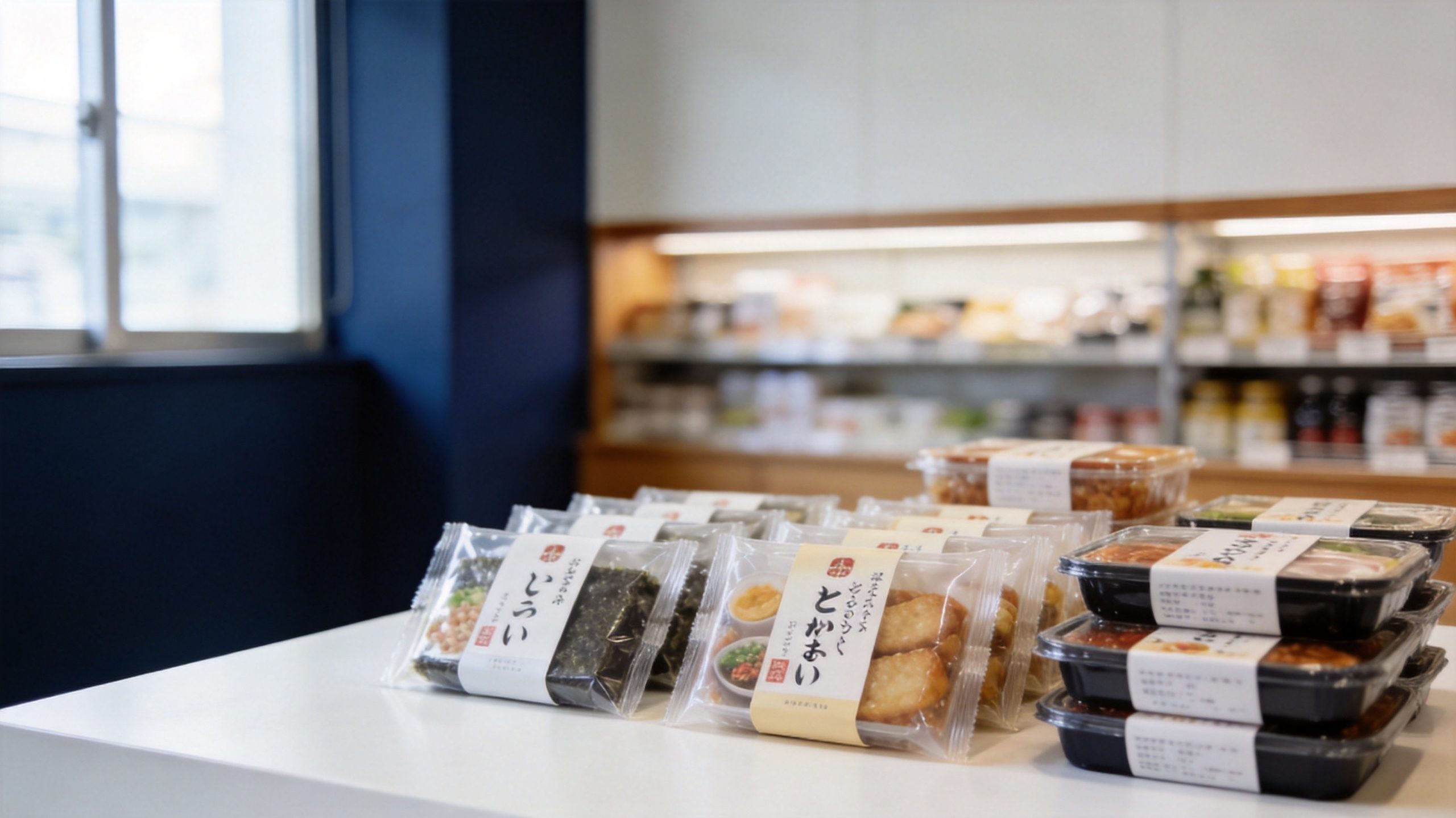
At Specit Consulting, we track Japanese food labelling developments for exporters shipping to the market. Japan's Consumer Affairs Agency (CAA) is revising the Food Labelling Standards (食品表示基準) in phases, with the most consequential changes taking effect from 2027 through 2030. Three areas affect imported products most directly: the planned introduction of optional digital labelling via QR codes, simplification of ingredient and collective naming rules, and expansion of the mandatory allergen list.
Change 1: Digital Labelling via QR Codes (from FY2027 at the earliest)

The CAA plans to permit optional QR codes on processed food packaging, allowing consumers to scan and access supplementary product information — including certain ingredients and additives — on a dedicated webpage. The policy objective is to prevent physical labels from becoming overcrowded as mandatory disclosure items increase.
The system is not expected before the end of fiscal year 2027 (i.e., early 2028 at the earliest). Two operational models are under consideration: direct access to the product labelling page by scanning the QR code, or a two-step flow where consumers confirm product identity via expiry date or lot number before being directed to the information page.
Three constraints are already clear. First, key information — product name, allergen declarations, nutrition information, and safety-related items — must remain on the physical label; QR codes supplement, they do not replace. This aligns with Codex Alimentarius guidance on digital food labelling. Second, businesses will be required to maintain records of digital labelling content revisions for a specified retention period. Third, accessibility requirements (consideration for consumers without smartphones) are part of the framework design.
For exporters, the practical implication is that future label design may have more physical space, but digital content will need to match the physical label exactly and remain accurate for the shelf life of each batch. The exact boundary between what must remain on-label and what can move to QR will be finalised in upcoming subcommittee rulings — we monitor these rulings as they are released, as the classification of certain additive and origin declarations directly affects label layout decisions.
Change 2: Simplified Ingredient Naming and Collective Labelling (phased to March 2030)
Amendments already enacted in 2026 begin streamlining certain ingredient display rules, with a full compliance deadline of 31 March 2030.

Key changes include:
Dressings: Products previously divided into multiple sub-categories (e.g., semi-solid dressing, emulsified dressing) may now be labelled broadly as "dressing", with "non-oil dressing" permitted where fat content meets the defined threshold.
Vegetable oils: Rather than listing individual oil names (e.g., "soybean oil", "safflower oil"), manufacturers may use the collective term "oils extracted from plant seeds or pulp", provided the product is not formulated in a way that would mislead consumers as to the oil source.
Fruit collective names: The previous catch-all "Others" category in fruit collective naming has been removed. Collective labelling is now restricted to clearly defined botanical groups (e.g., citrus fruits) under specified conditions.
Item-specific provisions: Several narrow, product-specific labelling rules have been simplified or repealed, allowing broader category naming where no consumer protection risk arises.
The shift toward broader categories reduces some label complexity, but it also requires careful judgement: a label using a collective term where the specific ingredient identity matters to a consumer — particularly allergen-relevant oils or ingredients with additive restrictions — may still require individual disclosure. Whether a collective name can be safely used depends on the full ingredient list and formulation; misapplication of collective naming is a frequent cause of import notification rejection at Japanese quarantine stations.
Change 3: Expanded Mandatory Allergen Labelling (by March 2028)
Under the 2026 amendment, cashew nuts are added to the list of mandatory allergen items requiring declaration, and pistachios are added to the recommended (non-mandatory) declaration list. The transition period for the cashew requirement ends on 31 March 2028.
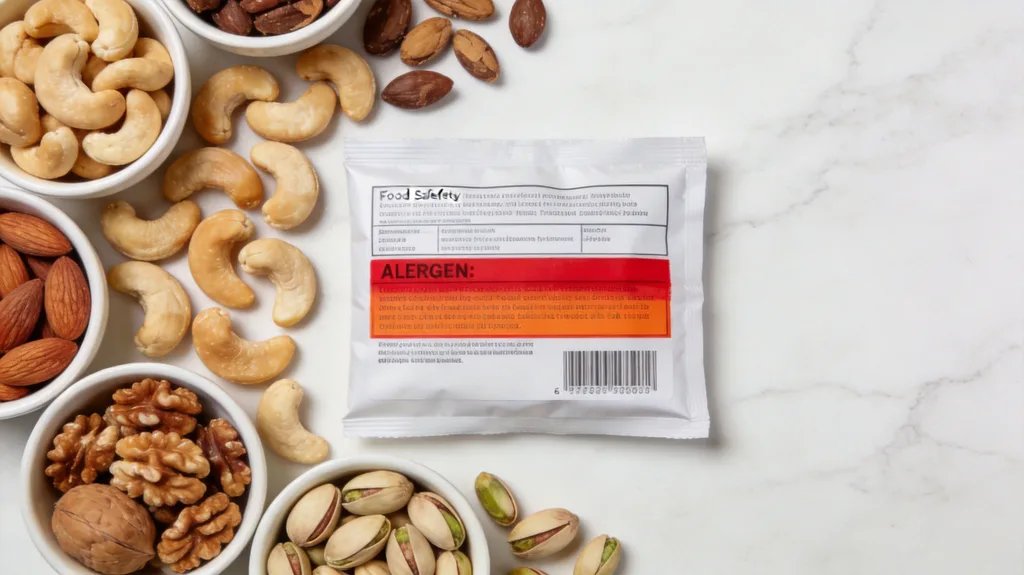
For context, Japan's mandatory allergen system currently covers seven items (egg, milk, wheat, prawn, crab, peanut, buckwheat); walnut was added as an eighth mandatory item with effect from 2025. Cashew will be the ninth. Mandatory allergens must appear on the label with specific emphasis (typically in brackets after the ingredient name or in a dedicated allergen box); recommended items carry no legal obligation but are widely expected by Japanese retailers and consumers.
Exporters shipping products containing cashew — a common ingredient in snack products, confectionery, and plant-based dairy alternatives — should audit formulations now and plan packaging updates before the 2028 deadline.
Pistachio, while recommended rather than mandatory, should be declared for products containing it, as most Japanese retailers follow the full CAA recommended list as a condition of listing. If your production line handles cashew alongside other tree nuts, cross-contamination declaration requirements differ between mandatory and recommended allergens, and the "may contain" threshold varies by retailer category — this is one of the most commonly flagged issues in our label compliance reviews.
Such cross-contamination thresholds are among the compliance blind spots we routinely flag in pre-entry reports that exporters miss.
Additional Developments to Monitor
The CAA released a further draft amendment for public comment in July 2026, focusing on nutrient function claims and related labelling rules. Subcommittee reviews of item-specific labelling provisions have also been underway; outcomes will be incorporated into subsequent amendments. Exporters should treat the current framework as still evolving, particularly in the nutrition claims and digital labelling areas. Japan's changes should also be read alongside broader labelling requirements that differ significantly across Asian markets.
Practical Steps for Exporters
**Identify cashew and tree nut exposure across your SKUs** — including not just intentional cashew ingredients but also cross-contamination risks from shared production lines. The distinction between mandatory "contains" declarations and advisory "may contain" statements is not self-evident, and retailer-specific requirements often exceed the legal minimum.
**Map your ingredient lists against the simplified collective naming rules** — determine where broader category names can legitimately reduce label clutter, and where individual disclosure remains necessary (particularly for allergen-relevant ingredients, additives with usage limits, and ingredients subject to origin marking requirements).
**Do not redesign labels around QR code replacement yet** — digital labelling remains optional, and key information must stay on the physical label for the foreseeable future. The final rules on what can move to QR are still being drafted; early adoption based on current proposals risks non-compliance when final rules differ.
**Track CAA subcommittee outputs through late 2026 and 2027** — additional amendments to nutrient function claims, additive labelling, and item-specific provisions are expected, and the compliance timelines are staggered across multiple deadlines.
Frequently Asked Questions
When do Japan's new allergen labelling rules take effect?
The addition of cashew nuts to the mandatory allergen list has a compliance deadline of 31 March 2028. Pistachios are added to the recommended declaration list but are not legally mandatory. Walnut, added as a mandatory allergen in 2025, should already be declared on all current labels.
Will QR codes replace physical labels in Japan?
No. The CAA has stated clearly that core information — product name, allergens, nutrition, and safety items — must remain on the physical label. QR codes are intended as a supplementary channel for additional detail, particularly as mandatory disclosure items grow.
What is the deadline for the simplified ingredient naming changes?
The broader ingredient and collective labelling simplifications must be fully adopted by 31 March 2030. Some provisions enacted in 2026 may be used earlier voluntarily.
Which products do these changes apply to?
All pre-packaged food sold at retail in Japan, including imported products sold through general trade. Cross-border e-commerce direct-to-consumer shipments fall under different rules, but any product entering Japanese retail distribution must comply.
──────────────────────────────────────────────────
Beyond Japan: Date Marking Across North Asia
Date marking is another area where Japan differs from its North Asian neighbours — China moves to a mandatory dual-date system (production date + expiry date, both in YYYY-MM-DD) under GB 7718-2025 on 16 March 2027, and Korea has used a consumer-facing use-by date (소비기한) at 80–90% of the quality-safety limit since January 2023. For a side-by-side comparison of shelf-life and date-marking rules across all three markets — including font-size thresholds, shelf-life validation evidence expectations, and a worked example of one product labelled three ways — see our guide to shelf life and date marking for food exports to China, Japan and Korea.
Unsure which of these changes affect your specific product line?
Send us your current Japanese label artwork and ingredient list — we'll provide a free 1-page gap analysis highlighting exactly which items need updating before the 2028 deadline, and which changes you can defer until later phases. This covers label compliance only — for full market entry support from label compliance through to importer identification, we offer a separate engagement scope.
Contact us: **info@specitconsulting.com**
──────────────────────────────────────────────────
About Specit Consulting
We help food and beverage brands enter and grow in the Chinese and wider Asian markets through trade intelligence, tariff analysis, labelling compliance, importer identification, and market research.
✉ info@specitconsulting.com
──────────────────────────────────────────────────
Disclaimer: This article reflects general market observations and regulatory understanding as of September 2026, based on publicly available CAA announcements. It does not constitute professional compliance advice. Specific requirements may vary by product formulation, HS classification, and point of entry; always verify against your specific product circumstances before making labelling decisions.
Need help navigating your market entry?
We've helped food exporters across 10+ countries enter 13 Asian markets. Get a free initial assessment based on public data — delivered in 3 working days.
Get Your Free AssessmentContinue Reading
▶Food Import Detentions in Asia: 7 Real Cases and How to Avoid Them (2026)
▶Japan Food Import Requirements: A 6-Step Compliance Guide for EU Exporters (2026)
Questions about entering the Asian market?
Chat with us on WhatsApp →