

20 August 2026 | Shanghai, China
Many exporters assume that opening a storefront on Tmall Global or JD Worldwide is enough to start selling in China. The answer depends entirely on your product category and the platform you choose. There is no single path.
What We Saw
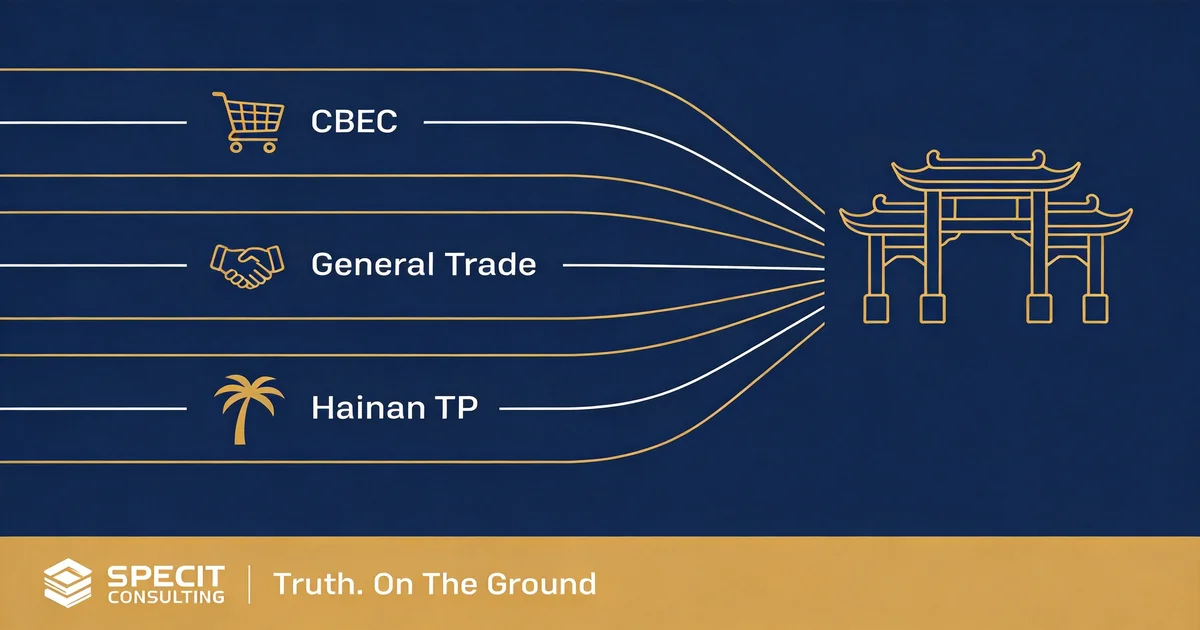
There are three routes into the Chinese market, and they operate under very different rules.
The first is Cross-Border E-Commerce — Tmall Global, JD Worldwide, Kaola. This is the most common answer to the “no local entity” question. CBEC platforms allow foreign companies to sell directly to Chinese consumers without establishing a Chinese subsidiary or appointing a local importer.
But the model is built on bonded warehouses and restricted to products on the government’s Positive List. Many everyday items are on it, but the list is updated regularly and does not include everything. Products must ship from a bonded warehouse in China, consumers must provide their ID for customs clearance, and per-person purchase limits apply — 5,000 RMB per transaction and 26,000 RMB per year (per 财关税〔2018〕49号).
Simplified customs procedures apply, but GACC registration for overseas manufacturers under Decree 280 is still required.
The second route is general trade through a local importer. If your product is not eligible for CBEC, this is your path. The importer must hold a Food Business License and act as the legal entity for your product in the market.
Goods are imported in bulk, cleared through customs, and distributed to retailers, e-commerce platforms, or Horeca. You do not need a Chinese company — but your product must comply with all GB standards, your facility must be GACC-registered, and your importer must hold the proper license.
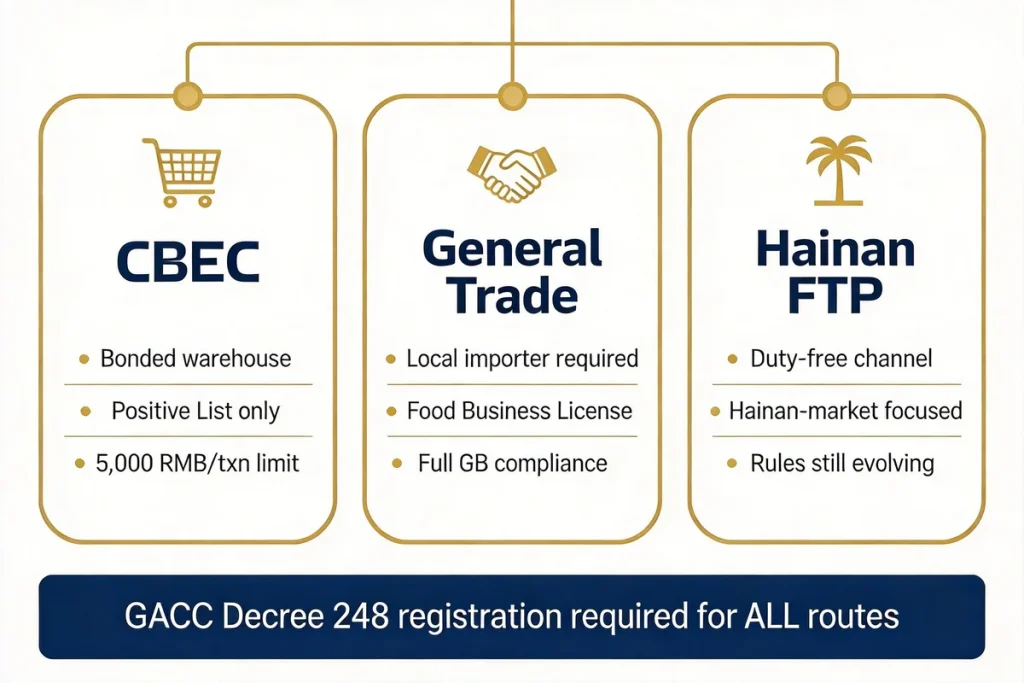
The third route is the Hainan Free Trade Port. Hainan offers a unique duty-free and simplified customs channel for certain imported goods. The rules are still evolving, and this route is most relevant for products destined for the domestic Hainan market rather than national e-commerce.
Across all three paths, there are restrictions exporters often miss. The Positive List does not include all product categories — infant formula, health foods, and certain fresh or frozen goods are excluded.
Products sold via CBEC can use simplified labels, but they still require Chinese characters for product name, country of origin, and key ingredients or allergens. The label must also state that the product was imported through cross-border e-commerce. And GACC registration is not optional, regardless of channel.
Why This Matters for You
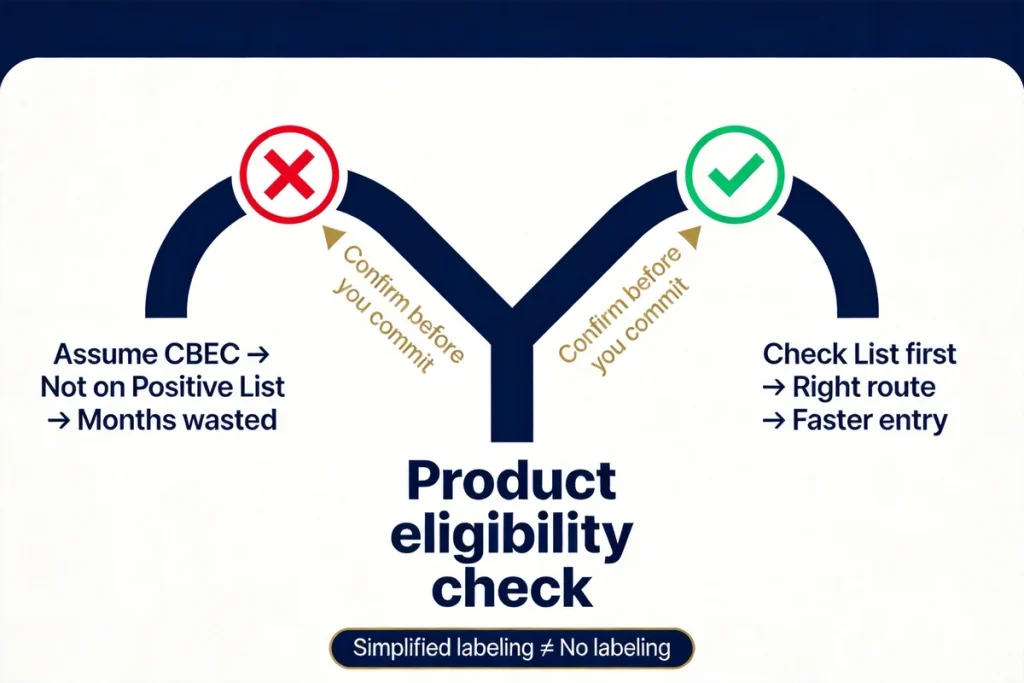
The most expensive mistake you can make is picking the wrong route before you understand your product’s eligibility. A brand that assumes CBEC will work, builds a launch plan around it, and then discovers the product is not on the Positive List has wasted months. The same applies in reverse — a product that could have moved quickly through CBEC gets slowed down by unnecessary general trade complexity because no one checked the list first.
The labeling point is also a quiet trap. “Simplified” does not mean “no labeling.” Products sold through CBEC still need Chinese-language information, and the label must clearly state the cross-border channel. We have seen shipments held because the exporter assumed an English label was sufficient. It is not.
And GACC registration sits underneath all of it. No matter which route you choose, your manufacturing facility must be registered under Decree 280. Some exporters treat GACC as a general trade requirement only, then discover it applies to CBEC as well. By then, the shipment is already scheduled.
Takeaway
Check the Positive List first. If your product is on it, CBEC is your fastest option without a local entity. If it is not, plan for general trade and find an importer with a valid Food Business License.
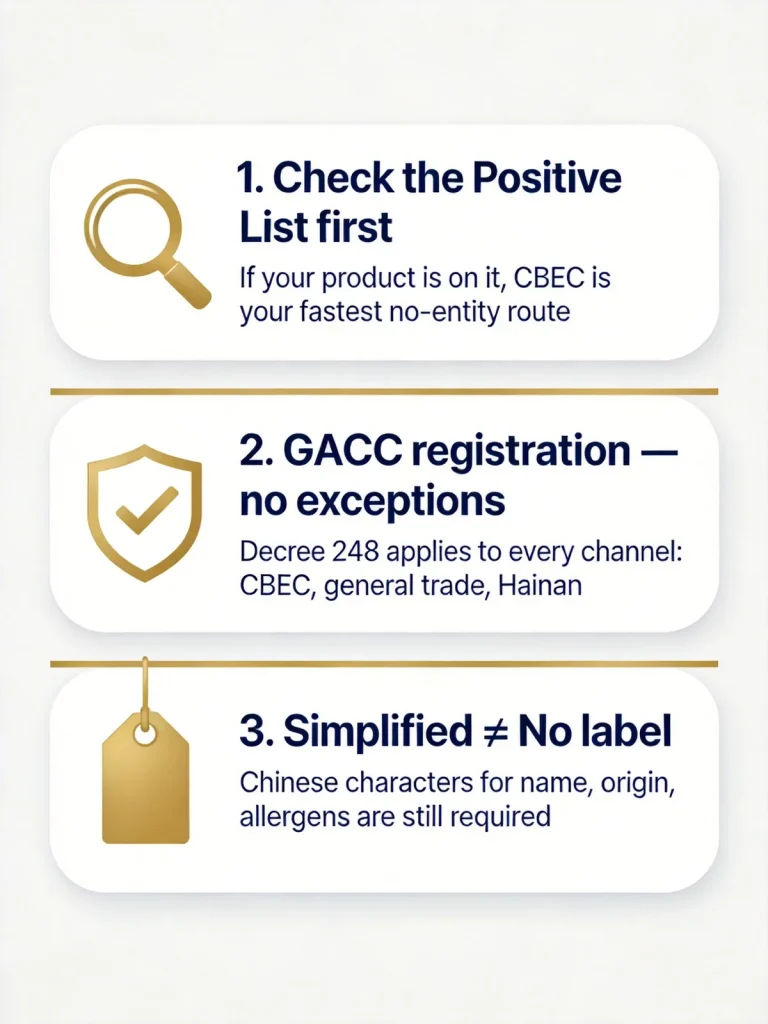
Ensure your facility is GACC-registered before you do anything else — this applies to every channel, no exceptions.
Do not assume your label will pass because the rules are “simplified.”
Confirm eligibility first, then build the route. Reality beats assumptions every time.
Need help determining which route fits your product? Read our step-by-step guide on exporting food to China under Decree 280.
About Specit Consulting
We help food and beverage brands enter and grow in the Chinese and wider Asian markets through trade intelligence, importer identification, and market research.
✉ info@specitconsulting.com
Disclaimer
This article reflects general market observations and regulatory understanding as of August 2026. It does not constitute legal or regulatory advice. Always confirm current requirements with the relevant authority or a qualified regulatory consultant.
Need help navigating your market entry?
We've helped food exporters across 10+ countries enter 13 Asian markets. Get a free initial assessment based on public data — delivered in 3 working days.
Get Your Free AssessmentContinue Reading
▶Email Asian Food Importers: 5 Mistakes to Avoid
▶Exporting Food to Southeast Asia: A 6-Country Compliance Roadmap
▶Canned Food in Asia: Where European Conservas, Confit and Tinned Seafood Actually Sell
Questions about entering the Asian market?
Chat with us on WhatsApp →