

19 August 2026 | Shanghai, China
Why Vietnam Looks Easier
Vietnam's food import process often looks simpler than China's. No GACC-style factory registration. No mandatory pre-market facility approval for most categories. For exporters comparing the two markets, Vietnam can appear to be the lower-risk option.
That impression is misleading. The regulatory structure differs, but the operational risks are not lower — they are distributed differently and harder to predict.
Five Risk Areas Where Vietnam Differs
1. Access path
China requires facility registration under GACC Decree 248. Once your facility is registered and your product is listed, the path is relatively consistent across ports.
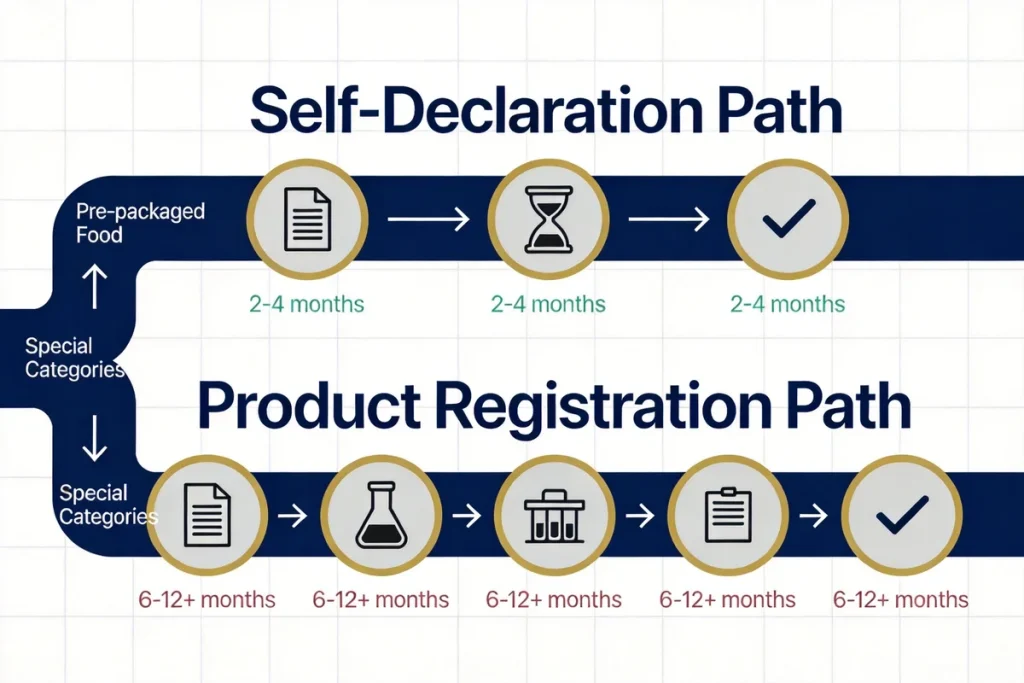
Vietnam operates a dual-track system under Decree 15/2018/ND-CP. Ordinary pre-packaged foods follow a self-declaration procedure (typically 2–4 months), while health foods, special medical-purpose foods, and infant nutrition products require full product registration (6–12 months or more). The Ministry of Health (MOH) oversees the former through the Vietnam Food Safety Authority (VSFA); the Ministry of Agriculture and Rural Development (MARD) handles quarantine of animal- and plant-origin food. The system is more fragmented, less centralised, and less predictable than China's single-GACC gate.
2. Label compliance
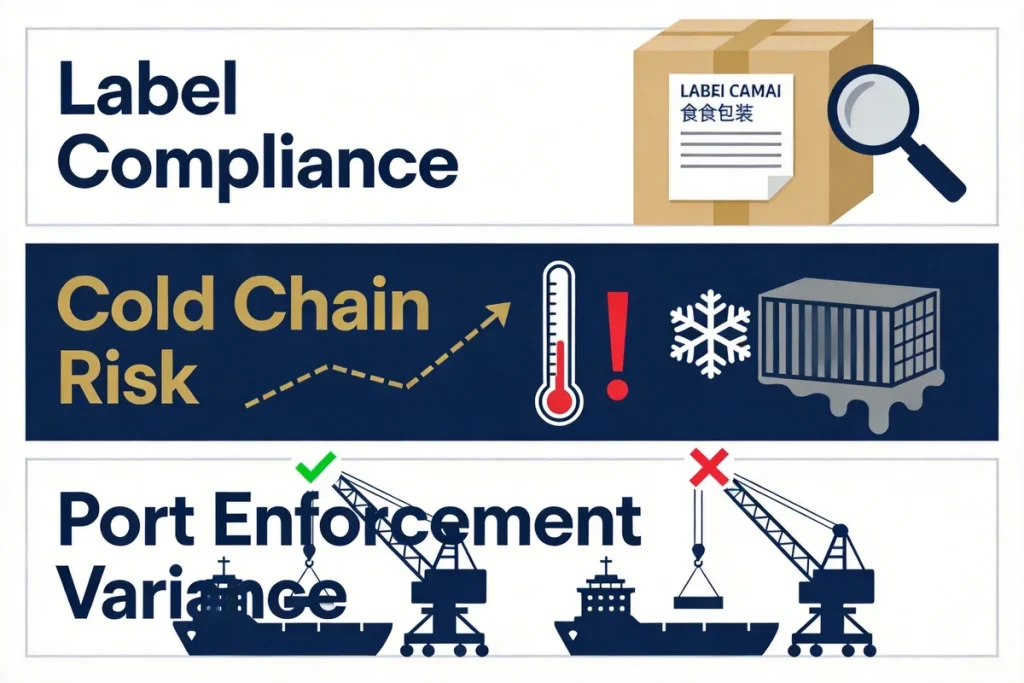
Vietnamese law requires labels in Vietnamese. Enforcement, however, varies significantly by port. What passes in Ho Chi Minh City may be delayed in Hai Phong. The risk of detention due to label omissions is real, and the inconsistency itself creates uncertainty for exporters used to China's more uniform enforcement.
3. Cold chain infrastructure
Vietnam's cold chain is less developed than China's. Ports lack consistent cold storage capacity, and last-mile reefer transport is unreliable. Frozen goods face a higher risk of temperature disruption — and a temperature break in Vietnam is just as fatal to the product as one in China, with fewer options for recovery.
4. Distribution channels
Traditional trade — wet markets and independent grocers — dominates Vietnam's food retail landscape. Supermarkets and modern trade hold a smaller share than in China. Exporters who build their strategy around retail-focused importers may find themselves shut out of the channels that actually move volume.
5. Payment and currency risk
Vietnam's foreign exchange controls and limited transparency in SME buyers' credit profiles create risks of delayed payments and defaults. Chinese counterparties are generally more bankable and easier to assess from abroad.
What We Saw at Ho Chi Minh Port
We observed one client ship a container of European cheese to Vietnam. The Vietnamese label was missing a required field — the importer's declaration number. The shipment was detained for two weeks. The importer, a local handling agent, held no liability. The exporter bore the entire cost.
Ho Chi Minh City Port and Hai Phong Port apply different enforcement standards, and local importers who advertise "full service" do not assume legal responsibility for compliance. The exporter's liability does not transfer just because the importer says they will handle everything.
For products under MARD's jurisdiction (animal and plant-origin foods), the situation is tighter still: goods are physically sampled and tested at port, with a testing cycle of 5–10 working days. Congestion varies by port and by laboratory capacity.
Vietnam vs China: Side-by-Side Risk Comparison
The table below summarises the key differences. Each area is discussed in detail above
| Risk Area | Vietnam | China |
| Access Path | Self-declaration (2–4 months) or Product Registration (6–12+ months) under Decree 15/2018 | GACC facility registration under Decree 248; once approved, path is consistent |
| Label Enforcement | Vietnamese labels required; enforcement varies by port — HCMC vs Hai Phong apply different standards | Chinese labels required; enforcement relatively consistent across major ports |
| Cold Chain | Limited cold storage at ports; last-mile reefer unreliable; higher temperature-disruption risk | Developed cold chain in Tier 1 ports; more reliable reefer logistics |
| Distribution | Wet markets & traditional trade dominate; modern trade share smaller than China | Modern trade (supermarkets, e-commerce) holds larger share; clearer channel structure |
| Payment Risk | FX controls + limited SME credit transparency = higher default risk | More bankable counterparties; easier credit assessment for importers |
Assess Both Markets Before You Choose
Vietnam is not a simplified version of China. It is a different market with a different risk profile. The entry costs may be lower at the start, but the operational risks are harder to predict.
An exporter who has built a successful China operation cannot simply copy the same approach into Vietnam and expect it to work. The most dangerous assumption is that the absence of a GACC-style system means less regulation. In practice, Vietnam's fragmented system means you may not know the actual requirement until your container reaches a specific port, on a specific day, under a specific customs officer. That is not less risk — it is less visibility.
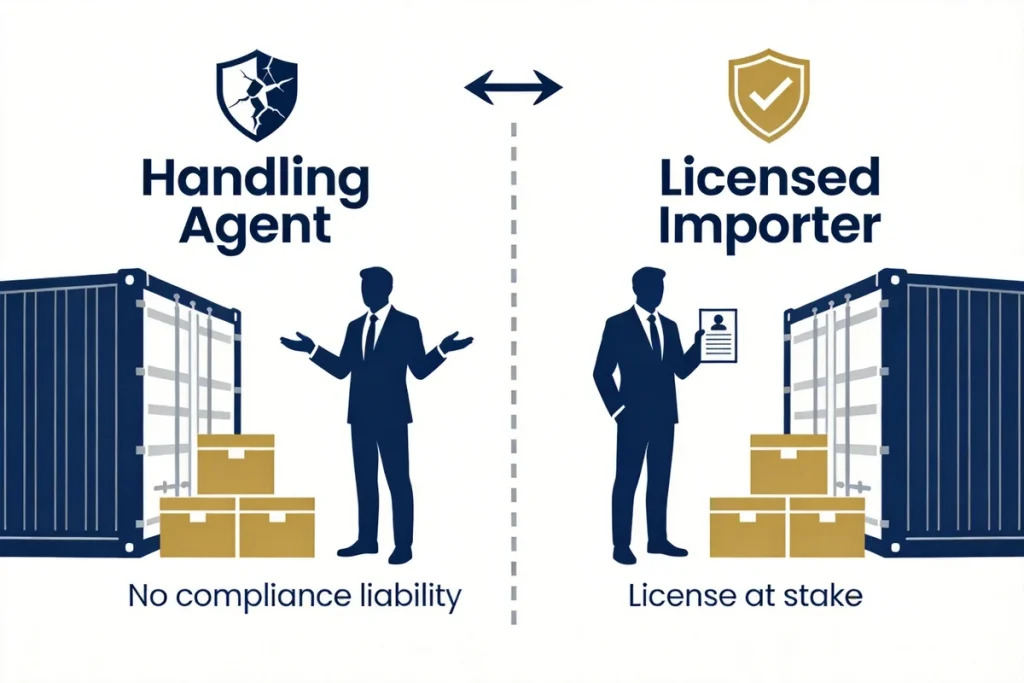
The importer question deserves particular attention. In Vietnam, many "full service" importers are handling agents, not compliance partners. They clear documents, but they do not carry liability. When a shipment is detained, the exporter is left with the cost and the silence. In China, a competent importer acts as a real gatekeeper because their own license is at stake. The incentive structures are fundamentally different, and exporters who miss this distinction end up exposed.
Note on regulatory outlook: Vietnam's revised Food Safety Law, originally anticipated for 2026, has been delayed twice (Decrees 46/2026/ND-CP and 66.13/2026/NQ-CP were suspended). The current framework remains Decree 15/2018/ND-CP. The revised law is now expected to take effect by February 2027, which may shift self-declaration and registration requirements — a reason to assess your position now rather than wait for the new rules to arrive.
For a complete walkthrough of the current registration, labelling, and customs framework, see our Vietnam food import step-by-step guide. Assess China and Vietnam separately. Do not carry assumptions from one market into the other. For Vietnam, confirm the applicable access track (self-declaration or product registration) before you commit. Verify label requirements for the specific port you will clear through — not the most lenient one. Audit your cold chain partner, because the infrastructure is weaker and the margin for error is smaller. And interrogate your importer's actual liability, not their promises.
Vietnam is a real and growing market, but the exporters who succeed there understand that different does not mean easier.
Need help understanding your risk exposure for a specific product category? Contact Specit Consulting for a pre-entry compliance review.
About Specit Consulting
We help food and beverage brands enter and grow in the Chinese and wider Asian markets through trade intelligence, importer identification, and market research.
✉ info@specitconsulting.com
Disclaimer: This article reflects general market observations and is intended for informational purposes only. It does not constitute legal or regulatory advice. Always confirm current requirements with the relevant authority or a qualified regulatory consultant.
Need help navigating your market entry?
We've helped food exporters across 10+ countries enter 13 Asian markets. Get a free initial assessment based on public data — delivered in 3 working days.
Get Your Free AssessmentContinue Reading
▶Email Asian Food Importers: 5 Mistakes to Avoid
▶Exporting Food to Southeast Asia: A 6-Country Compliance Roadmap
▶Canned Food in Asia: Where European Conservas, Confit and Tinned Seafood Actually Sell
Questions about entering the Asian market?
Chat with us on WhatsApp →