

20 August 2026 | Shanghai, China
In our pre-entry report, we flagged a cold chain risk for a client shipping temperature-sensitive products. The response: “Our importer has experience. They’ll handle it.”
Three weeks later, an entire container arrived with a core temperature of -2°C. The shipment was rejected, returned, and the client lost over €47,000.
What We Saw
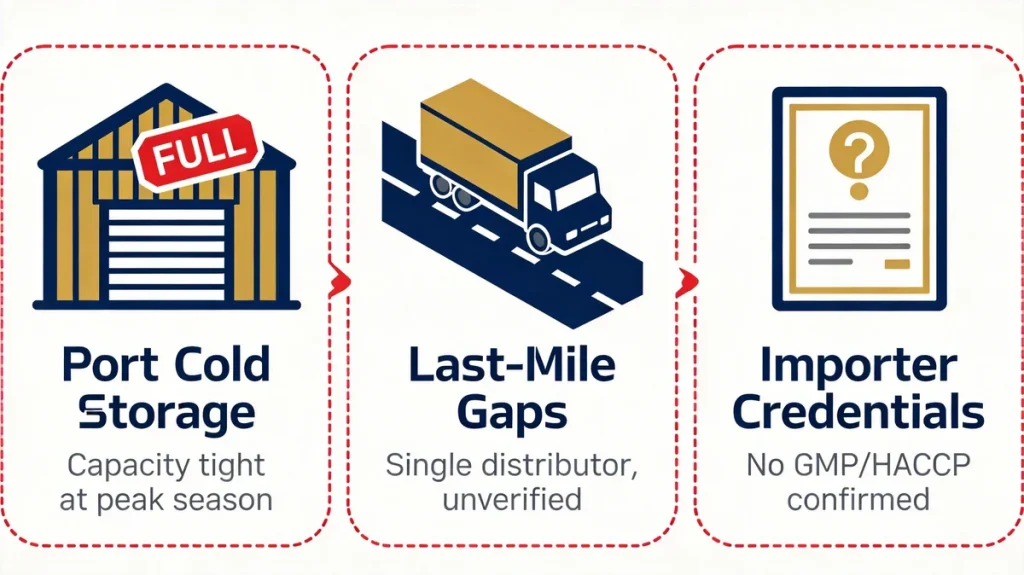
We had flagged three specific risks before the shipment left.
The first was port cold storage capacity. The client’s chosen port has historically had tight reefer storage, especially during peak import season. Large volumes of temperature-sensitive goods routinely overwhelm available capacity, and timing matters more than most exporters realise.
The second was last-mile cold chain gaps. The final destination required a multi-day overland journey. The port city had decent infrastructure, but the last 150 kilometres to the inland warehouse depended on a single distributor. We could not verify the reliability of that distributor’s vehicles, backup power, or temperature monitoring.
The third was the importer’s cold storage credentials. The importer was new to handling temperature-sensitive imports. We could not confirm GMP or HACCP certification for their cold storage facility, and no documented temperature mapping or refrigerator performance data were available.
The client acknowledged the risks but relied on the importer’s assurance rather than independent verification. The container sailed anyway.
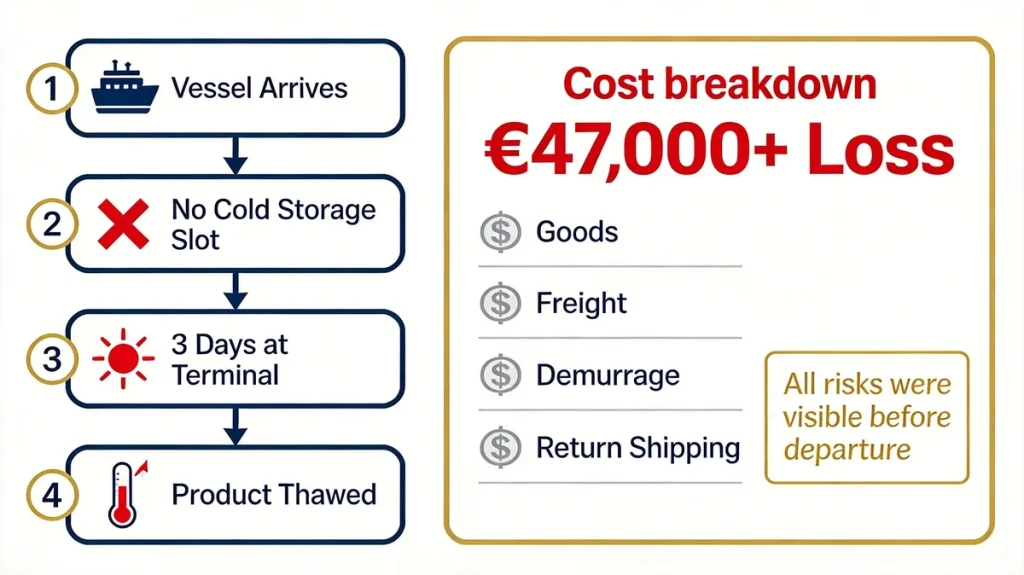
What actually happened followed the pattern we had warned about almost exactly. The vessel arrived on schedule, but the importer had not secured a confirmed cold storage slot before departure. Every major cold storage facility was full. The sealed container sat at the terminal for three days — with the reefer disconnected from shore power due to a slot shortage, a situation that occurs more often than most exporters assume at congested ports during peak season. When it finally moved to an available warehouse, customs inspection revealed the product had partially thawed. Core temperatures had risen to between -=2°C and 0°C. Packaging showed moisture loss. Customs declared the shipment non-compliant and ordered the entire container returned.
The direct loss exceeded €47,000 — goods, freight, demurrage, storage, and return shipping.
Why This Matters for You
Cold chain compliance is not just about booking a reefer container. It is about securing capacity before the vessel departs, verifying every partner in the chain, and preparing for the seasonal realities that catch exporters off guard. A single unverified link — one distributor, one warehouse, one missed booking — can cost the entire shipment.
What makes this case worth studying is that the risks were visible before the container left. None of this was hidden. The port’s capacity constraints were known. The last-mile dependency was identifiable. The importer’s credentials could have been requested and confirmed. The client relied on trust where verification was needed, and the market charged a heavy price for that choice.
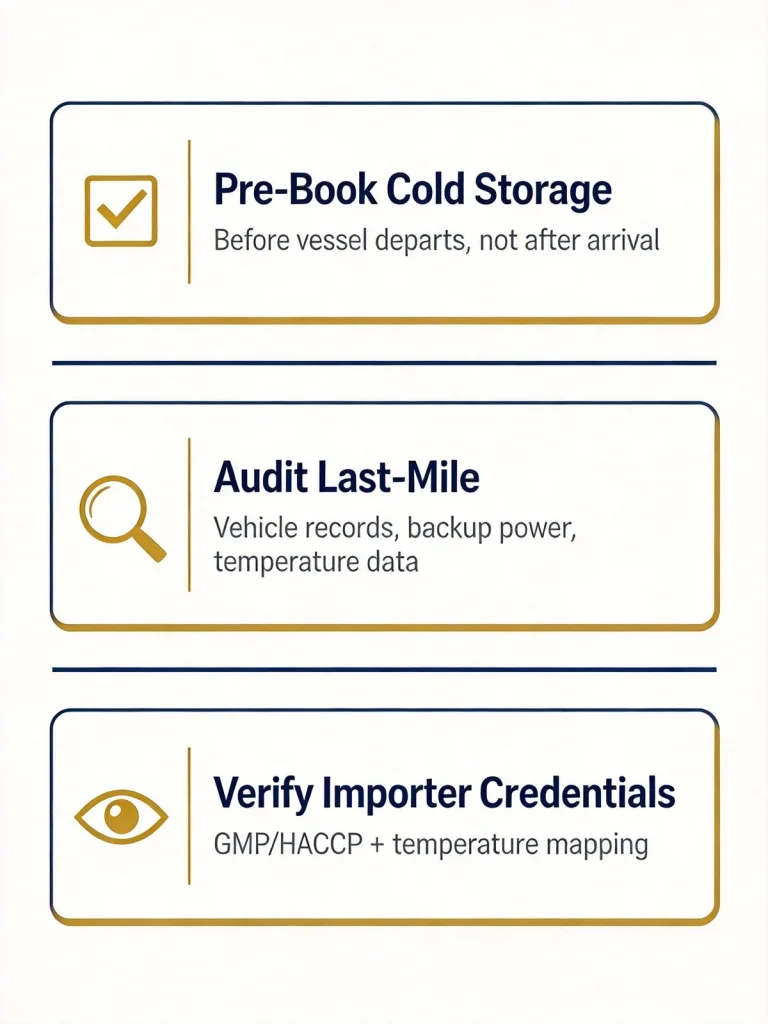
The fix we implemented afterwards was not complicated. We rerouted future shipments to a less congested port with a confirmed track record for perishable goods. The importer now pre-books cold storage capacity for every shipment, up to 30 days in advance, rather than waiting until arrival. We worked with the importer to build a standard audit checklist for every cold chain partner — GMP/HACCP certification, documented temperature mapping, independent monitoring of warehouse temperature data. None of this required new technology. It required discipline.
Takeaway
Verify your cold chain before you ship, not after. Confirm cold storage capacity at the chosen port and pre-book it before the vessel departs.
Audit the last-mile distributor — ask for vehicle reliability records, backup power arrangements, and temperature monitoring data.
Request your importer’s cold storage credentials and review them critically. A broken cold chain does not announce itself in advance. It waits for the container to arrive, the temperatures to rise, and the customs officer to open the door.
Exporters who take these precautions ship with confidence. Those who skip verification are one hot summer day away from a lesson this client paid €47,000 to learn.
Need help reviewing your cold chain before shipping? Read our guide on compliance blind spots we catch in pre-entry reports.
Q1: What happens when cold-chain compliance is overlooked in Asian food exports?
A1: A single unverified link — one distributor, one warehouse, one missed booking — can cost the entire shipment. The risks are usually visible before the container leaves; verification, not trust, is what prevents the loss.
Q2: How do you prevent cold-chain failures when exporting food to Asia?
A2: Pre-book cold storage capacity up to 30 days before arrival. Audit every cold-chain partner for GMP/HACCP certification and temperature mapping. Reroute to ports with confirmed track records for perishable goods.
About Specit Consulting
We help food and beverage brands enter and grow in the Chinese and wider Asian markets through trade intelligence, importer identification, and market research.
✉ info@specitconsulting.com
Disclaimer
This article reflects general market observations and is intended for informational purposes only. It does not constitute legal or regulatory advice. Case details are based on real engagements, with identifying information modified for client confidentiality.
Need help navigating your market entry?
We've helped food exporters across 10+ countries enter 13 Asian markets. Get a free initial assessment based on public data — delivered in 3 working days.
Get Your Free AssessmentContinue Reading
▶Send Food Samples to Asia: Avoid These Customs Mistakes
▶Food Import Detentions in Asia: 7 Real Cases and How to Avoid Them (2026)
Questions about entering the Asian market?
Chat with us on WhatsApp →