

FHC and ProWine Shanghai open today. N1–N5 and W1–W5, over 90,000 buyers expected across the two co-located shows — the largest Asian food trade show of the autumn calendar. We have walked the aisles in Shanghai, Hong Kong, Tokyo, and Seoul for the past five years, and we see the same mistakes repeated by non-Asian brands year after year at every major Asian food trade show.
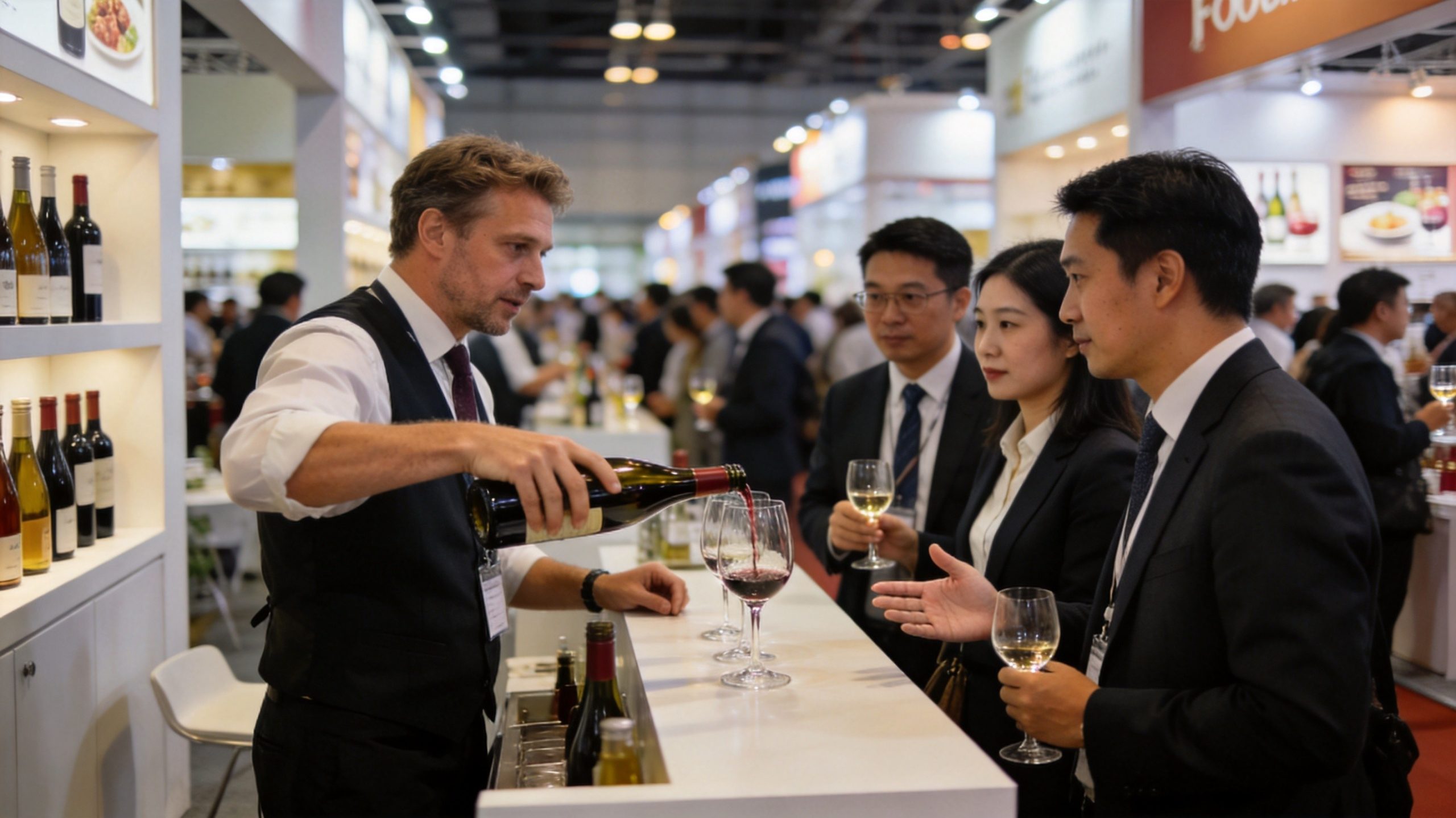
You are already on the floor. These nine fixes are still worth making today.
Mistake 1: Only Bringing Chinese-Market Collateral
More than 30% of buyers at FHC and ProWine come from Japan, Korea, Southeast Asia, Hong Kong, and Taiwan. Yet most exhibitors print only Chinese brochures. At any Asian food trade show, this is the single most easily avoided mistake.
A Japanese convenience store buyer we met at FHC two years ago walked past an Italian olive oil stand because all the sell sheets were printed in simplified Chinese — the importer he worked with only operated in English and Japanese. The brand lost a lead worth a full container in less than ten seconds.
The fix: Print a one-page English sell sheet. Include MOQ, price tier, and SKU range. Even without localisation, it is better than nothing. If you have the capacity, a one-page Korean or Japanese fact sheet covering certifications, shelf life, and pack sizes will move you from “another European brand” to “prepared exhibitor” instantly.
Mistake 2: No LINE, Kakao, or WhatsApp on Business Cards
Japanese and Korean buyers do not use WeChat as their primary messaging app. Email response rates from these markets are consistently below 15%, and a buyer who gave you their card on a Tuesday morning will have deleted your email from memory by Thursday afternoon.
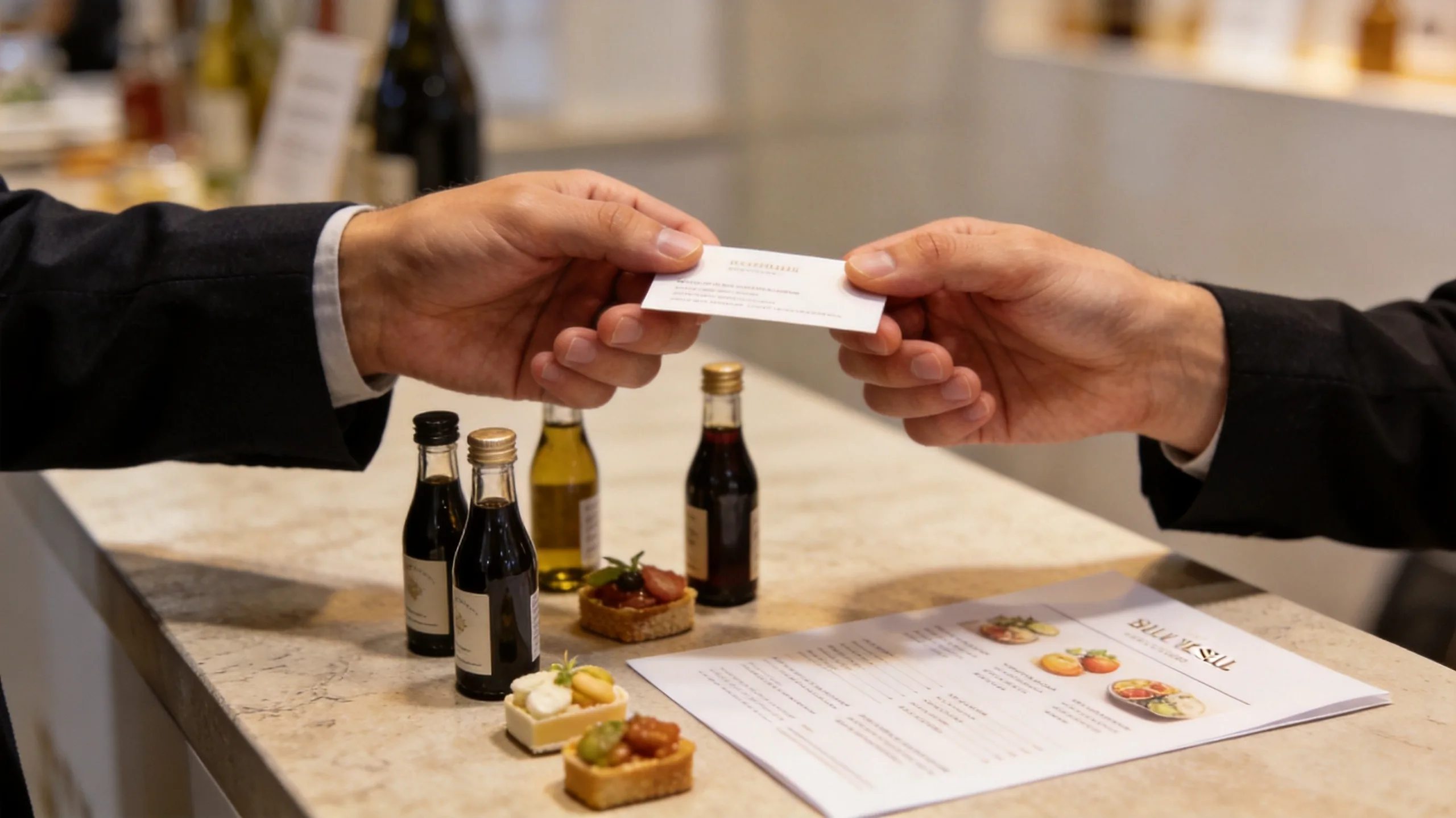
The fix: Add WhatsApp and LINE ID to your business card. When you exchange cards at the booth, ask to connect on WhatsApp — do not just collect paper. A live contact on the last day of the show is worth ten unanswered emails two weeks later. We cover the exact follow-up cadence for every Asian food trade show in our post-show email playbook — the window closes faster than most exhibitors realise.
Mistake 3: Only Bringing Family-Size or Large-Format SKUs
Asian retail is expensive to test. Shelf slots are small, slotting fees are real, and no buyer commits to a full-size SKU on a first meeting. Small formats, mini bottles, and trial sizes are the real entry point.
In Japan, convenience store alcohol SKUs are often 180–200ml. In Korea, E-mart and Traders prioritize smaller formats for new-to-market brands. In China, supermarket endcap slots for imported food are frequently booked three months ahead and paid per SKU per location, so a new brand needs a trial-size SKU just to get on the shelf at all.
The fix: If you do not have small formats yet, prepare a “starter order” combination suggestion — a mixed pallet that lets the buyer test your range without committing to a full container. This is a detail that separates prepared exhibitors from the rest at any Asian food trade show, and it is one of the highest-conversion conversations you can have on the booth.
Mistake 4: No Price Sheet or MOQ Ready on the Booth
When a buyer asks for pricing and you say “I’ll send it when I get back,” the lead is already dead. By the time you are back in your office, that buyer has walked past three competing booths and collected three printed price sheets.
We saw this happen to a French confectionery brand at last year’s show. A Korean duty-free buyer asked for EXW and MOQ. The export manager did not have the price sheet and promised to email it the following week. By Wednesday, that buyer had signed a competing French brand that handed over a printed MOQ ladder on the spot.
The fix: Print MOQ tiers — one pallet, five pallets, 20-foot container. Include FOB price and lead time for each tier. Hand it over on the spot. No follow-up required for that part of the conversation. If you are unsure how to structure FOB vs CIF pricing for an Asian food trade show, our article on quoting Asian food importers breaks down what each pricing term actually means for first-shipment risk.
Mistake 5: One Pitch for All East Asian Buyers
Japan, Korea, and China are not the same market. They do not share the same channels, buyer psychology, or decision timeline. Treating them as one “Asian market” is the fastest way to lose credibility on the booth.
Japan: Multiple distribution layers. Quality and provenance first. Slow decisions but high importer loyalty once listed. Read more in our complete Japan food import guide. Korea: Chain supermarkets, department stores, and on-trade are completely different channels, often with different importers. HoReCa decisions move fast. See our Korea MFDS checklist for what buyers actually care about. China: Online and offline run in parallel. Private domain and KOL channels can scale a brand quickly, but compliance and labelling requirements are more demanding. Our China food labelling GB 7718 article covers the baseline.
The fix: Prepare three opening sentences that switch by buyer origin. Name the country. Reference the channel. Show you have been there before. This single habit will make you stand out from the dozens of other brands pitching generically on the floor of an Asian food trade show.
Mistake 6: Confusing Importer, Distributor, and Wholesaler
A business card that says “importer” does not mean they have national distribution capability. In many Asian markets, an “importer” may hold the import licence but only sell to one region or one channel.
A Spanish wine producer we advised signed with what looked like a national Korean importer at a show three years ago, only to discover six months later that the “importer” held the licence but sold only to two Seoul restaurants and had no retail reach. The producer wasted a year and missed two buying cycles. This is exactly the scenario our 8 distributor qualification questions are designed to prevent.
The fix: Ask three questions before you spend 20 minutes pitching your full range: 1. Which global brands are in your current portfolio? 2. How many channels do you cover — retail, HoReCa, or both? 3. Are you national or regional?
The answers will tell you whether this is a real opportunity or a dead end, faster than any pitch.
Mistake 7: Talking Product, Not Asking About Their Portfolio Gaps
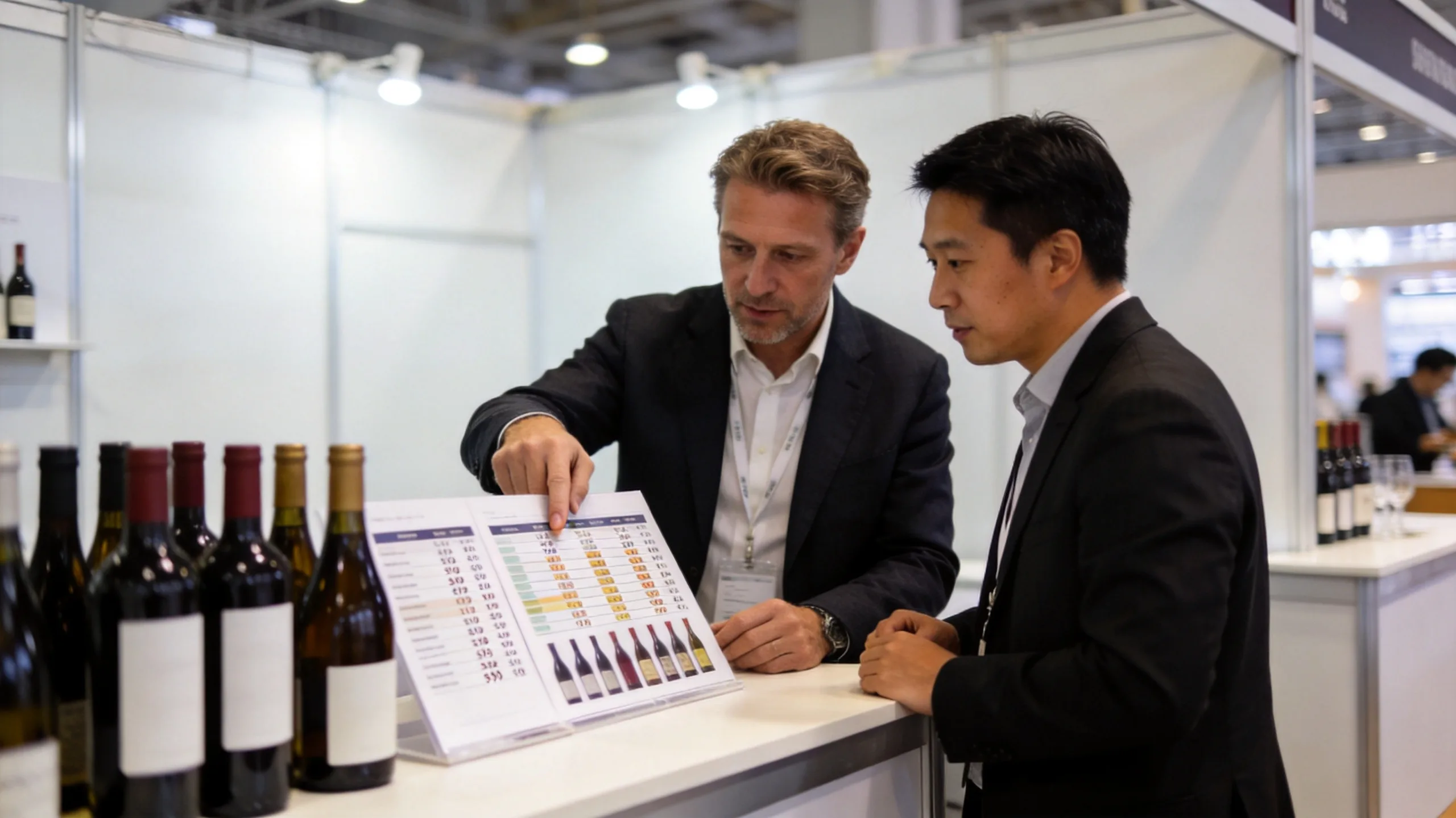
Most exhibitors spend the entire conversation talking about their own product. Terroir, family history, awards, winemaking philosophy — the buyer has heard it five times in the last hour.
The fix: Open every booth conversation with one question: “What categories are you actively sourcing for next quarter?” Then position your product as the answer to that gap. It is a completely different conversation. A Hong Kong wine importer we work with told us after last year’s show that she shortlisted exactly two European wineries out of more than 80 she walked past — both were the ones who asked about her portfolio gaps first instead of launching into their own story.
Mistake 8: No Post-Show Follow-Up Plan Before the Show Starts
Eighty per cent of trade show leads go cold within 14 days of the show closing. The reason is almost always the same: no follow-up system, and the exhibitor waits until they are back in the office to start writing emails. At an Asian food trade show where buyers may see dozens of brands in a single day, that delay is fatal.

The fix: Mark every business card A/B/C on the spot — hot, warm, cold. Send the A-grade follow-up from your hotel that same evening, while the conversation is still fresh. Do not wait until you get home. We published a trade show follow-up email cadence guide last week covering exact day-by-day send windows and templates for A, B, and C leads — use it before you write your first follow-up.
Mistake 9: No Answer for “Can This Be Imported Legally?”
Ingredient lists, label compliance, alcohol content, additive approvals — if you freeze when asked, the buyer loses confidence immediately. You do not need to know every detail of every market’s regulations, but you do need a credible answer. The most common deal-breakers at an Asian food trade show are not price or MOQ; they are ingredient approval gaps, additive restrictions, and shelf-life date-marking rules that invalidate the product before it clears customs. Our article on Asian food label rejection reasons lists the top reasons shipments get refused at port.
The fix: Prepare one sentence: “Our labels meet EU standards; for Japan, Korea, or China, we work with a local compliance partner on label registration and ingredient checks.” Do not say “it should be fine.” Those four words cost you the lead.
If You Are at the Show — Book a Free 48-Hour Post-Show Channel Diagnostic
Asian food trade shows are won or lost in the 72 hours between your first booth conversation and your first follow-up email. The booth is just the starting line.
I will be walking both W Hall and N Hall today and tomorrow (11/10–11/11, Specit days). If you are an exhibitor reading this from the booth and want 15 minutes on the floor to walk through your buyer cards, flag category compliance, or sanity-check your follow-up plan, message me on LinkedIn or WhatsApp: +86 150 2128 9465. We have six open slots remaining today and tomorrow.
After the show closes on Thursday 11/12, we are offering a free 30-minute post-show channel diagnostic call in the 48 hours after FHC (11/13–11/14). Bring your booth notes and graded buyer cards, and we will map your real A-grade opportunities against the noise, flag any compliance issues before you quote, and give you a prioritised follow-up sequence. Book via the link above or WhatsApp me directly from the show floor.
Disclaimer: The information in this article is based on direct trade show observation across multiple Asian markets (China, Japan, Korea, Hong Kong, Singapore, and Southeast Asia) over a five-year period, and is provided for general informational purposes only. Market conditions, regulatory requirements, import procedures, labelling rules, additive approvals, and buyer behaviour vary by country, category, and shipment timing, and can change without notice. Nothing in this article constitutes legal advice, regulatory compliance advice, tax or tariff advice, or commercial recommendation. Always verify specific import requirements, additive approvals, label compliance rules, shelf-life and date-marking requirements, and distributor licence validity with a qualified local compliance partner, licenced customs broker, or local legal counsel before shipping product, signing a distributor agreement, or making any commercial commitment. Specit Consulting provides market entry advisory support to non-Asian food and beverage brands; engagement does not guarantee any specific commercial outcome, distributor signature, or product listing. All company names, buyer encounters, and show-floor examples referenced are anonymised composites drawn from multiple client and on-site experiences and are used for illustrative purposes only.
Frequently Asked Questions
How many SKUs should I bring to my first Asian food trade show?
Bring a focused range of 6–12 SKUs that represent your bestsellers and one or two premium or distinctive items. A smaller, well-curated range is easier for buyers to remember than a full catalogue of 40+ SKUs. Include at least one SKU in a small format or travel size for sampling, and at least one SKU priced in a range that works for a first mixed-pallet order.
What is the ideal MOQ for a first order in Japan vs Korea vs China?
There is no single ideal MOQ, but a useful starting point for first conversations is: one mixed pallet for Japan (buyers test cautiously through specialty importers), one to five pallets for Korea (HoReCa and mid-sized retail move faster), and one 20-foot container for national China retail. Be willing to flex for the right partner, especially if they carry complementary brands you recognise.
Should I print collateral in local languages for Asian trade shows?
English is the standard working language at FHC and ProWine, and most senior buyers speak it. Local-language collateral helps for secondary conversations and leave-behinds, but it is not mandatory on your first show. Prioritise a clean English sell sheet with MOQ, price tiers, and SKU specs before you invest in translation. Japanese and Korean buyers in particular appreciate a one-page spec sheet with ingredient lists, allergens, and shelf life translated, even if the rest of the brochure is English.
How soon after a trade show should I follow up with Asian buyers?
Send A-grade leads a personalised follow-up within 24 hours of meeting them — ideally the same evening from your hotel. B-grade leads within 72 hours. C-grade leads within one week. After 14 days, response rates drop sharply, and the lead is effectively cold. A follow-up that lands while the buyer is still on the show floor or on their flight home is worth ten follow-ups sent two weeks later. Speed is only the first variable — triage grade, channel choice, the three-document sequence in week three, and the day-30 clean close all determine whether a card becomes a meeting. We walk through the full 30-day system in our guide to converting trade show leads into Asian distribution conversations.
What is the single highest-ROI thing I can change on my booth in the next hour?
Print or hand-write three large signs in English: (1) “Export-ready · MOQ from 1 pallet” — this immediately pre-qualifies serious buyers; (2) “Japan/Korea/China compliant ingredients” if true, or “Label support available” if you work with a compliance partner; (3) “Contact: WA +86 150 xxxx xxxx” — your WhatsApp number large enough to read from two metres away. Together these three signs filter out the wrong conversations and pull in the right ones, faster than any polished brochure redesign.
Related reading: - How to Qualify Asian Food Distributors at Trade Shows — the screening questions that separate real buyers from tire-kickers, expanded. - Asian Food Label Rejection: Top Reasons Importers Refuse Your Shipment — what actually goes wrong at the compliance stage, before your product reaches shelf. - Your First Food Shipment to Asia: A Realistic Timeline — from signed distributor agreement to first container on the water. - Trade Show Follow-Up Emails: A Cadence That Actually Converts — day-by-day send windows and A/B/C templates. - How to Quote Asian Food Importers: FOB, CIF, and MOQ Explained — which pricing term to use on your first booth conversation.
Need help navigating your market entry?
We've helped food exporters across 10+ countries enter 13 Asian markets. Get a free initial assessment based on public data — delivered in 3 working days.
Get Your Free AssessmentContinue Reading
▶Japan Food Distribution: HORECA vs Retail vs Online Channel Strategy
▶GACC Registration: 5 Mistakes That Get Your China Filing Rejected
Questions about entering the Asian market?
Chat with us on WhatsApp →