

27 August 2026 | Shanghai, China
When we reviewed a pre-entry compliance report for a European snack exporter targeting three Asian markets, we flagged something that initially seemed like a minor administrative detail — but turned out to be the difference between profit and loss.
What We Saw
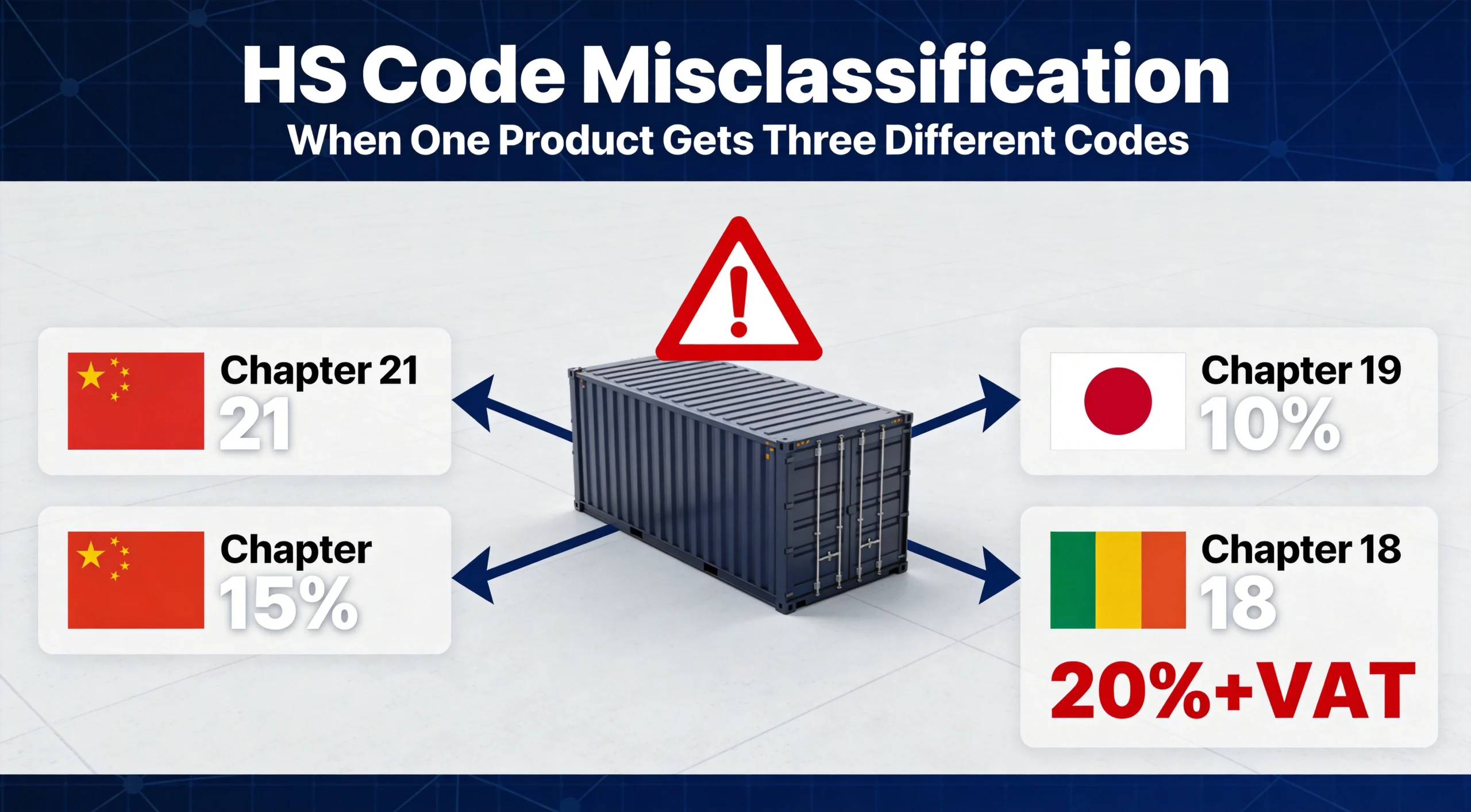
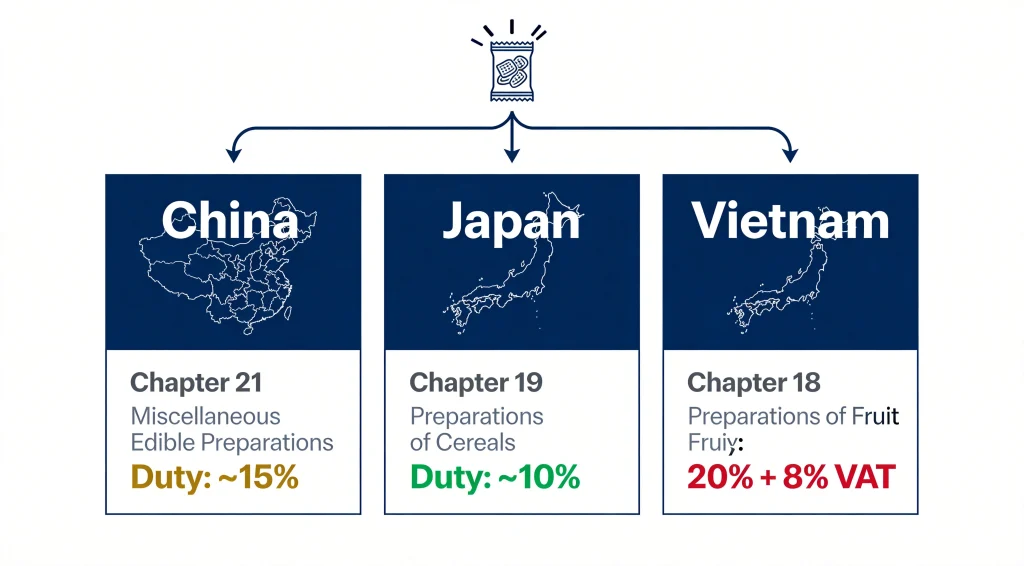
The same product was being classified under three different HS chapters across China, Japan, and Vietnam. China placed it under Chapter 21, miscellaneous edible preparations, at roughly 15% duty. Japan placed it under Chapter 19, preparations of cereals, at about 10%. Vietnam placed it under Chapter 18, preparations of fruit, at 20% duty plus 8% VAT — where the regulatory risks differ significantly from China.
The exporter had based their pricing on their home country’s classification, assuming it would carry over. We flagged the risk and recommended a pre-shipment verification for each market.
What Happened Next
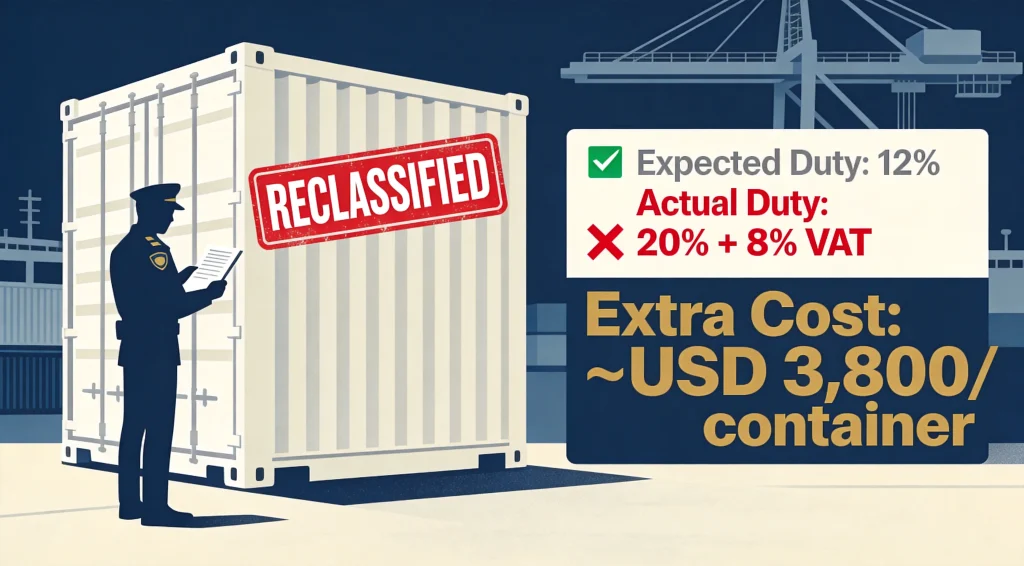
Six weeks later, the exporter shipped to Vietnam using their home-country HS code anyway. Vietnamese customs reclassified the goods upon inspection. The duty jumped from an anticipated 12% to 20% plus 8% VAT. The incremental cost on a single container was approximately USD 3,800 — a margin hit that exporters who have paid actual tariffs at the border will recognise.
This is not an unusual case.
Why This Matters for You
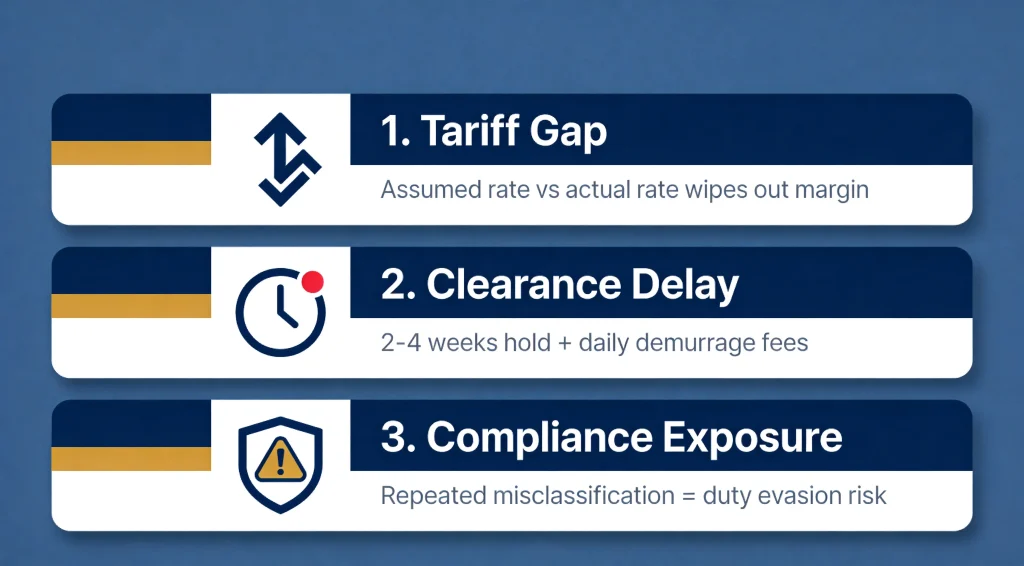
HS code mismatches trigger three distinct types of losses. The first is the tariff gap itself — the difference between your assumed rate and the actual rate, which can wipe out the margin on a full container. The second is clearance delay. Customs holds for reclassification can take two to four weeks, with demurrage and storage fees accumulating daily. The third is compliance exposure. Repeated or egregious misclassification can be treated as duty evasion, potentially triggering penalties or import restrictions.
The root cause is rarely intentional. Most exporters assume their local classification is universal. In Asia, that assumption is especially dangerous. Interpretation differences across countries are wider than in Europe or North America, and the same product can legitimately sit in different chapters depending on how each customs authority reads the ingredient composition, processing method, and intended use.
Your domestic HS code only applies domestically. That single sentence is the most important compliance lesson for any exporter entering Asia. The classification you have used for years at home is not a passport — it is a local interpretation that may not survive contact with another customs system.
What happened with the Vietnam shipment is instructive because it was avoidable at every stage. The risk was flagged before shipping. The recommendation was made before the container left. The exporter chose to proceed without verification, and the market charged the price.
The fix, once we engaged, was methodical: verify the correct classification against ingredient composition, processing method, and intended use; support the importer in submitting an advance ruling request to Vietnam Customs for binding classification clarity; refile all subsequent shipments under the corrected code; and integrate the true duty cost into the pricing model going forward.
The advance ruling mechanism is the most underused tool in the exporter’s compliance toolkit. China, Japan, and Vietnam all offer it. Japan's import process, however, carries three surprises that aren't in the official guide. It typically takes 2–6 weeks, but it converts a guess into a certainty. The exporters who use it know their duty rate before they ship. The ones who do not are betting their margin on an assumption.
Takeaway
Run an independent classification check for every Asian market you enter — not just once, but for every product and every destination. Products with blended ingredients or novel formulations are the most vulnerable to misclassification, because they sit in the grey zones between chapters. Use advance rulings where they are available, and do it before the shipment, not after the container is on the water.
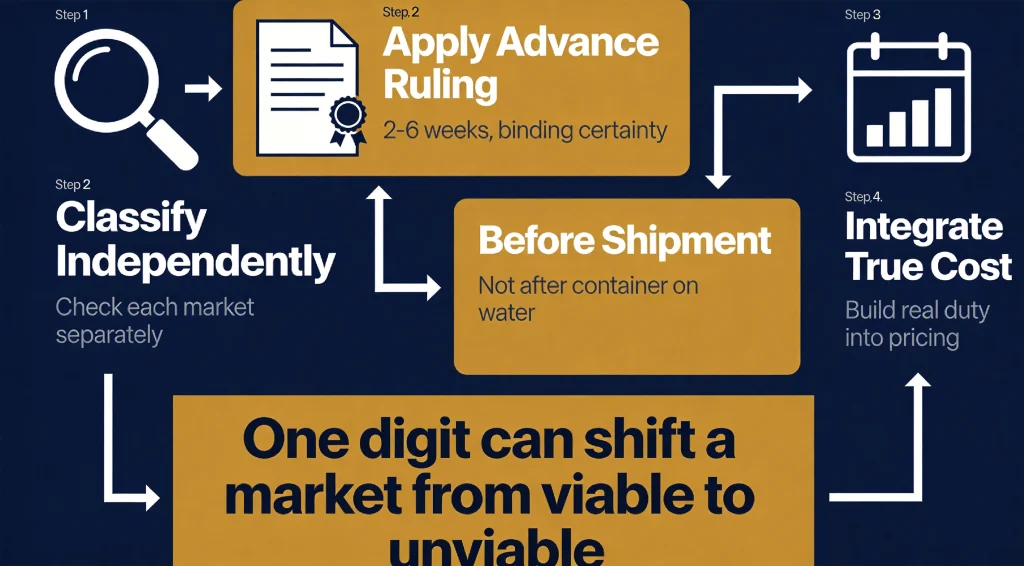
One digit can shift a market from viable to unviable. Specit Consulting verifies classifications before you ship.
Need help verifying your HS code across Asia before your next shipment? Contact Specit Consulting for a pre-entry review.
About Specit Consulting
We help food and beverage brands enter and grow in the Chinese and wider Asian markets through trade intelligence, importer identification, and market research.
✉ info@specitconsulting.com
Disclaimer: This article reflects general market observations and is intended for informational purposes only. It does not constitute legal or customs advice. Always confirm current requirements with the relevant authority or a qualified customs professional.
Meta Description: A European snack exporter lost USD 3,800 per container when Vietnamese customs reclassified their HS code. Our pre-entry report had predicted it. Here is what went wrong and how to prevent it.
Slug: hs-code-misclassification-asia-tariff-shock
Need help navigating your market entry?
We've helped food exporters across 10+ countries enter 13 Asian markets. Get a free initial assessment based on public data — delivered in 3 working days.
Get Your Free AssessmentContinue Reading
▶How to Read China HS Tariff Code (Chapter-by-Chapter)
▶EU Food Exports to China: Understanding Tariff Risks (2026–2029)
▶How Free Trade Agreements Reduce Food Import Tariffs in Asia
Questions about entering the Asian market?
Chat with us on WhatsApp →