


You met them at FHC or ProWine. They were enthusiastic, their booth was polished, and they said all the right things about "the Asian opportunity." Six months later, your product is sitting in a warehouse, the sell-through reports never arrived, and the exclusive territory you granted is blocking you from appointing anyone else. This is the moment most brands realise they missed the food distributor red flags and did not vet carefully enough.
Finding the right distributor is the single biggest bet in Asian market entry. It is also the one most exporters get wrong. Industry estimates put the failure rate of distributor relationships at around 70 percent. The U.S. Department of Commerce similarly warns that most failed export partnerships share a short list of early warning signs. In our experience, the reasons are rarely dramatic — usually it is a mismatch that was visible in the first conversation, if you knew what to look for. If you are coming off a show like FHC or ProWine, these warning signs in a food distributor are the filter to apply before converting trade show leads into real distributor conversations.
Here are seven food distributor red flags that should stop you before you sign. These are the checks I use to filter every distributor conversation that comes across my desk.
Red Flag #1: The Portfolio Is a Museum of Unrelated Categories
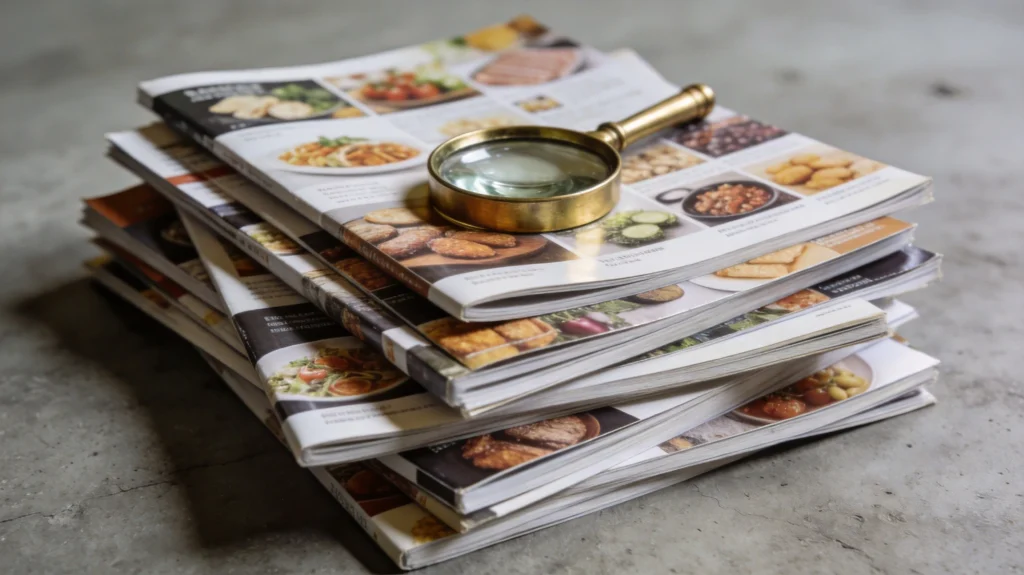
Their website says "specialty food," which sounds promising. Then you look at the brand list: Korean kimchi, Italian truffle oil, Mexican tortillas, German rye bread, Japanese matcha, and an obscure French cheese.
This is not a focused importer—it is a trading company that will say yes to anything with a margin, and one of the clearest food distributor red flags. A distributor carrying thirty unrelated categories is not an expert in any of them. Their sales team cannot develop category knowledge across that spread, their retail relationships are shallow in each channel, and your product will get the same attention as everything else: a line on a price list and a hope.
A serious importer in your category will have a portfolio that tells a story. You should be able to look at their brands and see a coherent proposition to buyers — same tier, same channel, same consumer. If you cannot see that logic, you are not looking at a specialist. You are looking at a warehouse with a sales email.
Red Flag #2: They Push for Exclusive Territory on the First Call

Exclusivity is a legitimate request — after the importer has proven they can sell. When it arrives before they have seen your pricing, before they have asked about label registration, before they have shown you a single account where your product would fit, it is not a partnership request. It is a lock.
The most common trap for first-time exporters is a two- or three-year exclusive with no performance clause, leaving you legally blocked from appointing anyone else while the importer does nothing. They get a territory to sit on. You get a year of your market-entry timeline gone.
If they ask for exclusivity early, the right response is not no — it is "yes, tied to performance." Minimum purchase volumes, minimum store listings, minimum marketing spend, and a termination clause if those targets are missed for two consecutive quarters. An importer who believes in your product will accept those terms. One who wants a lock without accountability will push back. This is where the key clauses to negotiate in an Asian food distributor agreement matter most — the ICC Model Commercial Agency Contract is a useful reference point for fair international distribution terms — get them wrong and the contract works against you.
Red Flag #3: No Sell-Through Reporting in the Contract

This is one of the most costly food distributor red flags because it hides failure for months—by the time you see it, a quarter is gone. They can tell you what they bought from you. That is sell-in. What they cannot tell you is what they sold to retailers and what retailers sold to consumers. That is sell-out, and it is the only number that matters.
A food distributor that cannot show you monthly depletion data by SKU, by account, by channel has no idea what is happening to your product. They are guessing. And when the first order runs out, and they place a second one that is half the size, you will have no way to know whether that is because the product is not selling or because their sales team is not trying.
Demand reporting as a contract term, not a favor. Monthly sell-through reports by account, quarterly business reviews with account-level detail, and a clear definition of what "sell-through" means in their reporting. If a food distributor resists regular reporting, add it to your list of food distributor red flags: they manage by relationship and intuition, not by data. That can work for a commodity product with a low price point. It will not work for yours.
Red Flag #4: The MOQ Is Too Low to Be Real
A first order of less than one pallet sounds friendly. It is not. It is a signal.
A one-pallet order is not a commitment. It is a test the importer is running with your money — and yours. They will put it in a few accounts, see what happens, and if it does not move immediately, they will lose interest. Meanwhile, you have paid for production, freight, and label registration for a volume that cannot generate enough revenue to justify the effort.
A serious importer making a serious first commitment will order enough to cover their launch accounts, their sample needs, and a reasonable sell-through period. That is usually at least one pallet, often two or three for a specialty food product. If they cannot commit to that, they are not committing to your brand. They are doing you a favor by taking a case. You do not need that favor. For how to size MOQ and land pricing that both sides can live with, see how to set MOQ and pricing for Asian buyers.
Red Flag #5: The Principal Won't Meet You
You have exchanged six emails, sent the product deck, pricing, and label mockup, and asked for a video call. The response is always the same: "My colleague will handle this," "Let me check with the team," "We are very busy this quarter."
If the person who would sign the distribution agreement cannot give you twenty minutes on a video call, the decision chain is either too long to be functional or the principal is not actually interested. Either way, add it to your food distributor red flags list and move on—you are wasting your time.
In Asian distribution, the relationship is the contract. If the principal will not meet you before signing, they will not meet you after signing either. You will be managed by an account coordinator who has no authority to make decisions and no incentive to champion your brand internally. That is how brands die quietly in a portfolio: no one is against them, but no one is for them either.
Red Flag #6: They Ask for Marketing Budget Up Front
"We need co-op funding to launch your brand." This request, arriving before the first order, signals the importer lacks working capital and wants you to fund the launch while they take the margin.
A legitimate version of this conversation happens later—after the first order ships and accounts are confirmed. Discussing it before a purchase order is not partnership; it is asking you to underwrite their risk.
The subtext is: "we are not sure this will work and want you to pay for the experiment." If they believed in the product, they would invest themselves. Asking you to fund first means they are hedging; hedge back by walking away.
Red Flag #7: The References Are All Brands You Cannot Find in Retail

They give you three references who are polite and positive on the phone. Then you search for those brands in the market—online, in stores, in the channels they claim. Nothing. Or one dusty listing on a third-tier e-commerce site with no stock.
Unverifiable references are among the most common food distributor red flags. A reference you cannot find in retail is not a reference. It is a name. A confident food distributor will give you brand owners whose products you can actually find on the shelf, in accounts they actually service. If every reference is either a brand that has disappeared or a brand owner who is themselves a friend of the importer, you have learned nothing.
The fastest reference check is not a phone call. It is a store visit. Ask for the addresses of three accounts where your category is sold, and go look. If the importer's brands are there, on shelf, with facing and pricing, the reference is real. If they are not, you have your answer.
How to Run a Reference Check That Actually Tells You Something
Most reference calls fail to surface food distributor red flags because the questions are too polite. "How is the partnership?" invites a diplomatic answer. Ask instead:
"Do payments arrive on time?" Payment behavior is the clearest signal of financial health and operational discipline. A brand owner who hesitates before saying "mostly" has told you more than a page of positive feedback.
"Did actual sales match the forecast in year one?" Every importer forecasts optimism. The question is whether they hit it. Ask for the percentage. If it was 40 percent of forecast, that is the number you should plan around.
"How responsive are they on quality or compliance issues?" A distributor that goes quiet when a shipment has a problem will do the same to you.
"Would you renew the contract today?" The last question is the only one that matters. If the answer is an immediate yes, you have a real reference. If it is a pause, a qualification, or a change of subject, you have your answer.
The Year You Save
The distributor you choose will shape your first year in the market more than your product, your pricing, or your marketing. A good one opens doors you did not know existed. A bad one closes the ones you paid to open, and takes your exclusivity with them.
None of these early warning signs is a guarantee of failure. Some importers with messy portfolios and low MOQs are exactly right for a small brand testing a market. But if you see three or more of them in the first two conversations, you are not looking at a partner. You are looking at a year of your time, about to be spent.
If you are evaluating a specific food distributor and seeing several of these red flags right now, and want a second opinion before you sign, book a free 20-minute call. Bring what you know about them — the portfolio, the proposed terms, the references — and we will walk through where the risk sits. Before that call lands, make sure your trade show follow-up emails are not already scaring serious partners off.
FAQ
How long should a distributor have been in business before I take them seriously?
Three years minimum for a specialty food importer; five is better. These food distributor red flags apply regardless of company age; a new distributor may be hungry and focused, but they have no track record of navigating label registration, customs clearance, and retail relationships. If they are new, ask who their operations lead is and how many years that person has in the market. The company can be young; the team should not be.
They say they have "strong relationships" with retailers. How do I verify that?
Ask for account names, not categories. "We work with premium supermarkets" is not verifiable. "We supply Aeon, Ito-Yokado, and Seijo Ishii in Kanto" is. Then ask for the name of the buyer at one of those accounts and whether the importer can arrange a brief introduction. A real relationship survives that request. A claimed one does not—and you have just identified one of the most important food distributor red flags.
What if the importer is the only one who responded to my outreach?
A single response is not validation—it is one of the quietest food distributor red flags. That is a reason to keep looking, not a reason to sign. Before you commit exclusivity to the only importer who replied, run a parallel search: contact three to five others in the same category, even if it takes another month. The cost of waiting is small. The cost of a bad exclusive is a year.
They asked for a three-year exclusive. Is that normal?
Long exclusives without performance clauses are a classic red flag. It is common, and it is also the most common trap. A three-year exclusive with no performance clause is a three-year option on your market that costs them nothing to hold. If they want three years, tie it to annual minimums and a termination right if those minimums are missed for two consecutive quarters. A serious importer will accept that. One who will not is telling you they do not expect to hit the numbers.
What should I do if I've already signed with a food distributor who isn't performing?
Read your termination clause. The same food distributor red flags you should have spotted before signing usually explain why performance is poor. If there is no clean exit for underperformance, you may need to negotiate a mutual release — which often means buying back stock or accepting a notice period. Do not simply stop shipping and hope they go away; that leaves your brand in legal limbo in the market. Get a lawyer who knows the jurisdiction, and start the conversation early. The longer you wait, the more of your market window closes.
Disclaimer: This article is provided for general informational purposes only and does not constitute legal, regulatory, or commercial advice. Food import regulations, distributor practices, and market conditions vary by country, category, and time. For China, GACC registration rules are governed by Decree No. 280 (effective June 2026); see our GACC registration guide for current procedures. Always verify requirements with qualified local counsel, a licensed customs broker, and the relevant regulatory authority before making market-entry or contractual decisions. Specit Consulting provides market entry advisory services for international food brands entering Asia; examples in this article are drawn from public sources and anonymised client experience and do not represent any specific company or engagement.
Related Reads
- How to Convert Trade Show Leads into Real Asian Food Distribution Deals
- Food Trade Show Follow Up Emails: Templates and Cadence That Actually Get Replies
- How to Quote Asian Food Importers: FOB, CIF, MOQ, and Pricing Strategy
- Key Clauses in an Asian Food Distributor Agreement
If you are currently vetting an Asian food distributor and want an experienced second set of eyes on the agreement, book a free 20-minute distributor vetting call. Bring the portfolio, the proposed terms, and the references—we will tell you which of these food distributor red flags apply before you commit.
A producer filing through an unvetted importer often sees their GACC registration rejected for ARP-related reasons, even before label or classification issues surface.
Need help navigating your market entry?
We've helped food exporters across 10+ countries enter 13 Asian markets. Get a free initial assessment based on public data — delivered in 3 working days.
Get Your Free AssessmentContinue Reading
▶Japan Food Distribution: HORECA vs Retail vs Online Channel Strategy
▶GACC Registration: 5 Mistakes That Get Your China Filing Rejected
Questions about entering the Asian market?
Chat with us on WhatsApp →