

31 August 2026 | Shanghai, China
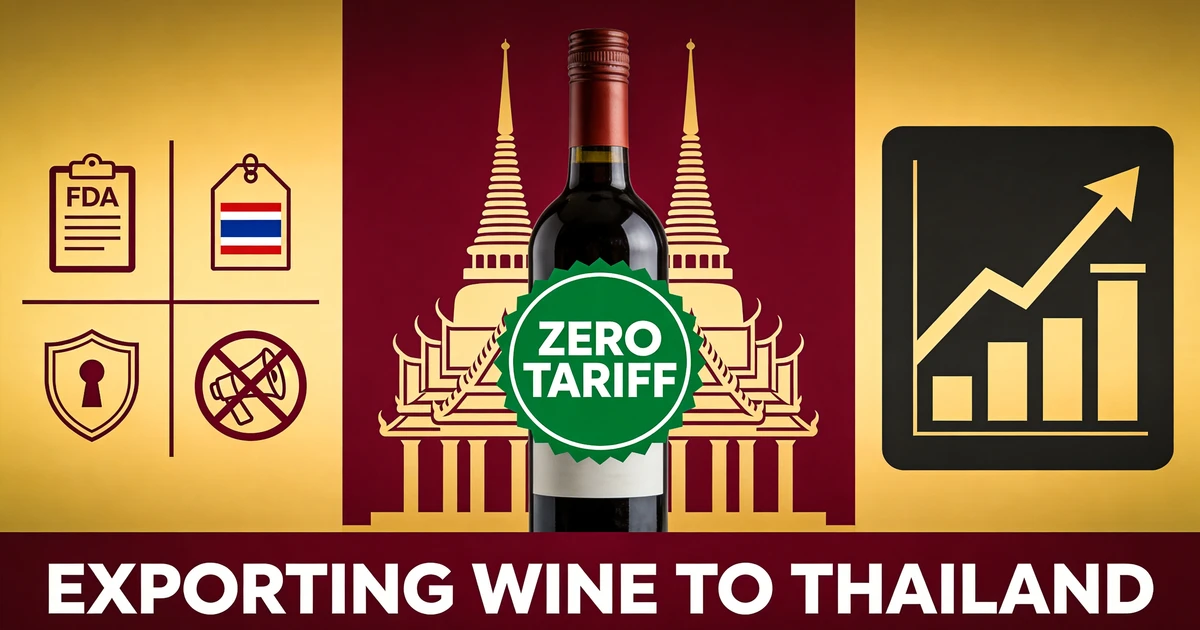
Thailand has maintained zero wine import tariffs since February 2024 — and the results are now visible. H1 2026 import value is up 13.71% even as volume stays flat. For exporters, that sounds like a green light. But zero tariff does not mean zero cost. Excise tax, Thai FDA registration, Thai-language labelling, and alcohol licensing are the real cost structure.
What We Saw on the Ground
The February 2024 policy eliminated import duties on wine under HS 2204, which previously ran as high as 54%. At the same time, excise tax on still wine dropped from 10% to 5%, with rates varying by product type. In 2025, Thailand relaxed alcohol sales hours in hotels, international airports, and entertainment venues. In May 2026, general sales hours were extended to 11:00 AM to midnight. The policy direction is clear: the government is gradually loosening restrictions to support tourism and hospitality.
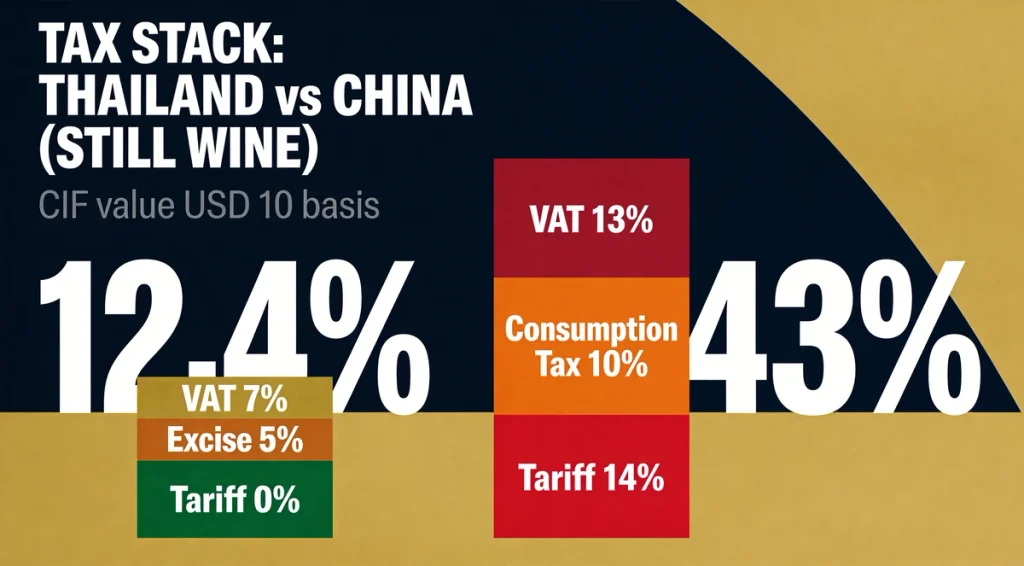
But the tariff is only the first layer. The full tax stack for wine entering Thailand includes excise tax — 5% for still wine, 10% for sparkling — and VAT at 7%, a reduced rate that has been extended through September 2027 following Cabinet approval in July 2026.
A still wine with a CIF value of USD 10 carries excise of USD 0.50 and VAT of USD 0.74, for a total tax of USD 1.24 and an effective rate of roughly 12.4%.
By comparison, China's combined burden on still wine under MFN rates is approximately 43%. Thailand is significantly lower — but "lower than China" is not the selling point. The real friction comes from four non-tariff gates.
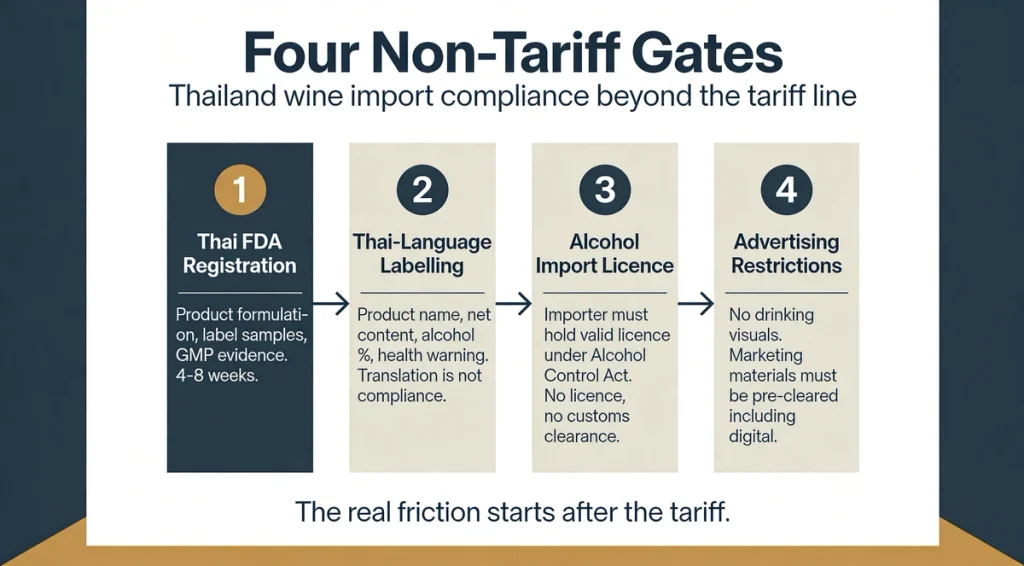
First, Thai FDA registration: all imported food and beverage products must be registered before sale, requiring product formulation, label samples, and evidence of GMP or food safety systems. The process typically takes four to eight weeks.
Second, Thai-language labelling: labels must include product name, net content, manufacturer and importer information, alcohol content, and health warning statements — in Thai. Translation is not compliance.
Third, the alcohol import licence: the importer must hold a valid licence under the Alcohol Control Act B.E. 2551 (2008). Without it, customs will not clear the shipment.
Fourth, advertising restrictions: alcohol advertising is strictly regulated, visuals of drinking are prohibited, and marketing materials must be pre-cleared, including digital channels.
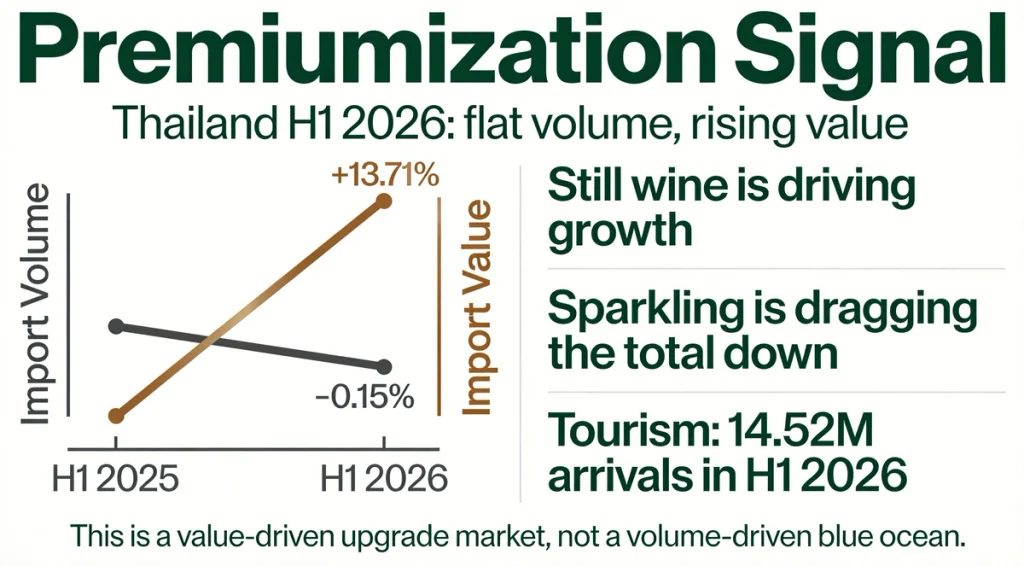
The market signals are telling. H1 2026 data shows import volume flat at minus 0.15%, but import value up 13.71%. That is premiumization: the market is buying less but paying more. Still wine is driving growth. Sparkling wine is dragging the total down, reflecting a shift away from celebration-only consumption. (Source: Vino Joy News, 25 Aug 2026)
Tourism is the key driver — 32.97 million international visitors in 2025, and H1 2026 has already recorded 14.52 million arrivals (source: Vino Joy News). With a population of 71 million, Thailand has a large domestic base. This is not a volume-driven blue ocean. It is a value-driven upgrade market.
Why This Matters for You
The exporters who get stuck in Thailand are rarely stuck on the tariff. They are stuck on the gates they did not see coming. The Thai FDA registration that was not started until the container was already at sea. The label that was translated but not compliance-checked. The importer who did not actually hold an alcohol licence. The marketing campaign that violated advertising restrictions no one had explained.
What makes Thailand interesting right now is the disconnect between the headline and the reality. The government has made wine cheaper to import, but the compliance structure has not changed. The opportunity is real, especially in tourism retail and premium still wine. But the path requires the same discipline as any other Asian market: verify before you ship, prepare before you promote, and calculate the full landed cost before you quote a price.
The premiumization signal is worth taking seriously. Flat volume with rising value means the buyers who are purchasing are trading up. That rewards brands with a clear quality story, proper positioning, and the patience to build presence in the right channels — hotels, restaurants, and duty-free rather than mass retail.
Takeaway
Calculate the full tax stack first: excise plus VAT, not just the tariff line.
Confirm your importer holds a valid Alcohol License before you ship anything.
Start Thai FDA product registration at least four to eight weeks before your target arrival date — do not wait until the container is at the port.
Prepare Thai-compliant labels with every mandatory element, and treat translation as the beginning, not the end, of the labelling process.
Choose your channel deliberately: tourism retail has different requirements from general retail, and the buyers are different.
The exporters who succeed in Thailand are the ones who see the zero tariff as a door opening, not a job finished.
Expanding Wine to Thailand?
Contact Specit Consulting for an initial assessment based on public data.
Related Reading
Import duties and tariff analysis across Asia →
services/import-duties-tariffs-asia/
Food export to Vietnam — where the risks differ from China →
food-export-to-vietnam-where-the-risks-differ-from-china
Labelling and regulatory compliance across Asia →
services/labelling-regulatory-requirements-asia/
About Specit Consulting
We help food and beverage brands enter and grow in the Chinese and wider Asian markets through trade intelligence, importer identification, and market research.
✉ info@specitconsulting.com
Disclaimer: This article reflects general market observations and regulatory understanding as of August 2026. Tax rates and regulatory requirements are indicative and subject to change. Always confirm current requirements with the relevant authority or a qualified regulatory consultant.
Need help navigating your market entry?
We've helped food exporters across 10+ countries enter 13 Asian markets. Get a free initial assessment based on public data — delivered in 3 working days.
Get Your Free AssessmentContinue Reading
▶What CIIE Exhibitors Learn After Their First Year in China
Questions about entering the Asian market?
Chat with us on WhatsApp →