

3 September 2026 | Guangzhou, China
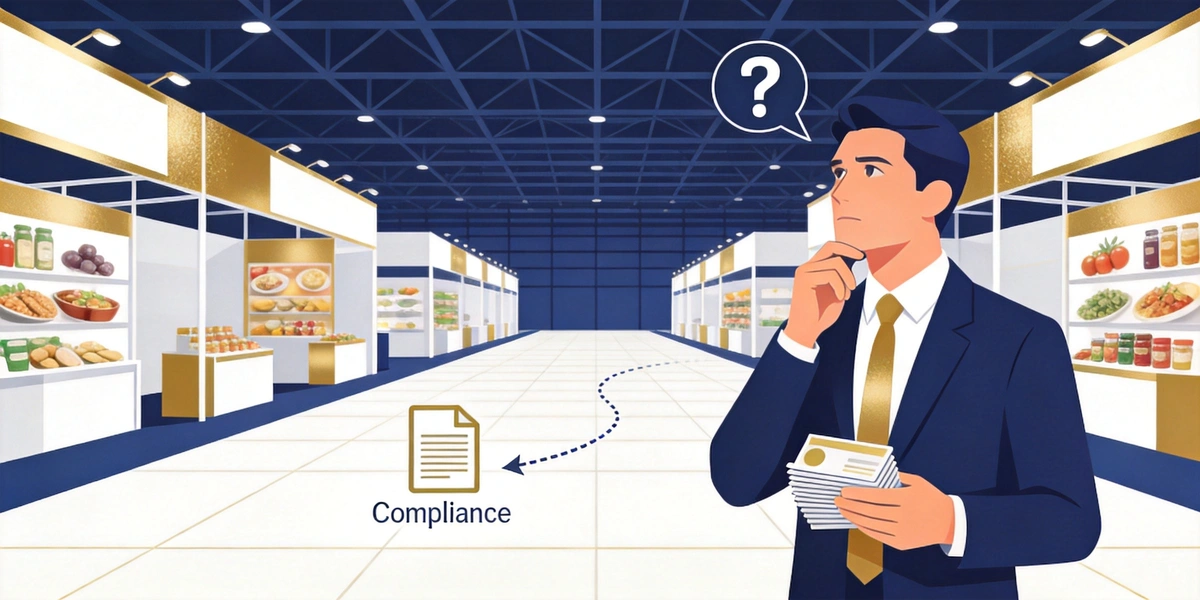
The booth gets attention. Visitors stop, sample your product, and hand over business cards. The CIIE floor is buzzing, and it feels like market entry is just a matter of follow-up emails. Then three months pass, and you are still talking to the same importers — who have not signed anything yet.
The real work starts not on the show floor, but after. That is when importers actually test your compliance.
Three Assumptions First-Time CIIE Exhibitors Make — and Why They Are Wrong
The first is “importer equals ready to buy.” Not necessarily. Many visitors at CIIE are market scouting, not procurement sourcing. They are curious about your product, but they may not have the infrastructure to bring it in. A few weeks after the show, they often go quiet — not because they lost interest, but because they discovered their import licence does not cover your category.
The second is “CIIE equals instant market entry.” The expo is a launchpad, not a landing. Brands that succeed at CIIE treat it as the beginning of a longer process. Those that treat it as the end of the sales cycle usually leave with a box of business cards and no orders.
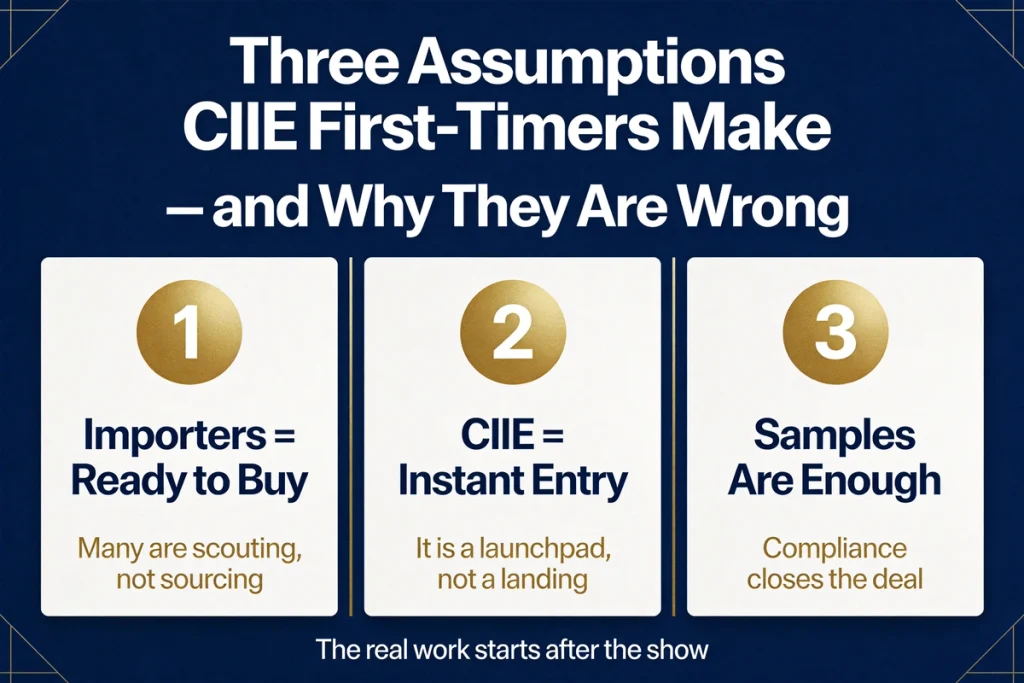
The third is “samples are enough.” Samples generate interest. Compliance documentation closes the deal. Importers who liked your product at the booth will ask for GACC registration numbers, label compliance files, and landed cost sheets. If you do not have them ready, the conversation stalls.
How We Screen CIIE Contacts: Compliance Before Commitment
Instead of sending follow-up emails to everyone, we screen the contacts who actually matter. The importer who asked for samples is interesting. The importer who asked for your GACC registration number is serious.
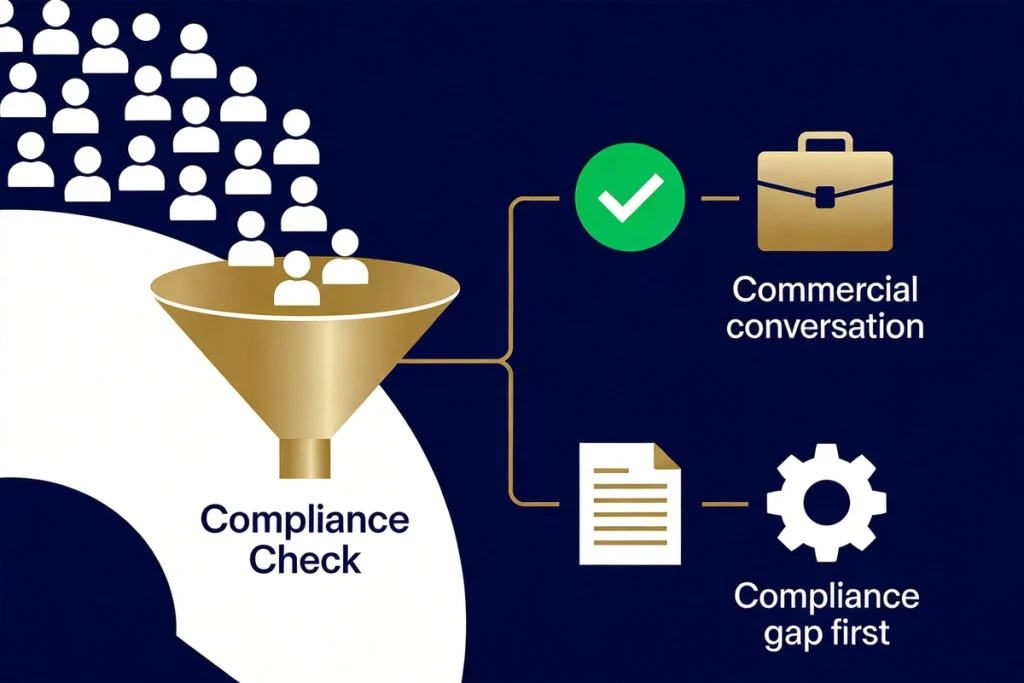
We run a quick compliance check before the importer commits: GACC status, label readiness, and whether the product is already registered or needs a new filing. This tells us who is ready to buy and who is still exploring. Those who clear the check move to the commercial conversation. Those who do not get a different follow-up — one that addresses the compliance gap first. That approach saves weeks of back-and-forth.
What to Prepare for CIIE 2026 (November 5–10, Shanghai)
Over 1,200 companies from 99 countries and regions have already confirmed participation, and contracted exhibition space has surpassed 340,000 square metres. The buyers will be there. The question is whether you will arrive ready to convert their interest into action.
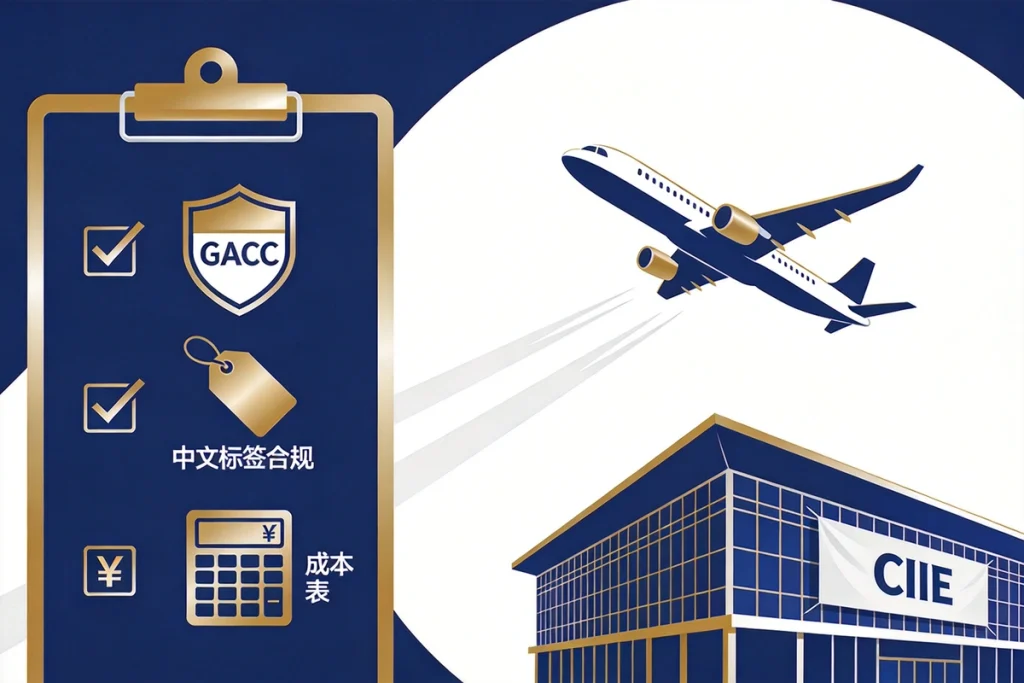
Three things need to be ready before you land. GACC status: confirm that your product is either already registered or eligible for list-registration under Decree 280. If your product falls into one of the high-risk categories, start the competent-authority recommendation process now — not after the show. Label-ready packaging: have your Chinese label designed, translated, and validated against the current GB 7718 standard (GB 7718-2025 takes effect in March 2027) before you show the product. The label is not a post-show task. It is a precondition for serious conversations. Landed cost sheet: importers will ask for it. Know your tariff, VAT, and logistics cost per unit for each target market. If you hesitate, you lose credibility.
Whether you are deciding whether to exhibit or visit or are already committed to a booth, CIIE is an efficient promotional platform for building brand influence and expanding sales channels. But it rewards preparation, not spontaneity. Show up with your compliance ready, and the follow-up becomes a negotiation. Show up without it, and you will spend the next six months chasing the same importers who were interested — but not convinced.
Takeaway
Treat CIIE as the midpoint of your market entry, not the starting line. Screen your contacts after the show — the importer who asks about compliance is worth more than ten who only asked for samples. Prepare your GACC status, Chinese label, and landed cost sheet before you board the plane. The exhibitors who convert leads into orders are the ones who arrive with their paperwork already in order. The ones who arrive with just samples and hope to leave with a stack of business cards and another year of waiting.
Ready to find the right importers before the show? See our Importer Sourcing & Profile service — or contact us directly.
About Specit Consulting
We help food and beverage brands enter and grow in the Chinese and wider Asian markets through trade intelligence, importer identification, and market research.
✉ info@specitconsulting.com
Disclaimer: This article reflects general market observations and is intended for informational purposes only. Exhibition figures and participation numbers are indicative and subject to change.
Need help navigating your market entry?
We've helped food exporters across 10+ countries enter 13 Asian markets. Get a free initial assessment based on public data — delivered in 3 working days.
Get Your Free AssessmentContinue Reading
▶3 Trade Shows Where Asia Food Buyers Show Up
▶Indonesia Food Import: What BPOM Registration Really Takes
▶Exporting Wine to Thailand: Zero Import Tariff, Real Compliance Costs
Questions about entering the Asian market?
Chat with us on WhatsApp →