

17 August 2026 | Shanghai, China
After weeks of preparation, the CIFER portal returns a rejection notice. The GACC registration has failed. With enforcement tightening under Decree 248, rejections are becoming more common — but they are almost always preventable.
What We Saw
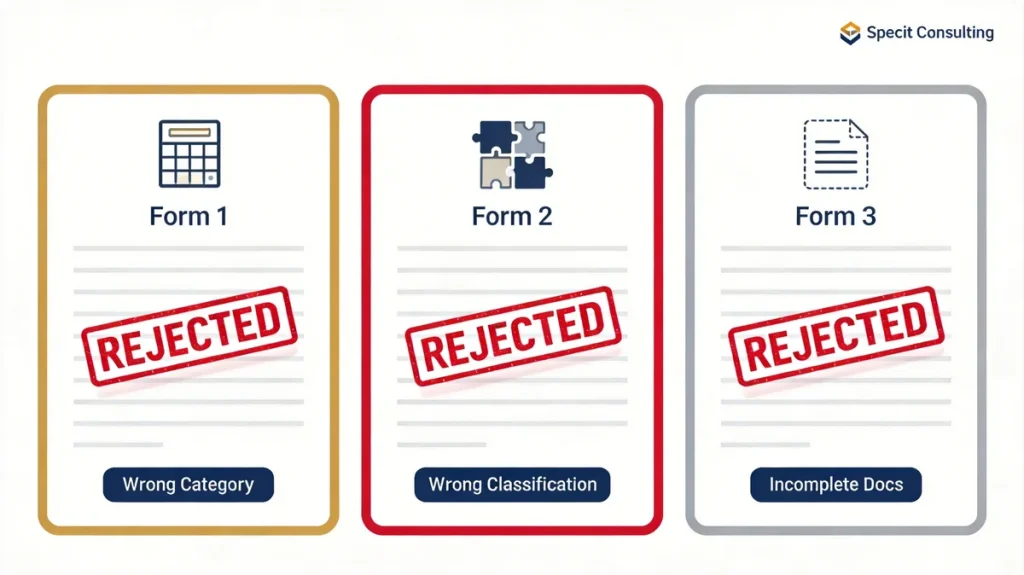
We have handled enough GACC registration cases to recognize the pattern. The same mistakes keep appearing, and they fall into three buckets.
1. Wrong application type and category
GACC maintains over 25 food categories and dozens of sub-categories, and each sub-category requires its own registration number. A winery producing both still and sparkling wines, for example, needs separate registrations for each product type — not one for the whole portfolio.
Exporters frequently assume one registration covers everything. It does not.
A European confectionery producer registered their chocolate products under “sugar confectionery” when their items contained dairy — putting them in a different sub-category entirely. The application was returned after nine weeks.
2. Incorrect product classification
China’s HS code and CIQ classification systems do not always align with those used in exporting countries. A product classified correctly at home may sit in a different category under Chinese rules. That mismatch alone is enough to fail an application.
A Middle Eastern dates exporter classified their product under the HS code used in their home market. China’s CIQ system placed it in a different category that required additional documentation they had not provided. Rejection followed.
3. Incomplete or incorrect documentation
Missing documents, documents that do not meet GACC requirements, or documents not translated into Chinese will cause rejection. This is the most frustrating category because it is entirely avoidable with attention to detail.
An Oceanic dairy applicant submitted health certificates in English only. GACC requires the key declarations in Chinese. The entire package was sent back without review.
The registration structure trap
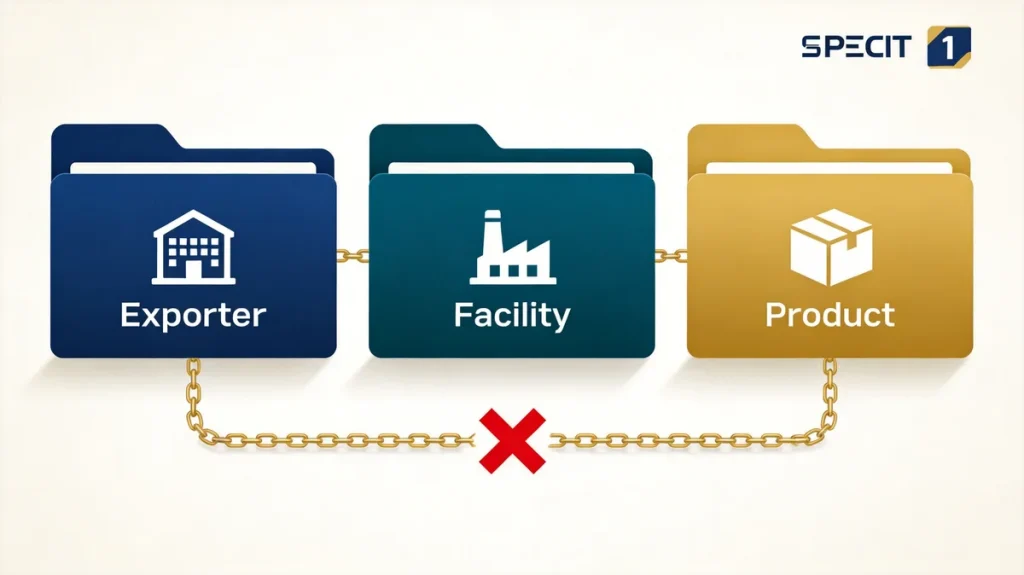
Many exporters also misunderstand the registration structure. Registering as an overseas exporter alone is not sufficient. You need three separate registrations:
- Overseas exporter registration — identifies your company as an authorised exporter
- Overseas producer facility registration — registers the manufacturing facility
- Product listing — lists each product with its 13-digit HS-CIQ code
All three numbers must appear on the customs declaration. Missing any one of them means rejection at the port.
The risk category trap
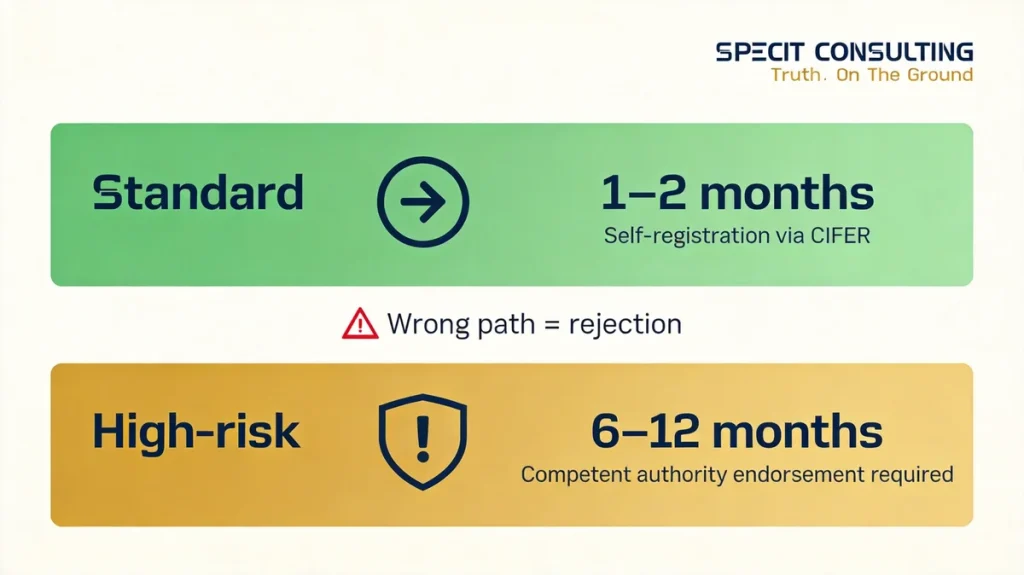
Where your product sits on the risk scale determines how long registration takes and what approvals you need — and getting this wrong is a rejection in itself.
| Risk level | Typical products | Path | Timeline |
| Standard (self-registration) | Beverages, confectionery, oils, snacks, frozen vegetables, etc. | Direct application via CIFER | 1–2 months |
| High-risk (recommendation required) | Meat, dairy, seafood, bird’s nests, honey, edible fats and oils of animal origin | Formal recommendation from competent authority in country of origin | 6–12+ months |
High-risk products cannot be self-registered. Without the competent authority’s recommendation letter, GACC will not even open the file.
Why This Matters for You
A GACC rejection is not a minor setback. It resets the clock entirely. For applications rejected by the competent authority, you cannot amend and resubmit — you must submit a completely new application from scratch. For GACC-level rejections, the same principle generally applies.
That means weeks or months of lost time, missed shipping windows, and an importer waiting with empty shelf space.
The financial cost is rarely in the application itself. GACC registration is free on the official CIFER platform. The real cost is the delay. A rejected registration can push market entry back by months, especially for high-risk categories where the competent authority endorsement process alone takes considerable time.
What frustrates exporters most is that most rejections were avoidable. The reasons are almost always visible before submission — wrong category selection, mismatched HS and CIQ codes, missing documentation, or a misunderstanding of the risk classification. The information is available. The problem is that someone was in a hurry.
Takeaway
If your registration has been rejected, follow these steps before resubmitting:
- Read the rejection reason. Log into CIFER, check the feedback, and identify exactly what went wrong.
- Verify your classification. Double-check the food category, sub-category, HS code, and CIQ code. If unsure, use the CIFER public query function to see how similar products are classified.
- Audit every document. Check for completeness, accuracy, and Chinese translation where required. One missing translation can sink the whole package.
- Confirm your risk level path. For high-risk products, verify that the competent authority’s recommendation letter was submitted correctly and meets GACC’s format requirements.
- Submit a fresh application. Not an amendment — a new submission. Start clean.
And if the first attempt failed, consider professional support for the second. Self-registration saves money only if it works the first time. After a rejection, the cost of getting it wrong again is far higher than the cost of getting help.
For a full picture of how long each risk category takes, read our guide on GACC registration timelines.
For common errors that trip up first-time applicants, see our GACC registration walkthrough.
If you are registering a production facility, our facility registration guide covers the documentation checklist.
Need help with GACC registration? See our China GACC Food Registration service
FAQ
Can I amend a rejected GACC registration instead of starting over?
Generally no. Both competent authority rejections and GACC rejections typically require a completely new application. You cannot edit and resubmit the original.
How do I check the rejection reason for my GACC application?
Log into the CIFER platform (https://cifer.singlewindow.cn) and check the status of your application. The system provides feedback on why the application was not accepted.
Does GACC charge a registration fee?
No. GACC registration is free through the official CIFER platform. The cost of registration lies in the time and expertise required to prepare a correct application, not in government fees.
About Shanghai Specit Management Consulting Co., Ltd.
We help food and beverage brands enter and grow in the Chinese and wider Asian markets through trade intelligence, importer identification, and market research.
✉ info@specitconsulting.com
Disclaimer:
This article is based on publicly available data and reflects general market observations and regulatory understanding as of August 2026. It does not constitute legal or regulatory advice. Always confirm current requirements with the relevant authority or a qualified regulatory consultant.
Need help navigating your market entry?
We've helped food exporters across 10+ countries enter 13 Asian markets. Get a free initial assessment based on public data — delivered in 3 working days.
Get Your Free AssessmentContinue Reading
▶What CIIE Exhibitors Learn After Their First Year in China
Questions about entering the Asian market?
Chat with us on WhatsApp →